
What Does “Voodoo” Mean?
Quick Definition
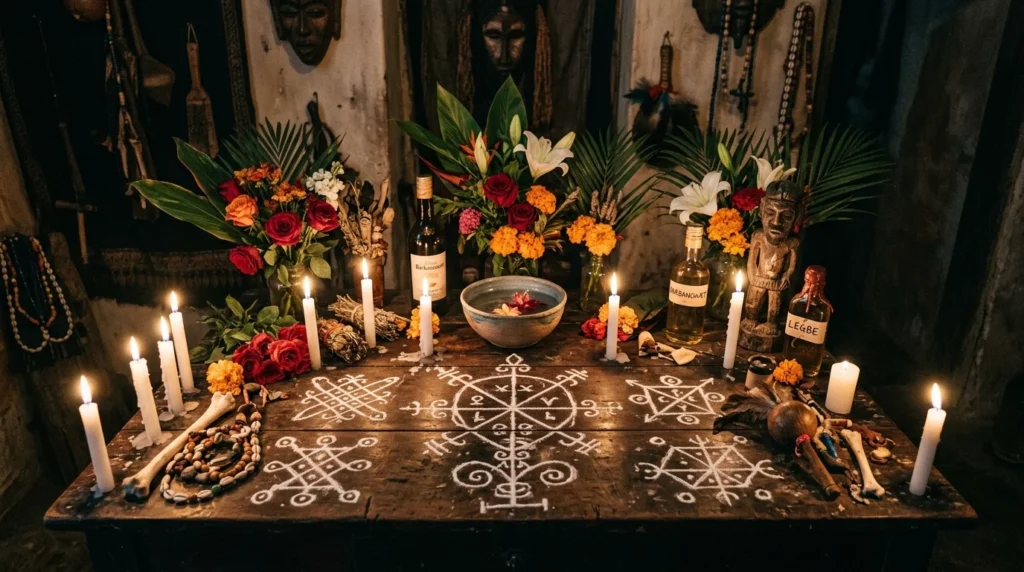
Voodoo is a spiritual tradition that originated in West Africa and is practiced by millions in Africa, the Caribbean, South America, and the United States. It involves belief in a supreme God and a pantheon of spirits known as loa or vodun, who communicate with believers through dreams, trances, and ritual possession. The word itself comes from the Fon-Ewe word vodún, meaning “spirit” or “deity.”
What It Usually Means In Conversations
When people talk about the voodoo meaning in everyday conversation, they’re usually referring to one of these things:
The religious tradition: A belief system rooted in West African spiritual practices, characterized by reverence for ancestors, nature spirits, and a supreme creator god. This is the true voodoo meaning that practitioners follow.
The practitioners: A person who practices voodoo—priests are called houngan and priestesses are called mambo.
The metaphorical use: In informal English, voodoo can describe deceptively simple or magical solutions, like “voodoo economics.” This usage is considered offensive by some who understand the true voodoo meaning.
What Tone Does It Convey?
The tone of voodoo depends entirely on the context:
| Context | Tone | Example |
|---|---|---|
| Religious discussion | Respectful, informative | “Voodoo is a recognized religion in Haiti” |
| Pop culture references | Misleading, stereotypical | Movies with voodoo dolls and curses |
| Figurative/Metaphorical | Neutral or negative | “Voodoo economics” |
| Historical discussion | Educational, factual | The African origins of voodoo |
What Does Voodoo Mean on Different Platforms?
Text Messages
In texts, voodoo is rarely used casually. You might see it when someone’s joking about something magical or mysterious, or when discussing cultural topics.
Example: “That new restaurant is so good it must be voodoo.”
Snapchat
On Snapchat, you might see voodoo in stories about New Orleans or Haitian culture, or in content about spirituality and alternative religions.
Example: A snap of a New Orleans shop with “Voodoo vibes” in the caption.
Instagram users post about voodoo in cultural content, spiritual discussions, and educational posts. The hashtag #voodoo has millions of posts. The voodoo meaning is often explored in posts about African spirituality and Caribbean culture.
Example: An infographic explaining the real voodoo meaning.
TikTok
TikTok creators make videos explaining voodoo, sharing personal experiences with the religion, and debunking myths about the voodoo meaning. It’s a popular topic in educational and spiritual content.
Example: “Everything you think you know about voodoo is wrong.”
Discord
In Discord servers, especially those focused on spirituality, history, or Caribbean culture, voodoo is discussed in depth. People share information and ask questions about the true voodoo meaning.
Example: “Can anyone explain the difference between Vodou and Voodoo?”
Reddit has extensive discussions about voodoo in subreddits like r/Vodou, r/religion, and r/NewOrleans. Users share experiences, ask questions, and offer support about the voodoo meaning.
Example: “What’s the difference between hoodoo and voodoo?”
Dating Apps
On dating apps, voodoo is rare, but you might see it in bios from people interested in spirituality, Caribbean culture, or New Orleans.
Example: “Voodoo priestess in training. Ask me about it.”
The Origin and History of Voodoo
West African Roots
The voodoo meaning begins in West Africa, particularly among the Fon, Ewe, and Yoruba peoples of countries like Benin, Togo, and Nigeria. Some anthropologists estimate that voodoo’s roots may go back as far as 6,000 years. The voodoo meaning is deeply connected to these ancient traditions.
In the country now known as Benin (formerly the Kingdom of Dahomey), Vodun is the national religion, followed by a large portion of the population. The word vodún is the Fon-Ewe word for “spirit.” In West Africa, the religion includes a complex pantheon of spirits associated with natural phenomena, historical figures, and ancestors. Understanding the voodoo meaning means understanding these West African origins.
The Journey to the Americas
The voodoo meaning was transformed by the transatlantic slave trade. Enslaved Africans brought their spiritual traditions to the Caribbean and the Americas in the 16th century. In places like Haiti and Louisiana, these traditions blended with elements of Roman Catholicism, a process known as syncretism.
This blending happened because:
Enslaved people were forced to convert to Catholicism
They found similarities between Catholic saints and their own spirits
Catholic rituals provided a cover for practicing African traditions
The result was the creation of distinct New World religions like Haitian Vodou and Louisiana Voodoo. The voodoo meaning evolved differently in each location.
Haitian Vodou
In Haiti, the religion is properly called Vodou (or Vodoun). It combines West African traditions with elements from the Kongo people of Central Africa and the indigenous Taíno people. In April 2003, Haitian President Jean-Bertrand Aristide officially recognized Vodou as a religion in Haiti. The voodoo meaning in Haiti is deeply tied to national identity.
New Orleans Voodoo
New Orleans Voodoo developed in the United States, with roots in West and Central African religions as well as Catholicism. It was popularized by Marie Laveau (1801–1881), known as the “Voodoo Queen” of New Orleans, who was famous for her medicines, spells, and curses. Her tomb in St. Louis Cemetery #1 remains a popular site for believers and tourists. The voodoo meaning in New Orleans is distinct from the Haitian tradition.
Today’s Followers
Today, an estimated 60 to 80 million people practice voodoo worldwide. In Benin alone, modest estimates put followers at at least 40% of the population. The voodoo meaning continues to evolve while maintaining its core spiritual principles.
How Voodoo Is Practiced
Beliefs and Structure
Voodoo is a religion with one supreme god, known by different names in different regions—in Haiti, he is often called Bondieu. Because this god is considered too powerful to approach directly, practitioners communicate through a pantheon of spirits known as loa or Iwa. This is central to the voodoo meaning.
There are thousands of loa in the voodoo pantheon, including spirits of nature, divine ancestors, agriculture, fertility, war, and death. Some well-known spirits include:
Legba – guardian of crossroads and communication
Erzuli – the great mother spirit
Ogoun – spirit of iron and war
Zaka – spirit of agriculture
Ceremonies and Rituals
Voodoo ceremonies typically involve:
Prayers – often beginning with a Catholic prayer
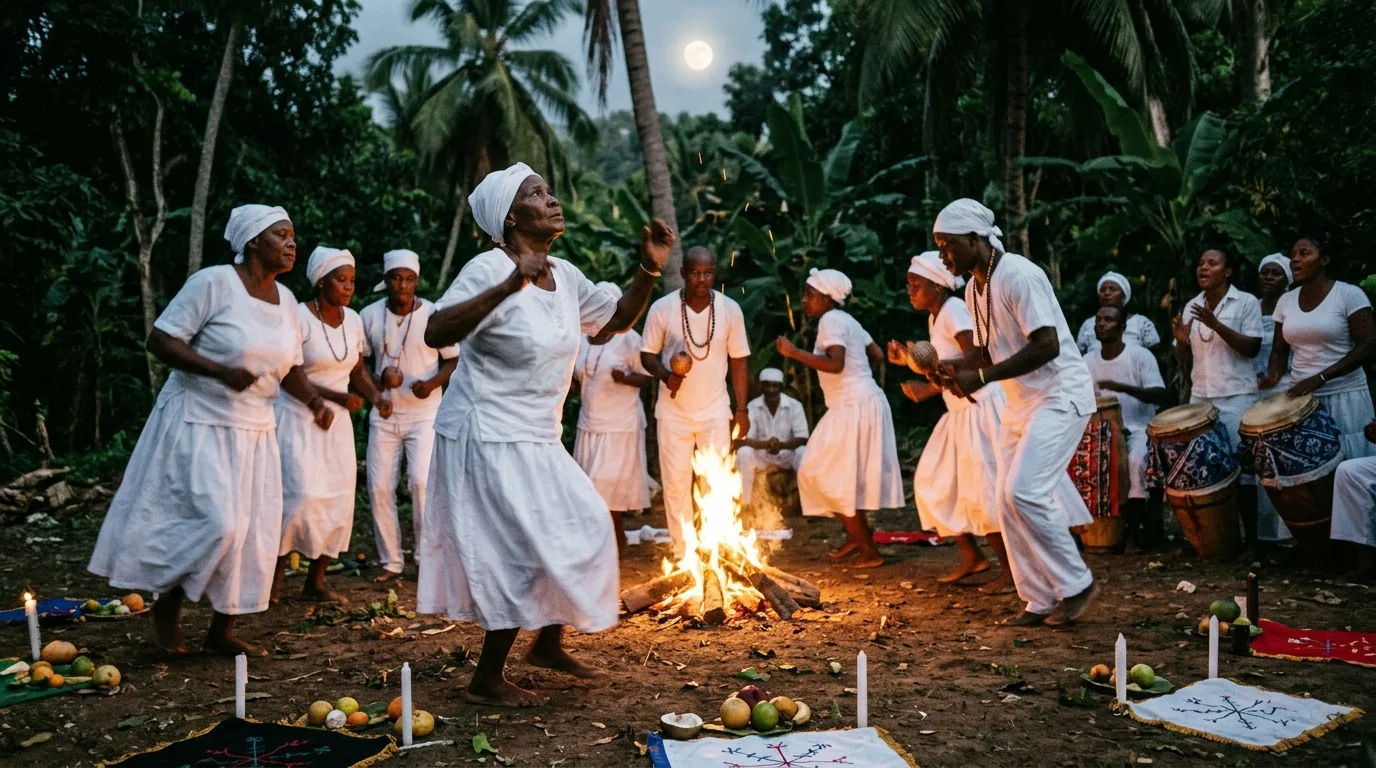
Drumming and dancing – rhythmic music to invoke the spirits
Spirit possession – participants may enter trances, believed to be “ridden” by the loa
Offerings – such as food, candles, rum, and animal sacrifices
In Haiti, believers gather outdoors to make contact with the loa and ask for advice or help with problems—more than half of requests are for health. The voodoo meaning is expressed through these communal rituals.
Priests and Priestesses
The priesthood in voodoo is open to both men and women:
Houngan – a male priest
Mambo – a female priestess
Bokor – a priest who practices certain types of magic
The role of a priest includes healing, performing rituals, telling fortunes, reading dreams, and invoking protections. This is an essential part of the voodoo meaning.
The Haitian Saying
A common saying in Haiti reflects the integration of voodoo with other religions: “Haitians are 70 percent Catholic, 30 percent Protestant, and 100 percent voodoo.” In Benin, there’s a similar saying: “Christian during the day and voodoo at night.”
Pop Culture Myths vs. Reality
The voodoo meaning in popular culture is often wildly inaccurate. Here’s the truth behind some common myths:
| Myth | Reality |
|---|---|
| Voodoo is a form of black magic or sorcery | Voodoo is a legitimate religion focused on healing, community, and ancestral connection |
| Voodoo dolls are used to curse people | No such practice of stabbing effigies with pins is attested in actual Voodoo or Hoodoo practice |
| Zombies are undead monsters | In Vodou, a “zombie” is a living but soulless individual whose free will has been taken—not the risen dead of movies |
| Voodoo is evil or devil worship | Voodoo has no concept of the devil; it’s a spiritual tradition with a supreme god and helpful spirits |
| All Voodoo practitioners use curses | Practitioners strive to live in peace and do good; bad intentions are believed not to go unpunished |
As one expert explains: “Voodoo is a way of life. Participation in voodoo ritual reaffirms one’s relationships with ancestors, personal history, community relationships—and the cosmos.”
Real Examples of Voodoo in Conversations
Example 1: Religious Context
Person A: “Is voodoo a real religion?”
Person B: “Yes, it’s practiced by millions worldwide. It has roots in West Africa and is recognized in Haiti and Benin.”
Meaning: Explaining the religious nature of voodoo.
Why it was used: To provide factual information about the voodoo meaning.
Example 2: Correcting a Myth
Person A: “I saw a movie with voodoo dolls and curses.”
Person B: “That’s actually not real voodoo. Voodoo is a spiritual tradition focused on healing and community.”
Meaning: Correcting a misconception.
Why it was used: To educate about the real voodoo meaning.
Example 3: Cultural Discussion
Person A: “Why do people in Haiti practice voodoo and Catholicism?”
Person B: “It’s syncretism—the blending of African traditions with Catholicism that happened during slavery.”
Meaning: Explaining the historical fusion.
Why it was used: To provide historical context for the voodoo meaning.
Example 4: Figurative Use
Person A: “How does this economic plan work?”
Person B: “I don’t know. It sounds like voodoo economics to me.”
Meaning: Skepticism about economic proposals.
Why it was used: Informally describing something seen as illusory.
Example 5: Learning About Heritage
Person A: “My family is from Haiti and I want to learn more about our traditions.”
Person B: “You should learn about Vodou—it’s a huge part of Haitian culture.”
Meaning: Exploring ancestral traditions.
Why it was used: To encourage cultural exploration of the voodoo meaning.
Example 6: Visiting New Orleans
Person A: “What should I do in New Orleans?”
Person B: “You should visit a voodoo shop. It’s part of the city’s history.”
Meaning: Exploring local culture.
Why it was used: To suggest cultural tourism.
Example 7: Academic Discussion
Person A: “Is voodoo related to Santería?”
Person B: “Yes, they both come from West African traditions and blended with Catholicism.”
Meaning: Comparing Afro-Caribbean religions.
Why it was used: To explain connections between traditions.
Example 8: Personal Spiritual Journey
Person A: “I’ve been learning about voodoo and it resonates with me.”
Person B: “It’s a beautiful tradition. Are you looking for a houngan or mambo?”
Meaning: Exploring spiritual practice.
Why it was used: To offer guidance on the voodoo meaning.
Example 9: Debunking Myths on Social Media
Person A: “The voodoo meaning in movies is so wrong.”
Person B: “I know! People think it’s about curses when it’s really about community.”
Meaning: Correcting popular misconceptions.
Why it was used: To share accurate information about the voodoo meaning.
Common Mistakes and Misunderstandings
Confusing Pop Culture with Reality
This is the most common mistake. The voodoo meaning in movies and entertainment is almost entirely inaccurate, creating fear and misunderstanding about a legitimate spiritual tradition.
Thinking It’s Only About Curses
While magic is part of some voodoo practices, the religion is primarily about healing, community, and connection with ancestors and spirits. This is the true voodoo meaning.
Misunderstanding “Zombie” in Vodou
In Vodou, a “zombie” is a living person whose free will has been taken by a sorcerer, not the undead creature of horror films. This is often confused with the voodoo meaning.
Using the Wrong Spelling
“Voodoo” properly refers to the Louisiana tradition; “Vodou” refers to the Haitian tradition; “Vodun” refers to the West African tradition. Understanding these distinctions helps clarify the voodoo meaning.
Believing Animal Sacrifices Are Cruel
Animal sacrifices in voodoo are ritual acts that transfer life energy to the spirits, similar to practices in many ancient religions. This is part of the voodoo meaning that outsiders often misunderstand.
Similar Spiritual Traditions
| Term | Meaning | Difference from Voodoo |
|---|---|---|
| Santería | Afro-Cuban religion blending Yoruba and Catholic traditions | Originated in Cuba, not Haiti or Louisiana |
| Candomblé | Afro-Brazilian religion | Originated in Brazil |
| Hoodoo | African-American folk magic | Focuses on magic and rootwork, not necessarily religious |
| Lucumi | Another name for Santería | Regional variation |
| Umbanda | Brazilian religion | Blends African, Catholic, and Spiritist elements |
Is Voodoo Positive, Negative, or Neutral?
The voodoo meaning itself is neutral, but its reputation varies:
Positive aspects:
Focus on community, healing, and ancestral connection
Recognized religion in Haiti and Benin
Rich cultural heritage
Negative aspects (misconceptions):
Stereotypes from Hollywood
Misunderstanding of the true voodoo meaning
Historical persecution of practitioners
Neutral aspects:
A legitimate spiritual tradition like any other
Has evolved through syncretism with Catholicism
Should You Use the Word “Voodoo”?
You might use it:
When referring to the Louisiana tradition (New Orleans Voodoo)
In historical or educational contexts
As a recognized English term in general usage
You should be careful:
Use “Vodou” for the Haitian tradition
Use “Vodun” for the West African tradition
Avoid using it in a way that perpetuates harmful stereotypes
Remember that some find the spelling “Voodoo” offensive for non-Louisiana traditions