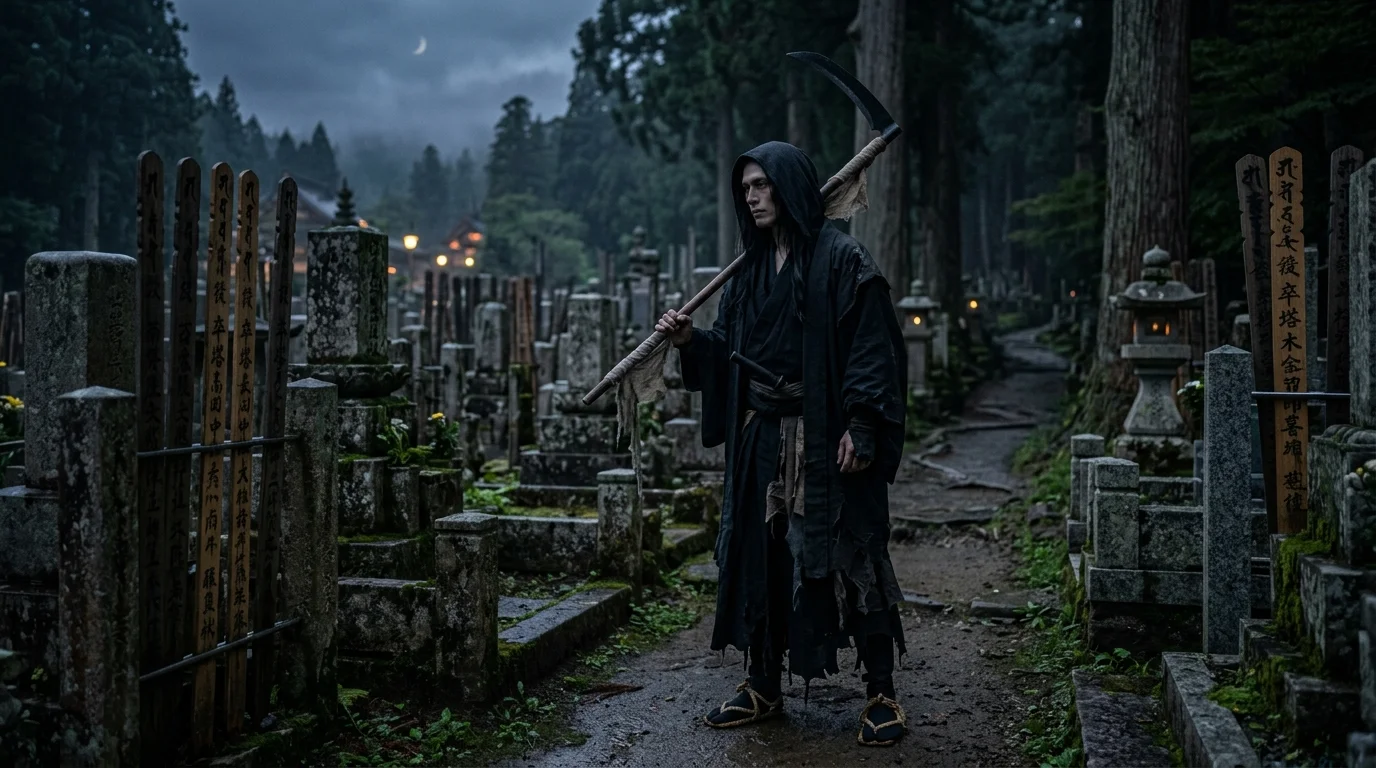
What Does “Shinigami” Mean?
Quick Definition
Shinigami means “death god,” “god of death,” or “death spirit.”
What It Usually Means
The word commonly refers to:
- A god of death
- A supernatural spirit
- A soul guide
- A mythical being connected with death
Literal Meaning
The Japanese word combines:
- Shi (死) = death
- Kami/Gami (神) = god or deity
Together, the word literally means “death god.”
Most Common Interpretation
Today, most people understand shinigami as supernatural beings responsible for death or guiding souls, especially in Japanese fiction.
What Tone Does It Convey?
The term often conveys:
- Mystery
- Supernatural power
- Spirituality
- Fate
- The afterlife
What Does Shinigami Mean in Different Contexts?
Japanese Folklore
In folklore, shinigami are supernatural beings associated with death. Unlike some Western concepts of death personified, there is no single, universally accepted description of shinigami across all Japanese traditions.
Anime and Manga
Anime has made the term internationally famous.
Examples include:
- Death Note — Shinigami possess Death Notes that can determine a person’s fate.
- Bleach — Shinigami protect humans and guide souls to the afterlife.
Although inspired by Japanese mythology, these fictional portrayals differ from traditional folklore.
Video Games
Many Japanese role-playing games feature shinigami as powerful enemies, guardians, or spiritual beings.
Literature
Modern novels often use shinigami as symbolic figures representing mortality and destiny.
Origin and History of Shinigami
The word shinigami comes directly from Japanese:
- Shi (死) meaning “death.”
- Kami (神) meaning “god” or “deity.”
While spirits associated with death appear in Japanese folklore, the specific term shinigami became more common in literature and theater during the Edo period (1603–1868). Its modern popularity has been driven largely by anime, manga, films, and video games.
Because Japanese beliefs about death vary among Shinto, Buddhist, and folk traditions, there is no single definitive description of a shinigami.
How People Actually Use Shinigami
Meaning 1: Death God
Example:
“The story follows a powerful shinigami.”
Meaning:
A supernatural deity connected to death.
Meaning 2: Anime Character
Example:
“My favorite shinigami is Ryuk.”
Meaning:
A fictional death god.
Meaning 3: Symbol of Death
Example:
“The artwork depicts a shinigami watching over lost souls.”
Meaning:
A symbolic representation of death.
When People Use It
You’ll often hear shinigami in:
- Anime discussions
- Manga reviews
- Japanese mythology
- Video games
- Online fan communities
Real Examples of Shinigami in Conversations
Example 1
Friend: What does shinigami mean?
Response: It means “death god” in Japanese.
Meaning: Vocabulary explanation.
Why it was used: Learning Japanese.
Example 2
Anime Fan: Ryuk is a shinigami.
Meaning: Fictional death god.
Why it was used: Anime discussion.
Example 3
Student: Is shinigami a real Japanese belief?
Teacher: The concept exists in folklore, but modern portrayals often differ from traditional beliefs.
Meaning: Cultural explanation.
Why it was used: Education.
Example 4
Gamer: That boss looks like a shinigami.
Meaning: Death-themed supernatural being.
Why it was used: Gaming.
Example 5
Artist: I drew a shinigami inspired by Japanese mythology.
Meaning: Mythological figure.
Why it was used: Creative discussion.
Example 6
Reader: Does every shinigami look the same?
Friend: No, different stories portray them differently.
Meaning: Fictional variation.
Why it was used: Literature.
Example 7
Movie Fan: The shinigami character was fascinating.
Meaning: Death spirit.
Why it was used: Entertainment.
Example 8
Tourist: I learned about shinigami while studying Japanese culture.
Meaning: Cultural knowledge.
Why it was used: Education.
Example 9
Writer: My novel features a shinigami guide.
Meaning: Supernatural character.
Why it was used: Storytelling.
Example 10
Child: Is a shinigami the same as the Grim Reaper?
Parent: They’re similar in some ways, but they come from different cultures and traditions.
Meaning: Cultural comparison.
Why it was used: Learning.
Common Mistakes and Misunderstandings
Mistake 1: Thinking Shinigami Only Exist in Anime
The concept comes from Japanese folklore and literature, although anime popularized it worldwide.
Mistake 2: Assuming Every Shinigami Looks the Same
Different stories depict shinigami in many different forms.
Mistake 3: Equating Shinigami Exactly With the Grim Reaper
While both are associated with death, they come from different cultural traditions and are not identical.
Mistake 4: Believing There Is One Official Version
Japanese mythology and fiction portray shinigami in a variety of ways.
How to Avoid Confusion
Remember:
- Shinigami literally means “death god.”
- The concept originates in Japan.
- Anime versions are fictional interpretations.
- Traditional folklore is more varied than modern entertainment.
Similar Mythological Terms and Related Concepts
| Term | Meaning | Difference |
|---|---|---|
| Shinigami | Death god or death spirit | Main concept |
| Grim Reaper | Personification of death in Western tradition | Different cultural origin |
| Yokai | Supernatural creature in Japanese folklore | Broader category |
| Kami | Deity or divine spirit in Shinto | Not limited to death |
| Oni | Demon or ogre in Japanese folklore | Different type of being |
| Ghost | Spirit of a deceased person | Human spirit |
| Soul | Spiritual essence of a person | Not a deity |
| Reaper | Figure associated with death | General English term |
| Deity | Divine being | Broader religious concept |
| Spirit | Supernatural entity | General category |
Is Shinigami Positive, Negative, or Neutral?
The shinigami meaning is generally neutral, though its emotional tone depends on the story.
Positive Associations
- Guidance
- Balance
- Spiritual symbolism
- Protection of souls (in some stories)
Neutral Associations
- Death
- Fate
- Mythology
- Supernatural beings
Negative Associations
Some fictional portrayals depict shinigami as frightening or dangerous.
Should You Use the Word Shinigami?
Use It If
- You’re discussing Japanese mythology.
- You’re talking about anime or manga.
- You’re writing about Japanese culture.
- You want to use the correct Japanese term.
Avoid It If
- Your audience may not understand the reference without explanation.
- You’re referring generally to death figures from non-Japanese traditions.