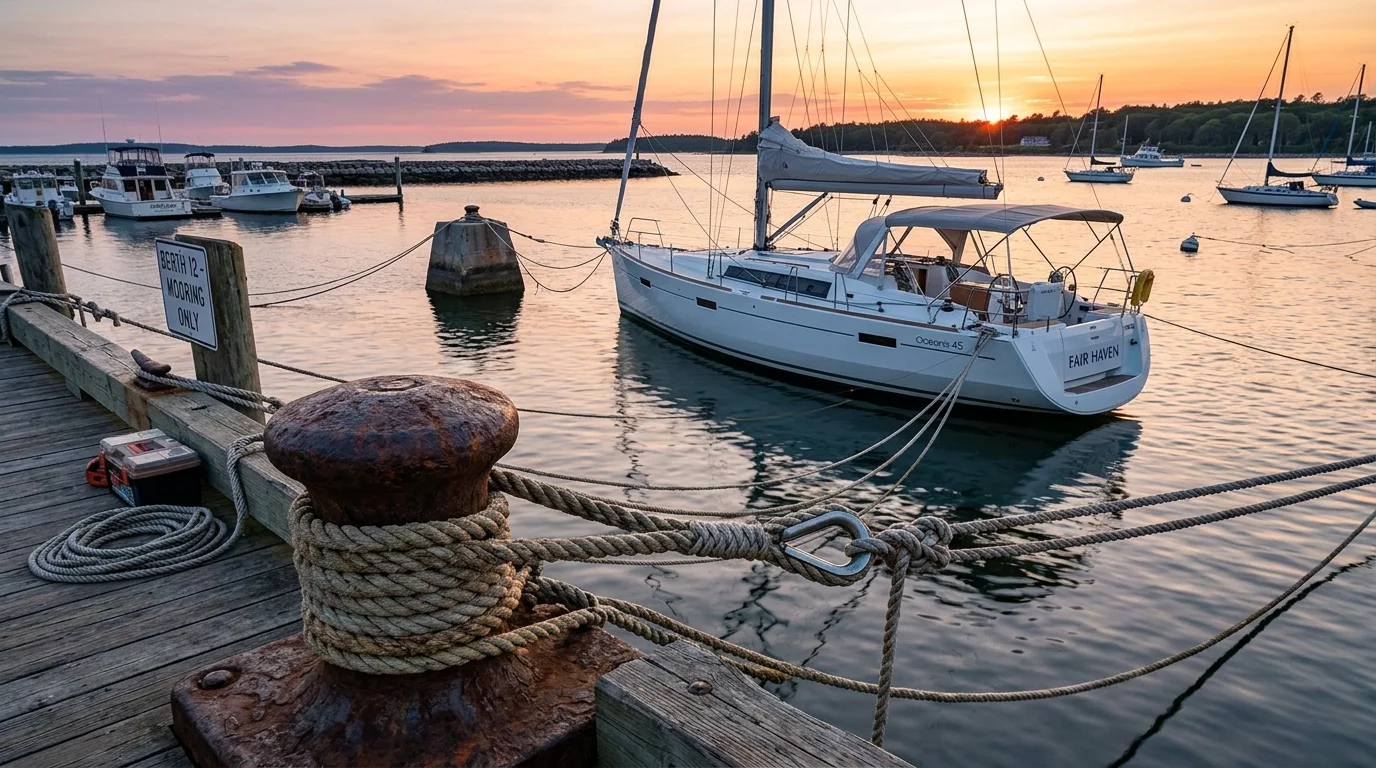
What Does “Mooring” Mean?
Quick Definition
Mooring is the act or system of securing a boat, ship, or floating object in one place.
What It Usually Means
The term commonly refers to:
- Tying a boat to a dock
- Securing a ship with ropes or chains
- Anchoring floating structures
- A designated place where a vessel is kept
Literal Meaning
As a noun, mooring means the equipment or place used to secure a vessel.
As a verb (“to moor”), it means to fasten or secure a vessel.
Most Common Interpretation
Most people understand mooring as keeping a boat or ship safely secured while it is not sailing.
What Tone Does It Convey?
The word often conveys:
- Safety
- Stability
- Security
- Maritime operations
- Navigation
What Does Mooring Mean in Different Contexts?
Boating
In recreational boating, mooring means securing a boat to a dock, buoy, or fixed anchor point.
Shipping
Large commercial ships use mooring systems when arriving at ports to prevent movement during loading and unloading.
Offshore Engineering
Oil platforms, floating wind turbines, and research vessels use advanced mooring systems to remain stable at sea.
Everyday English
The word can also be used figuratively to describe emotional or moral stability.
Example:
“Family traditions served as his emotional moorings during difficult times.”
Origin and History of Mooring
The word mooring comes from the Middle English verb moor, meaning “to fasten or secure a vessel.”
For centuries, sailors have used ropes, anchors, chains, and wooden posts to keep ships from drifting. As maritime technology advanced, modern mooring systems became more sophisticated, supporting everything from small fishing boats to massive cargo ships and offshore platforms.
Today, mooring remains an essential part of marine transportation and safety.
Types of Mooring
Dock Mooring
A boat is tied directly to a dock or pier using mooring lines.
Buoy Mooring
The vessel is secured to a floating buoy anchored to the seabed.
Anchor Mooring
A boat remains in place using one or more anchors attached to the seabed.
Permanent Mooring
A long-term mooring system installed for regular vessel use.
Offshore Mooring
Heavy-duty systems designed for ships, oil platforms, and floating structures operating in open water.
How People Actually Use Mooring
Meaning 1: Securing a Boat
Example:
“The captain completed the mooring before sunset.”
Meaning:
The boat was safely secured.
Meaning 2: A Mooring Location
Example:
“They rented a mooring at the marina.”
Meaning:
A designated place to keep a boat.
Meaning 3: Offshore Equipment
Example:
“The platform uses advanced mooring systems.”
Meaning:
Equipment that keeps a floating structure stable.
When People Use It
You’ll often hear mooring in:
- Sailing
- Fishing
- Shipping
- Marine engineering
- Harbor operations
Real Examples of Mooring in Conversations
Example 1
Captain: Secure the mooring lines.
Crew: They’re fastened.
Meaning: Boat secured.
Why it was used: Sailing.
Example 2
Boat Owner: We rented a mooring for the summer.
Meaning: Boat storage location.
Why it was used: Marina discussion.
Example 3
Engineer: The offshore platform requires stronger mooring systems.
Meaning: Stability equipment.
Why it was used: Engineering.
Example 4
Tourist: Why is that boat attached to a buoy?
Guide: It’s on a mooring.
Meaning: Secured vessel.
Why it was used: Harbor tour.
Example 5
Fisherman: Check the mooring rope before leaving.
Meaning: Safety equipment.
Why it was used: Fishing.
Example 6
Student: What does mooring mean?
Teacher: It means securing a vessel so it stays in place.
Meaning: Vocabulary lesson.
Why it was used: Education.
Example 7
Harbor Master: Your mooring assignment is Dock B.
Meaning: Assigned berth.
Why it was used: Marina operations.
Example 8
Sailor: Strong winds tested the mooring overnight.
Meaning: Boat restraint.
Why it was used: Weather discussion.
Example 9
Worker: The cargo ship completed mooring at noon.
Meaning: Ship secured.
Why it was used: Port operations.
Example 10
Author: Her friendships became emotional moorings during hard times.
Meaning: Figurative stability.
Why it was used: Literary expression.
Common Mistakes and Misunderstandings
Mistake 1: Confusing Mooring with Anchoring
Anchoring uses an anchor dropped to the seabed, while mooring often involves fixed lines, buoys, docks, or permanent systems.
Mistake 2: Thinking Mooring Only Applies to Boats
Mooring systems are also used for ships, floating platforms, barges, and offshore wind turbines.
Mistake 3: Assuming Every Harbor Uses the Same Mooring System
Different locations use different methods depending on water depth, tides, weather, and vessel size.
Mistake 4: Using “Mooring” Instead of “Docking”
Docking refers to bringing a vessel alongside a dock, while mooring focuses on securing it in place.
How to Avoid Confusion
Remember:
- Mooring means securing a floating vessel or structure.
- It may involve ropes, chains, buoys, or fixed anchors.
- It is broader than anchoring.
- It plays a key role in marine safety.
Similar Maritime Terms and Related Concepts
| Term | Meaning | Difference |
|---|---|---|
| Mooring | Securing a vessel in place | Main concept |
| Anchor | Device dropped to the seabed | One method of holding position |
| Docking | Bringing a vessel to a dock | Arrival process |
| Berth | Assigned docking location | Parking space for vessels |
| Pier | Structure extending into water | Used for docking |
| Marina | Harbor for recreational boats | Location |
| Buoy | Floating marker or attachment point | May be part of a mooring |
| Hawser | Heavy mooring rope | Equipment |
| Harbor | Sheltered body of water | General location |
| Jetty | Structure protecting a shoreline or harbor | Different marine structure |
Is Mooring Positive, Negative, or Neutral?
The mooring meaning is generally neutral.
Positive Associations
- Safety
- Stability
- Security
- Reliable navigation
Neutral Associations
- Maritime operations
- Engineering
- Transportation
The term itself has no negative meaning.
Should You Use the Word Mooring?
Use It If
- You’re discussing boats or ships.
- You’re writing about marine engineering.
- You’re referring to offshore structures.
- You’re describing how a vessel is secured.
Avoid It If
- You actually mean anchoring or docking and want to be more specific.