
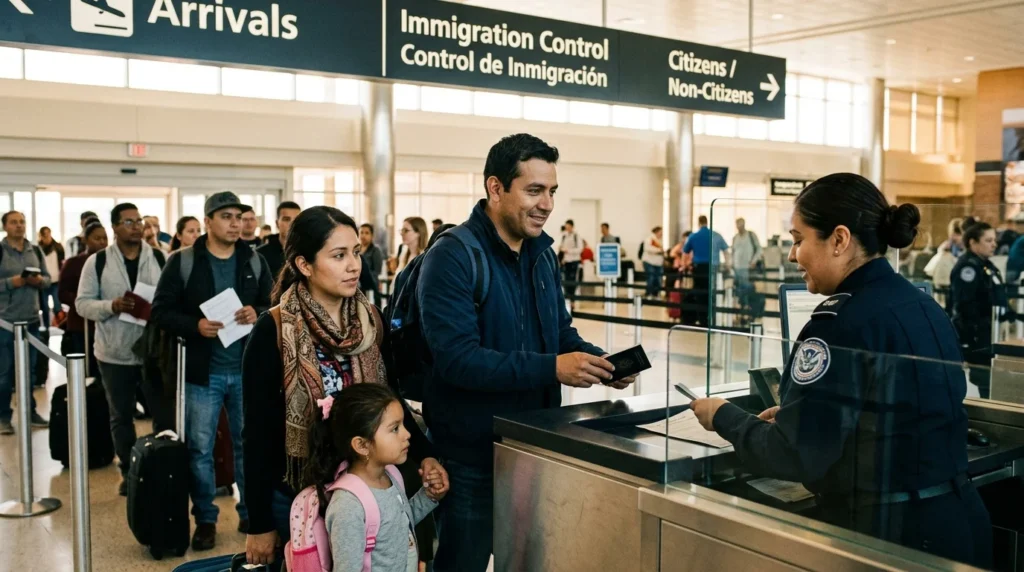
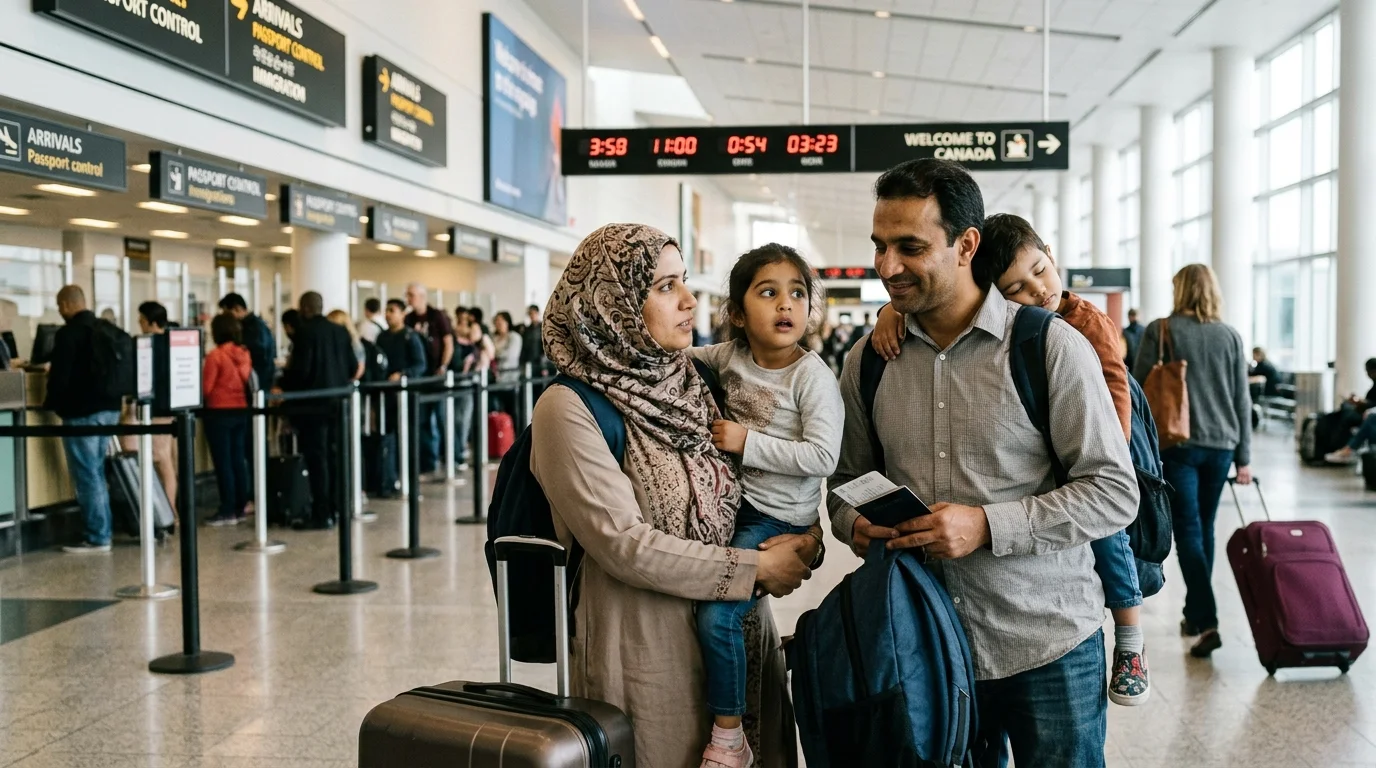
What Does “Immigration” Mean?
The primary immigration meaning is:
The act of entering another country to live there permanently or for an extended period.
Quick Definition
Immigration = The process of moving into a foreign country to live, work, study, or settle.
What It Usually Means
When someone says:
“She immigrated to Canada.”
They mean:
“She moved from another country to live in Canada.”
What Tone Does It Convey?
The word immigration is generally:
- Neutral
- Legal
- Social
- Economic
- Demographic
Its emotional tone depends on the context in which it is discussed.
Immigration Meaning in Different Contexts
Legal Context
In law, immigration refers to the rules and processes governing who may enter, stay, work, or become a permanent resident or citizen of a country.
Employment
Many people immigrate for better job opportunities or specialized careers.
Example:
“He immigrated for a technology job.”
Education
Students may move abroad to attend universities and, in some cases, later become permanent residents if the country’s laws allow.
Family Reunification
Many countries permit eligible family members to immigrate to join close relatives already living there.
Humanitarian Immigration
Some individuals move because of war, persecution, or other humanitarian reasons, subject to the immigration and refugee laws of the destination country.
Origin and History of Immigration
The word immigration comes from the Latin word immigrare, meaning “to move into.”
The English word entered common use in the 17th century and has since become a key legal, political, and social term describing people moving into new countries.
Throughout history, immigration has influenced population growth, economic development, and cultural exchange across the world.
Types of Immigration
1. Permanent Immigration
People move intending to live in another country indefinitely.
2. Temporary Immigration
Individuals enter another country for a limited period, such as for work or study, under the applicable visa or permit.
3. Family-Based Immigration
People immigrate to join eligible family members.
4. Employment-Based Immigration
Workers move because of job opportunities or employer sponsorship.
5. Humanitarian Immigration
People may seek protection under refugee, asylum, or other humanitarian programs, depending on a country’s laws.
Real Examples of Immigration in Conversations
Example 1
Person A: Why did your family move?
Person B: We immigrated for better job opportunities.
Meaning: Moved to another country to live and work.
Example 2
Person A: What does immigration mean?
Person B: It means moving into another country to live there.
Meaning: Basic definition.
Example 3
Person A: Is your sister studying abroad?
Person B: Yes, and she hopes to immigrate permanently later if she’s eligible.
Meaning: Possible long-term relocation.
Example 4
Person A: What’s the difference between immigration and tourism?
Person B: Immigration involves living in another country, while tourism is for short visits.
Meaning: Different purposes of travel.
Example 5
Person A: Why do governments have immigration laws?
Person B: To regulate who may enter, stay, work, and settle in the country.
Meaning: Legal regulation.
Common Mistakes and Misunderstandings
Mistake 1
Confusing immigration with emigration.
- Immigration = Moving into a country.
- Emigration = Leaving your own country to live elsewhere.
Mistake 2
Thinking immigration always means permanent residence.
Some immigration pathways allow temporary residence, depending on the country’s laws.
Mistake 3
Using migration and immigration interchangeably.
Migration is a broader term that includes movement within a country as well as between countries.
Mistake 4
Assuming immigration processes are the same everywhere.
Every country has its own immigration laws, requirements, and procedures.
Similar Terms
| Term | Meaning | Difference |
|---|---|---|
| Immigration | Moving into another country | Focuses on entering a country |
| Emigration | Leaving one’s own country | Focuses on departing |
| Migration | Movement from one place to another | Broader concept |
| Immigrant | Person who moves into another country | Refers to the individual |
| Migrant | Person who moves locations | May move within or between countries |
| Refugee | Person granted protection under international or national law | Specific legal status |
| Asylum Seeker | Person requesting protection | Awaiting a legal decision |
| Visa | Official travel or entry authorization | Not the same as immigration |
| Citizenship | Legal membership in a country | Different legal status |
| Permanent Resident | Person authorized to live long-term | May not be a citizen |
Internal linking opportunities: immigrant meaning, migration meaning, emigration meaning, visa meaning, citizenship meaning.
Is Immigration Positive, Negative, or Neutral?
Immigration is a neutral term.
Whether it’s viewed positively or negatively often depends on:
- The context
- Personal opinions
- Public policy discussions
- Economic and social perspectives
The word itself simply describes the movement of people into another country.
Should You Use the Word “Immigration”?
Yes. Immigration is the correct term when discussing people entering another country to live, work, study, or settle.
Use it if:
- You’re discussing international movement.
- You’re referring to immigration laws or policies.
- You’re describing someone moving into a new country.
Avoid it if:
- You mean someone leaving a country (use emigration instead).
- You’re referring to movement within the same country (use migration or relocation, depending on the context