What Does “Clip Farming” Mean?
Quick Definition
Clip farming is the act of deliberately doing or saying something shocking or dramatic in a video on social media with the aim of producing short videos that are then widely shared online. It also refers to the systematic process of extracting multiple short-form clips from existing long-form content and distributing them across platforms.
What It Usually Means In Conversations
When people use the term clip farming in everyday conversation, they’re usually referring to one of two things:
The streaming definition: A streamer intentionally does something outrageous, funny, or shocking on stream—just to get clipped and shared. It’s like clickbait, but live. Think someone pouring water on themselves indoors, raging over something small, or sharing something highly personal on stream. This is often considered inauthentic and is used derogatorily in streaming communities.
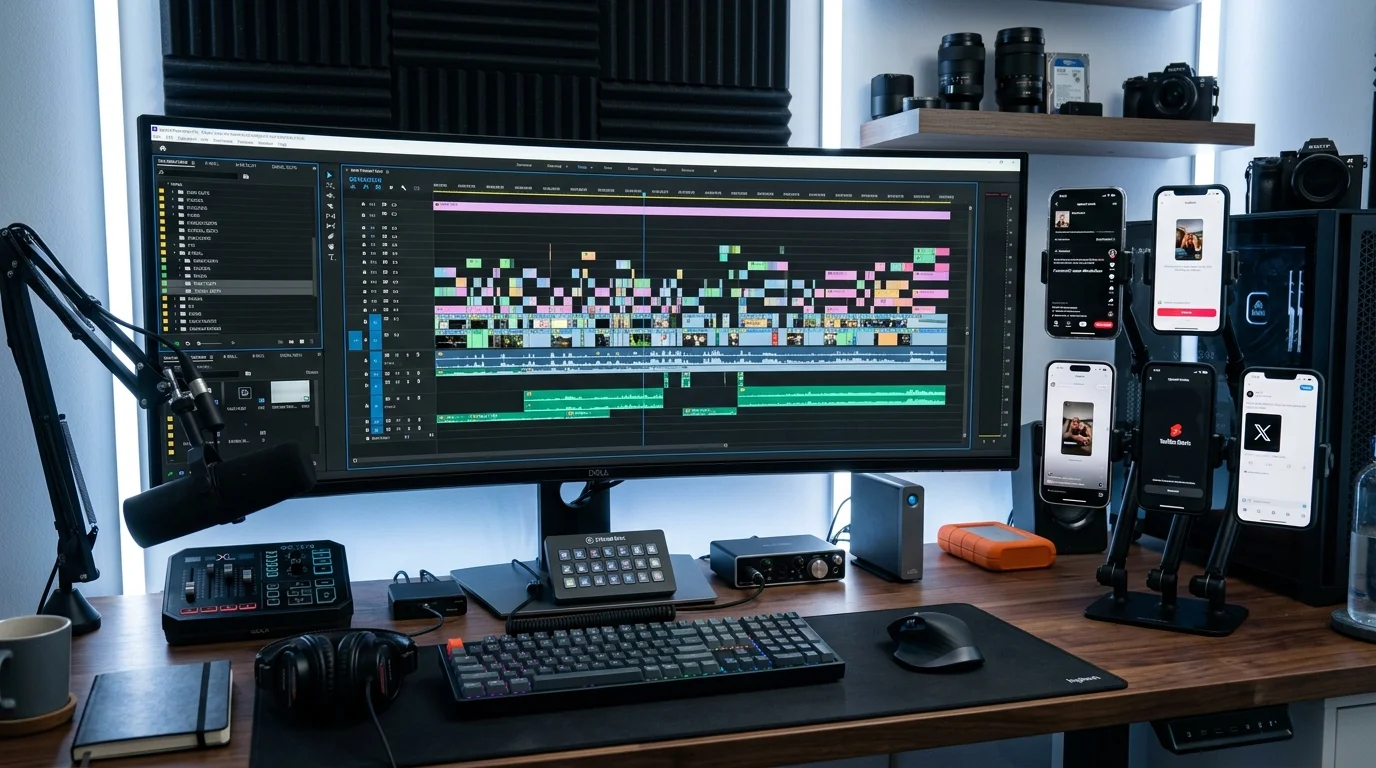
The marketing definition: The practice of cutting one long video, podcast, or stream into many short clips and posting them across YouTube Shorts, TikTok, Reels, and X to multiply reach and drive viewers back to your main channel. This is seen as a smart content distribution strategy.
Understanding the clip farming meaning requires knowing which definition is being used in a given context.
What Tone Does It Convey?
The tone of clip farming depends entirely on the context:
| Context | Tone | Example |
|---|---|---|
| Streaming community | Derogatory, critical | “That streamer is just clip farming for views” |
| Marketing/Content strategy | Neutral, professional | “We use clip farming to maximize our content reach” |
| Social media commentary | Playful, humorous | “Bro is clip farming hard with that reaction” |
| Educational | Informative, neutral | “Clip farming is a debated tactic in the streaming world” |
What Does Clip Farming Mean on Different Platforms?
Twitch
On Twitch, clip farming is often seen as a controversial tactic. Streamers do something intentionally outrageous to get clipped and shared. Some consider it a growth hack, while others view it as inauthentic and exploitative. The clip farming meaning on Twitch is almost always negative.
Example: A streamer faking rage over a minor game glitch to get clipped and shared.
TikTok
On TikTok, clip farming is both a strategy and a criticism. Creators intentionally stage moments to go viral, and viewers often call out obvious clip farming in the comments. The clip farming meaning on TikTok can be either positive (when done cleverly) or negative (when it feels fake).
Example: TikToker asking dad how many wings he ate with a dramatic shrug, calling it clip farming in the caption.
YouTube Shorts
On YouTube Shorts, clip farming is used to extract highlights from longer YouTube videos and repurpose them for the Shorts algorithm. This is a positive application of the clip farming meaning in the marketing sense.
Example: Taking the best 20-second moment from a 30-minute podcast and posting it as a Short.
Instagram Reels
On Instagram Reels, clip farming involves repurposing content for the Reels format to maximize reach and engagement. Brands commonly use this clip farming strategy.
Example: Brands cutting behind-the-scenes footage into multiple Reels.
Discord
In Discord servers, clip farming is discussed in gaming and content creation communities, often critically when streamers fake reactions. The clip farming meaning in gaming communities is usually negative.
Example: “Did you see that clip? He was definitely clip farming.”
On Reddit, clip farming is debated in subreddits like r/Twitch and r/NewTubers. Users discuss whether it’s an effective growth strategy or a short-term gimmick. Reddit offers nuanced takes on the clip farming meaning.
Example: “Is clip farming worth it for small streamers?”
Dating Apps
On dating apps, clip farming is rarely used, but you might see it in bios from content creators or streamers who are self-aware about their content strategy.
Example: “Professional clip farmer. Don’t hate the player, hate the game.”
Origin and History of Clip Farming
The clip farming meaning has evolved significantly over time, and understanding this history helps contextualize the term.
Early 2010s: Clipping started as a way for viewers to capture and share memorable moments from livestreams on platforms like Twitch. This was organic and viewer-driven, not creator-driven.
Mid-2010s: Streamers began noticing that certain types of moments were more likely to get clipped and shared, leading to intentional “farming” of those moments. This marked the beginning of the modern clip farming meaning.
Late 2010s: Clip farming became a recognized term and a debated tactic in the streaming world. It was often used derogatorily to describe streamers who faked reactions for views. The negative clip farming meaning became prominent.
2020s: The term expanded to include the systematic repurposing of content across short-form platforms. Brands and creators began using clip farming as a legitimate distribution strategy. The clip farming meaning now had both negative and positive connotations.
2026: Cambridge Dictionary officially highlighted clip farming as a notable new term, defining it as “the act of deliberately doing or saying something shocking or dramatic in a video on social media with the aim of producing short videos that are then widely shared online.” This recognition cemented the clip farming meaning in the cultural lexicon.
Today, the clip farming meaning covers everything from staged streaming drama to sophisticated content repurposing strategies used by major brands like Coinbase and Lionsgate.
How People Actually Use Clip Farming
When to Use It
Use the streaming definition when:
Describing streamers who fake reactions for attention
Discussing controversial growth tactics on Twitch
Calling out inauthentic content in gaming communities
Critiquing content that feels manufactured for virality
Use the marketing definition when:
Repurposing long-form content into short clips
Maximizing reach across multiple social platforms
Discussing content distribution strategies
Planning efficient content production workflows
When Not to Use It
You might want to avoid using clip farming when:
The person you’re talking to doesn’t know the term and might misunderstand
You’re in a context where it might be seen as accusing someone of being inauthentic
You want to emphasize authenticity (clip farming can be seen as the opposite of authentic content)
You’re discussing serious content that shouldn’t be trivialized
How Clip Farming Works
For Creators and Brands
At its core, clip farming follows a simple workflow that has become standard practice in content creation:
Create long-form content: A livestream, podcast, video, or event that serves as the source material
Extract clips: Cut the strongest 20-60 second moments from the content
Edit each clip: Add captions, optimize for vertical formats, and tailor to each platform
Distribute: Post across YouTube Shorts, TikTok, Instagram Reels, and X
The beauty of clip farming lies in its efficiency: you’re not creating more content from scratch; you’re being smarter about how you distribute what you’ve already made. This is the positive clip farming meaning that marketers embrace.
AI and Automation
Modern clip farming often involves automated tools that make the process scalable:
AI-driven systems can detect high-potential moments in long-form content
Automated transcription adds captions to clips
Tools apply effects like zooms, sound effects, and transitions
Scheduling exports to multiple platforms happens automatically
Tools like StreamLadder and Restream Clips allow creators to import clips, apply edits, and schedule exports to multiple platforms, making clip farming more accessible than ever.
Clip Farming Examples
Example 1: Staged Reaction
Context: A streamer dramatically throws their controller and yells after a minor game death.
Meaning: The streamer is clip farming by exaggerating their reaction to get clipped and shared.
Why it was used: To generate viral short-form content and grow their channel.
Example 2: Public Prank
Context: A streamer runs through a grocery store knocking items off shelves.
Meaning: The streamer is clip farming by doing something outrageous in public.
Why it was used: To create shocking content that will be clipped and shared widely.
Example 3: Podcast Repurposing
Context: A podcast host takes the funniest 30-second exchange from a 1-hour episode and posts it on TikTok.
Meaning: The podcast is clip farming by repurposing content for short-form platforms.
Why it was used: To reach new audiences on different platforms and drive listeners to the full episode.
Example 4: Brand Campaign
Context: A company pays creators to cut an executive interview into multiple vertical clips for TikTok.
Meaning: The brand is clip farming as a marketing strategy to maximize reach.
Why it was used: To leverage a single piece of content across multiple platforms.
Example 5: YouTube Shorts Strategy
Context: A YouTuber extracts the 5 best moments from a 20-minute video and posts them as YouTube Shorts.
Meaning: The creator is clip farming to multiply reach and drive views back to the main channel.
Why it was used: To leverage short-form content for channel growth.
Example 6: Gaming Highlight
Context: A gamer takes an epic play from their 3-hour stream and posts it as a TikTok.
Meaning: The creator is clip farming by turning a stream highlight into short-form content.
Why it was used: To showcase skill and attract new viewers to their streams.
Example 7: Staged Drama
Context: Two streamers fake a public argument to generate viral clips.
Meaning: The streamers are clip farming by manufacturing conflict for views.
Why it was used: To create buzz and engagement through manufactured drama.
Example 8: Corporate Clipping
Context: Lionsgate hires creators to cut a movie trailer into multiple TikTok clips.
Meaning: The studio is clip farming as part of a promotional strategy.
Why it was used: To promote content on platforms where younger audiences spend time.
Example 9: Self-Aware Clip Farming
Context: A TikToker includes “clip farming” in their caption when doing something dramatic.
Meaning: The creator is acknowledging they’re intentionally creating clip-worthy content.
Why it was used: To be self-aware and engage the audience with humor.
Example 10: Automated Clip Farming
Context: A streamer uses AI tools to detect burst moments, transcribe clips, and post them automatically.
Meaning: The creator is using automation to scale their clip farming.
Why it was used: To save time and maximize content output.
Example 11: Influencer Collaboration
Context: Two influencers stage a “feud” on Twitter that spills into TikTok clips.
Meaning: The influencers are clip farming by manufacturing conflict for views.
Why it was used: To generate engagement and grow both channels.
Example 12: Political Clip Farming
Context: A political campaign cuts a speech into multiple 30-second clips for social media.
Meaning: The campaign is clip farming to maximize reach of their message.
Why it was used: To distribute political messaging efficiently.
Pros and Cons of Clip Farming
Pros of Clip Farming
| Pro | Description |
|---|---|
| Rapid visibility | Can generate significant exposure quickly |
| Multi-platform reach | Expands reach beyond a single platform |
| Content efficiency | Maximizes ROI from existing content |
| Discovery potential | Bypasses platform algorithms that hide new creators |
| Compound growth | Growth accelerates as more clips reach new audiences |
| Time savings | Creates multiple pieces of content from one source |
Cons of Clip Farming
| Con | Description |
|---|---|
| Inauthentic perception | Viewers may sense moments were forced |
| Low retention | Viral viewers may not convert into loyal followers |
| Creative burnout | Constant chase for virality can be exhausting |
| Brand dilution | Shock-driven content can weaken brand perception |
| Unrealistic expectations | Sets expectations that live content can’t always meet |
| Backlash risk | Audiences may turn against creators who feel fake |
Common Mistakes and Misunderstandings
Confusing the Two Meanings
This is by far the most common mistake. The clip farming meaning can refer to either staged streaming moments or systematic content repurposing. Paying attention to context is essential for understanding which definition someone is using.
Thinking It’s All Inauthentic
Not all clip farming is staged. The marketing definition involves repurposing genuine moments from existing content. It only becomes a problem when creators fake reactions or bait engagement for views.
Assuming It’s Illegal
Clip farming is completely legitimate when you repurpose real moments from your own content. It only violates rules when creators steal content from others or violate platform reused-content policies.
Believing It Guarantees Success
While clip farming can generate views, visibility alone doesn’t guarantee growth. Viral spikes fade if they aren’t supported by a strong live experience and consistent engagement.
Thinking It’s Just About Streaming
The clip farming meaning has expanded beyond streaming. Brands, media companies, and even political campaigns now use clip farming as a marketing strategy.
Confusing It with Clipping
Clipping is the act of taking a short section of a video. Clip farming is the systematic process of creating multiple clips from content to maximize reach across platforms.
Similar Slang Terms and Related Words
| Term | Meaning | Difference from Clip Farming |
|---|---|---|
| Clickbait | Content designed to attract clicks | Older concept; clip farming is the video version |
| Aura farming | Doing things to boost your “coolness” | Social status focus vs. viral content focus |
| Clipping | Cutting short videos from longer content | The core action; farming is scaling it |
| Content repurposing | Using content across platforms | Broader term; clip farming is one method |
| Growth hacking | Rapid growth through creative tactics | Clip farming is one type of growth hack |
| Rage bait | Content designed to provoke anger | A specific type of clip farming |
| Farming | Doing something repeatedly for gain | Video game origin; applies to clip farming |
| Engagement bait | Content designed to encourage interaction | Broader category that includes clip farming |
| Reaction farming | Faking reactions for attention | Specific type of clip farming |
Is Clip Farming Positive, Negative, or Neutral?
The clip farming meaning itself is neutral, but its emotional weight depends entirely on context:
Positive Clip Farming:
Repurposing authentic content efficiently
Helping new creators get discovered
Maximizing ROI from content creation
Smart content distribution strategy
Negative Clip Farming:
Faking reactions for views
Stealing other creators’ content
Manufacturing drama for attention
Creating inauthentic content that misleads viewers
Neutral Clip Farming:
Content distribution strategy
Marketing tactic
Streamer growth method
The key to understanding the clip farming meaning is recognizing that how you do it matters more than that you do it.
Should You Use Clip Farming?
You might use the strategy if:
You’re a content creator looking to maximize reach
You want to repurpose existing content efficiently
You’re a brand looking to reach younger audiences
You’re a streamer trying to grow on multiple platforms
You have long-form content that can be repurposed
You should avoid it if:
You want to maintain an authentic brand
You’re not willing to put in the work to edit properly
You’d be faking reactions or creating inauthentic content
You want to build deep, loyal relationships with your audience