
What Does “Biometric” Mean?
The primary biometric meaning is:
Using unique physical or behavioral characteristics to identify or verify a person’s identity.
Quick Definition
Biometric = A measurable biological or behavioral characteristic used for identification or authentication.
What It Usually Means
When someone says:
“The airport uses biometric screening.”
They mean:
“The airport verifies travelers using features such as fingerprints or facial recognition.”
What Tone Does It Convey?
The word biometric is generally:
- Technical
- Secure
- Scientific
- Professional
- Neutral
Biometric Meaning in Different Contexts
Smartphones
Many smartphones use biometric authentication through:
- Fingerprint recognition
- Facial recognition
Example:
“I unlocked my phone using Face ID.”
Immigration and Border Control
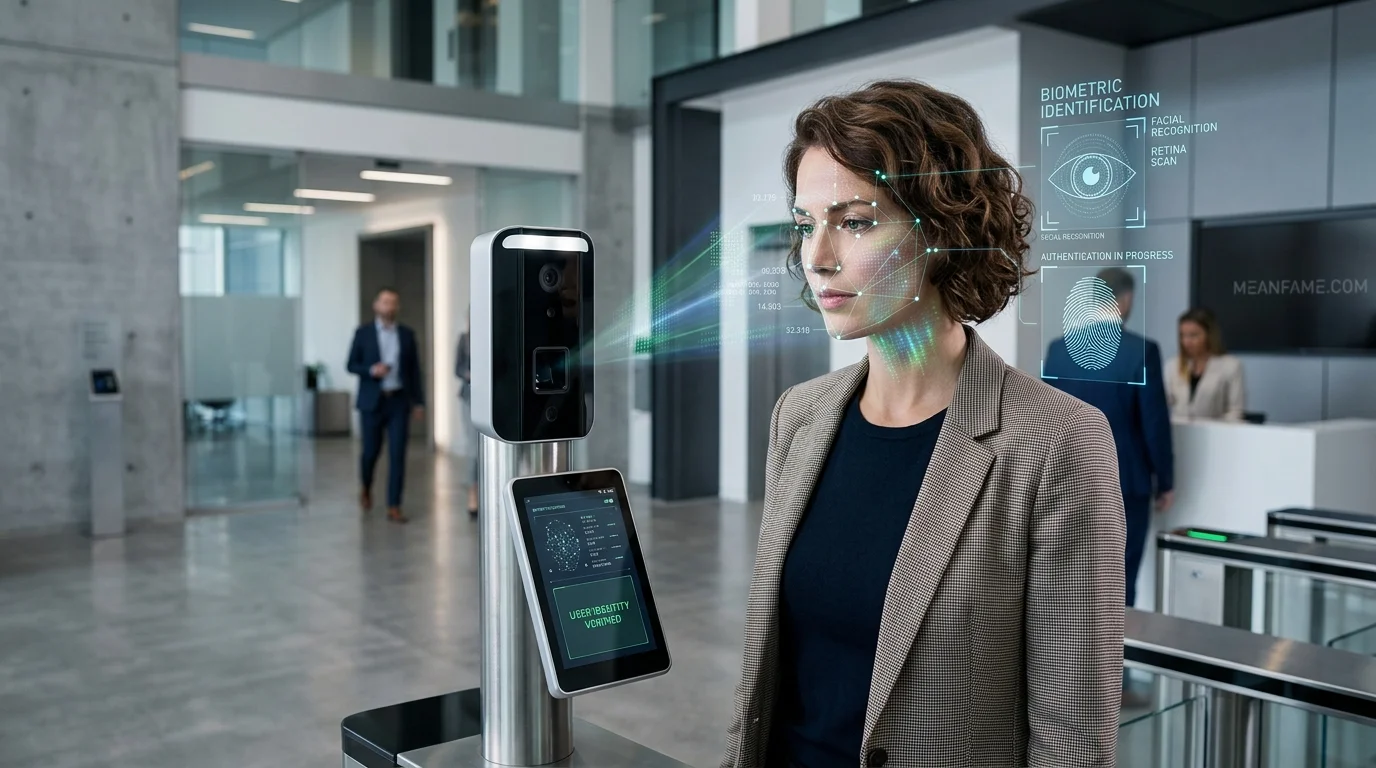
Governments collect biometric information to verify travelers’ identities.
Common examples include:
- Fingerprints
- Facial photographs
- Iris scans
Banking
Banks use biometrics to:
- Log into mobile apps
- Approve transactions
- Prevent fraud
Workplace Security
Many organizations use biometric systems for:
- Employee attendance
- Building access
- Secure workstations
Healthcare
Hospitals may use biometric identification to help confirm patient identities and improve record accuracy.
Origin and History of Biometric
The word biometric comes from the Greek words:
- Bio = Life
- Metric = Measure
Originally, biometrics referred to the statistical measurement of biological characteristics. Today, the term is most commonly associated with technologies that identify people using their unique physical or behavioral traits.
Advances in computing and artificial intelligence have made biometric authentication faster, more accurate, and more widely available.
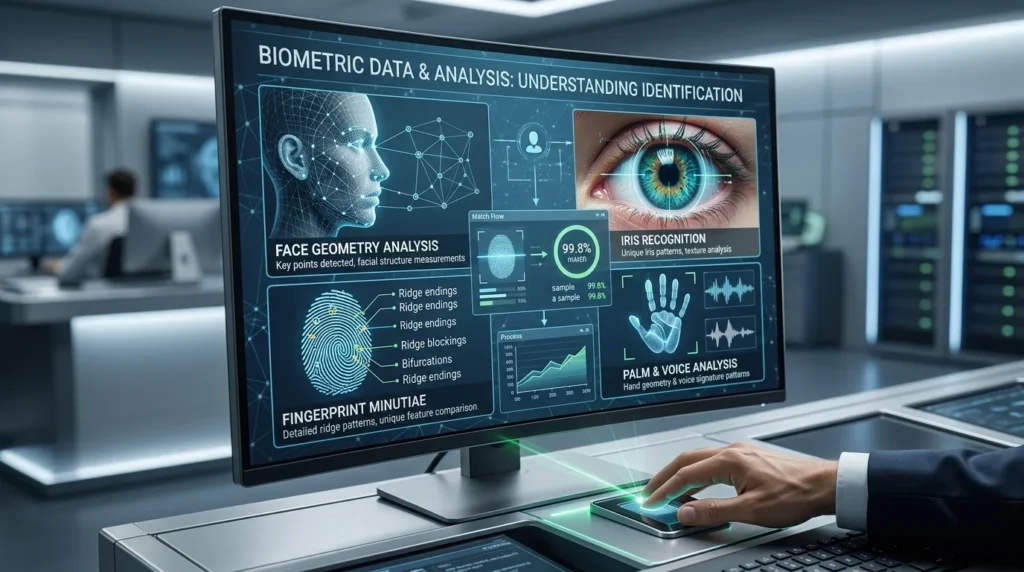
Common Types of Biometrics
1. Fingerprint Recognition
Matches the unique patterns on a person’s fingertips.
2. Facial Recognition
Analyzes facial features to verify identity.
3. Iris Recognition
Scans the colored part of the eye.
4. Retina Recognition
Examines blood vessel patterns inside the eye.
5. Voice Recognition
Identifies individuals using unique vocal characteristics.
6. Hand Geometry
Measures the size and shape of a person’s hand.
7. Behavioral Biometrics
Uses patterns such as:
- Typing rhythm
- Mouse movements
- Walking style (gait)
How People Actually Use Biometrics
Smartphone Login
Example:
“I use my fingerprint instead of a password.”
Meaning:
Biometric authentication.
Airport Security
Example:
“Passengers completed biometric verification.”
Meaning:
Identity confirmed using physical characteristics.
Banking
Example:
“The app requested facial recognition.”
Meaning:
Identity verification before granting access.
Office Access
Example:
“Employees scan their fingerprints.”
Meaning:
Secure entry system.
Real Examples of Biometric in Conversations
Example 1
Person A: What does biometric mean?
Person B: It means identifying someone using unique physical or behavioral traits.
Meaning: Basic definition.
Example 2
Person A: Why does my phone scan my face?
Person B: It’s using biometric authentication.
Meaning: Identity verification.
Example 3
Person A: Why did immigration take my fingerprints?
Person B: They collected biometric information for identity verification.
Meaning: Border security.
Example 4
Person A: How do I log into my banking app?
Person B: Use your fingerprint or face scan.
Meaning: Biometric login.
Example 5
Person A: Why doesn’t my office need key cards anymore?
Person B: They switched to biometric access.
Meaning: Fingerprint or facial recognition.
Common Mistakes and Misunderstandings
Mistake 1
Thinking biometrics only means fingerprints.
Biometrics includes facial recognition, iris scans, voice recognition, and many other identification methods.
Mistake 2
Assuming biometrics are always perfect.
While highly accurate, biometric systems can occasionally produce false matches or fail to recognize authorized users.
Mistake 3
Confusing biometrics with passwords.
Passwords are knowledge-based authentication, while biometrics rely on unique personal characteristics.
Mistake 4
Believing all biometric data is stored the same way.
Different organizations use different security methods and legal requirements for storing biometric information.
Similar Terms
| Term | Meaning | Difference |
|---|---|---|
| Biometric | Identification using unique traits | Broad category |
| Authentication | Verifying identity | General security process |
| Verification | Confirming a claimed identity | Part of authentication |
| Fingerprint Scan | Uses fingerprint patterns | One biometric method |
| Facial Recognition | Uses facial features | One biometric method |
| Iris Scan | Uses iris patterns | Eye-based biometric |
| Retina Scan | Uses retinal blood vessels | Different eye scan |
| PIN | Numeric security code | Not biometric |
| Password | Secret phrase or code | Knowledge-based authentication |
| Multi-Factor Authentication (MFA) | Uses multiple verification methods | May include biometrics |
Internal linking opportunities: authentication meaning, facial recognition meaning, fingerprint meaning, MFA meaning, password meaning.
Is Biometric Positive, Negative, or Neutral?
Biometric is generally a neutral term.
Many people view biometric technology positively because it:
- Improves security
- Speeds up authentication
- Reduces password reliance
Others raise concerns about:
- Privacy
- Data protection
- Information security
The overall perception depends on how biometric data is collected, stored, and used.
Should You Use Biometrics?
Biometric authentication can be a convenient and secure option when implemented responsibly.
Use it if:
- You want faster device access.
- You need stronger identity verification.
- Your organization requires secure authentication.
Be aware that:
- You should follow best practices for protecting your biometric data.
- It’s important to understand an organization’s privacy policies before providing biometric information.