

What Does “APRN Meaning Medical” Mean?
Quick Definition
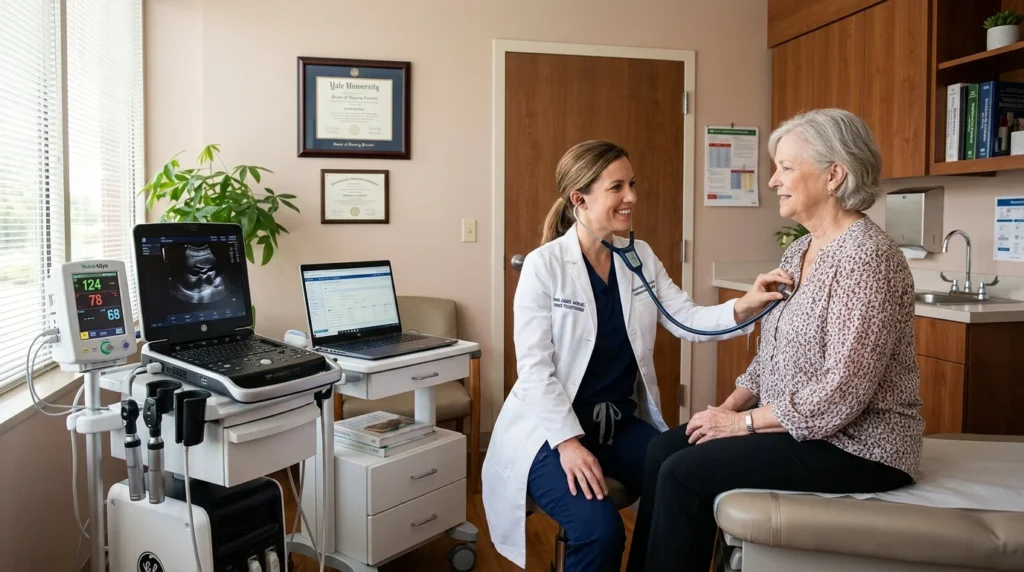
APRN stands for Advanced Practice Registered Nurse. It is a professional nursing designation used in healthcare settings throughout the United States.
An APRN has advanced education beyond the level of a standard registered nurse (RN), typically holding a master’s or doctoral degree.
What It Usually Means in Medical Settings
When you see APRN listed after someone’s name, it means the healthcare provider has completed specialized training and has authority to provide advanced patient care.
Depending on state laws, APRNs may:
- Diagnose illnesses
- Order diagnostic tests
- Interpret laboratory results
- Develop treatment plans
- Prescribe medications
- Manage chronic conditions
- Provide preventive care
What Tone Does It Convey?
The term APRN is generally:
- Professional
- Clinical
- Authoritative
- Trustworthy
- Educational
Unlike internet slang or texting abbreviations, APRN is a formal healthcare credential.
What Does APRN Meaning Medical Mean on Different Platforms?
Although the meaning remains largely consistent, the context can vary depending on where you encounter the term.
Medical Records
In medical records, APRN identifies the healthcare provider responsible for treatment, diagnoses, or patient care documentation.
Hospital Websites
Hospitals often use APRN to describe advanced nursing professionals who work independently or alongside physicians.
Healthcare Portals
Patients frequently see APRN listed in appointment details, provider directories, and electronic health records.
Healthcare professionals use APRN credentials to highlight advanced qualifications and specialties.
Nursing Forums
In nursing communities, APRN discussions often focus on certification requirements, licensing, education, and career advancement.
Educational Websites
Universities use APRN terminology when describing graduate nursing programs and advanced clinical practice tracks.
Professional Networking Groups
The abbreviation helps distinguish advanced practice nurses from registered nurses and other healthcare professionals.
Origin and History of APRN
The history of APRNs is tied closely to the growth of advanced nursing practice in the United States.
As healthcare demands increased during the mid-20th century, nurses began receiving specialized training to provide more comprehensive patient care.
The nurse practitioner role emerged during the 1960s to address healthcare provider shortages, especially in rural areas.
Over time, additional advanced nursing specialties developed, including:
- Clinical Nurse Specialists
- Certified Nurse Midwives
- Certified Registered Nurse Anesthetists
The term APRN eventually became an umbrella designation that includes these advanced nursing roles.
Today, APRNs are recognized nationwide as essential healthcare providers.
How People Actually Use APRN Meaning Medical
Most people encounter APRN terminology during healthcare visits.
You’ll often see it:
- On appointment schedules
- In provider directories
- On hospital websites
- In medical documentation
- On prescription information
Most patients use the term when asking questions such as:
- “Is an APRN the same as a doctor?”
- “Can an APRN prescribe medicine?”
- “Should I see an APRN or a physician?”
Healthcare students often search APRN meaning medical when exploring nursing career paths.
Appropriate Situations
Use APRN when discussing:
- Healthcare credentials
- Nursing careers
- Clinical practice
- Patient care providers
Less Appropriate Situations
Avoid using APRN as a general synonym for all nurses because not every nurse holds advanced practice certification.
Types of APRNs
There are four primary APRN roles recognized in the United States.
Nurse Practitioner (NP)
Provides primary and specialty healthcare services, including diagnosis and treatment.
Clinical Nurse Specialist (CNS)
Focuses on improving patient outcomes and healthcare systems through specialized expertise.
Certified Registered Nurse Anesthetist (CRNA)
Administers anesthesia and manages patient care before, during, and after procedures.
Certified Nurse Midwife (CNM)
Provides healthcare services related to pregnancy, childbirth, and reproductive health.
Real Examples of APRN in Conversations
Example 1
Person A: Who handled your checkup today?
Person B: An APRN at the clinic.
Meaning: Advanced practice nurse provided care.
Why it was used: To identify the provider’s credentials.
Example 2
Person A: Can your provider prescribe medication?
Person B: Yes, she’s an APRN.
Meaning: APRNs often have prescribing authority.
Why it was used: To explain qualifications.
Example 3
Person A: Was it a doctor?
Person B: No, it was an APRN specializing in family medicine.
Meaning: Advanced nursing provider.
Why it was used: To clarify professional role.
Example 4
Person A: Who reviewed your lab results?
Person B: My APRN discussed them during the appointment.
Meaning: Healthcare consultation.
Why it was used: To identify care provider.
Example 5
Person A: Are APRNs qualified to diagnose illnesses?
Person B: Absolutely.
Meaning: APRNs have advanced clinical training.
Why it was used: Educational discussion.
Example 6
Person A: I’m considering nursing school.
Person B: Becoming an APRN is a great long-term goal.
Meaning: Career advancement path.
Why it was used: Professional advice.
Example 7
Person A: My provider ordered additional testing.
Person B: Was it your APRN?
Meaning: Advanced clinical authority.
Why it was used: Healthcare discussion.
Example 8
Person A: Who manages your diabetes treatment?
Person B: My APRN handles it.
Meaning: Ongoing healthcare management.
Why it was used: Medical care context.
Example 9
Person A: I met with an APRN today.
Person B: How was the experience?
Meaning: Healthcare appointment.
Why it was used: Casual discussion.
Example 10
Person A: What’s the difference between an RN and APRN?
Person B: APRNs have advanced graduate education and expanded responsibilities.
Meaning: Credential comparison.
Why it was used: Educational explanation.
Common Mistakes and Misunderstandings
Mistake 1: Thinking APRNs Are the Same as RNs
All APRNs are registered nurses, but not all registered nurses are APRNs.
Mistake 2: Assuming APRNs Cannot Prescribe Medication
Many APRNs have prescribing authority depending on state regulations.
Mistake 3: Believing APRNs Have No Specialization
Most APRNs complete extensive specialty training.
Mistake 4: Confusing APRNs with Physicians
APRNs and physicians have different educational pathways, though both can provide advanced patient care.
Mistake 5: Assuming APRNs Work Only in Hospitals
APRNs work in clinics, hospitals, private practices, schools, and community health settings.
Similar Medical Terms and Related Abbreviations
| Term | Meaning | Difference |
|---|---|---|
| RN | Registered Nurse | Basic nursing licensure |
| NP | Nurse Practitioner | One APRN specialty |
| CNS | Clinical Nurse Specialist | APRN specialty |
| CRNA | Certified Registered Nurse Anesthetist | Anesthesia specialist |
| CNM | Certified Nurse Midwife | Midwifery specialist |
| PA | Physician Assistant | Different healthcare profession |
| MD | Medical Doctor | Physician credential |
| DO | Doctor of Osteopathic Medicine | Physician credential |
| LPN | Licensed Practical Nurse | Entry-level nursing role |
| DNP | Doctor of Nursing Practice | Advanced nursing degree |
Is APRN Positive, Negative, or Neutral?
The term APRN is generally positive and professional.
It usually reflects:
- Advanced education
- Clinical expertise
- Professional achievement
- Patient care leadership
There is no negative meaning associated with the credential itself.
The perception often depends on the healthcare context rather than the title.
Should You Use APRN?
Use It If:
- You are discussing advanced nursing professionals.
- You are referencing healthcare credentials accurately.
Avoid It If:
- You mean all nurses in general.
- You are unsure of a provider’s actual credentials.
Using the title correctly demonstrates understanding of healthcare professions.