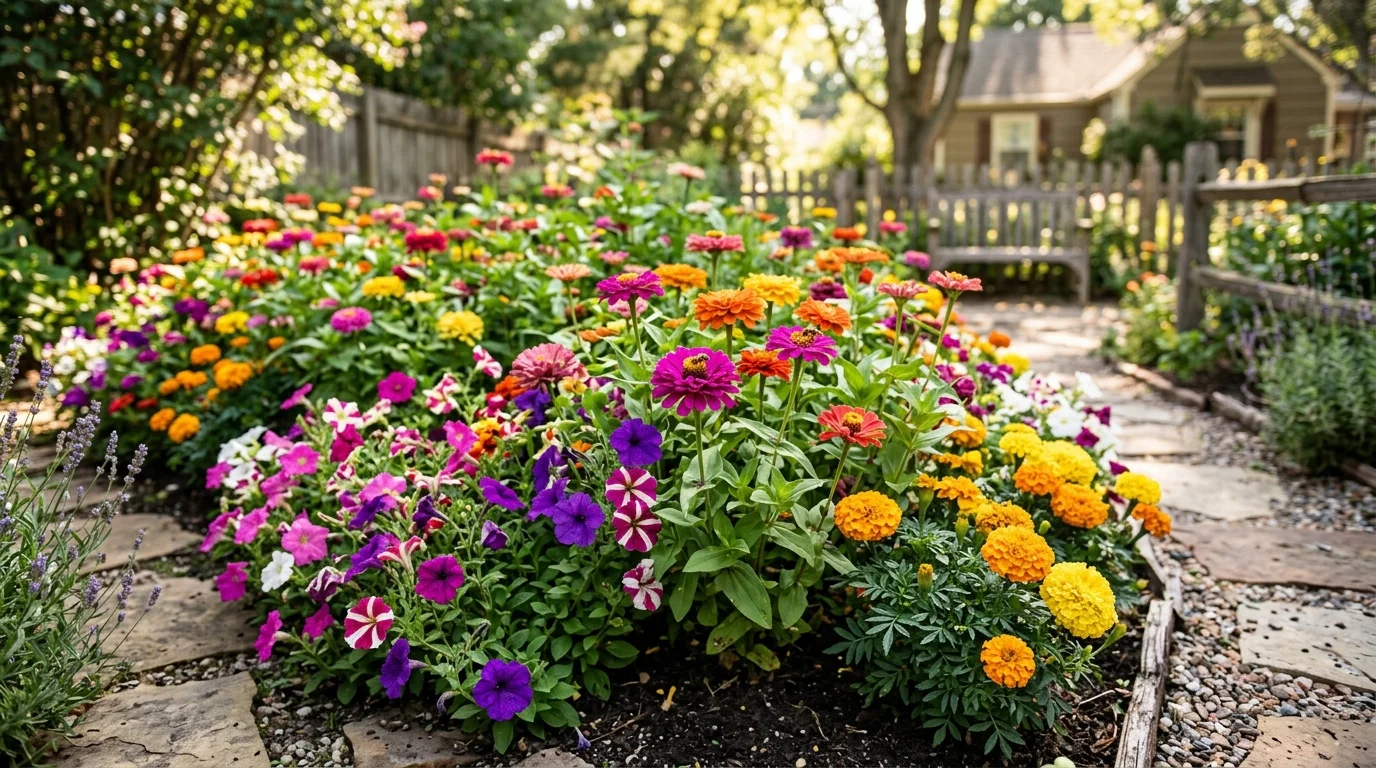
What Does “Annual Plants” Mean?
Quick Definition
The annual plants meaning refers to plants that:
- Germinate from seeds
- Grow leaves and stems
- Produce flowers
- Create seeds
- Die within one growing season
Simple Explanation
In simple terms, annual plants live for only one year or growing season.
Once they finish producing seeds, their life cycle ends.
Why They’re Called Annuals
The word “annual” comes from the Latin word annus, meaning “year.”
This reflects the fact that these plants complete their entire life cycle within a single year.
Key Characteristics
Most annual plants:
- Grow quickly
- Bloom heavily
- Produce seeds rapidly
- Require replanting each year
Understanding the Life Cycle of Annual Plants
The annual plants meaning becomes easier to understand when you look at the life cycle.
Stage 1: Seed Germination
The plant begins as a seed.
With proper moisture, temperature, and sunlight, the seed sprouts.
Stage 2: Vegetative Growth
The plant develops:
- Roots
- Stems
- Leaves
This stage focuses on building strength.
Stage 3: Flower Production
As the plant matures, it begins producing flowers.
Many annual plants bloom continuously for months.
Stage 4: Seed Production
Flowers eventually develop seeds.
These seeds ensure future generations of the plant.
Stage 5: Plant Death
After producing seeds, the plant naturally dies.
This completes the annual life cycle.
Types of Annual Plants
The annual plants meaning includes several categories.
Flowering Annuals
These are grown mainly for their colorful blooms.
Examples:
- Petunias
- Marigolds
- Zinnias
- Cosmos
Vegetable Annuals
Many vegetables are annual plants.
Examples:
- Tomatoes
- Cucumbers
- Lettuce
- Beans
Herb Annuals
Certain culinary herbs are annuals.
Examples:
- Basil
- Dill
- Cilantro
Ornamental Annuals
These are grown for decorative foliage or unique appearance.
Examples:
- Coleus
- Ornamental kale
Popular Examples of Annual Plants
Marigolds
- Bright colors
- Easy maintenance
- Pest resistance
Petunias
- Long blooming periods
- Wide color selection
- Excellent container performance
Zinnias
Zinnias offer:
- Vibrant flowers
- Pollinator attraction
- Easy cultivation
Sunflowers
Sunflowers are popular because of:
- Large blooms
- Fast growth
- Wildlife benefits
Cosmos
Cosmos produce:
- Delicate flowers
- Continuous blooms
- Low-maintenance beauty
Annual Plants vs Perennial Plants
Many people researching the annual plants meaning want to understand the difference between annuals and perennials.
| Feature | Annual Plants | Perennial Plants |
|---|---|---|
| Life Span | One season | Multiple years |
| Replanting | Required yearly | Usually not needed |
| Growth Rate | Fast | Often slower |
| Flower Production | Heavy blooms | Varies |
| Cost Over Time | Higher | Lower |
| Seasonal Color | Excellent | Moderate |
Main Difference
Annual plants die after one growing season.
Perennials return year after year.
Annual Plants vs Biennial Plants
Another common gardening term is “biennial.”
| Plant Type | Life Cycle |
|---|---|
| Annual | One year |
| Biennial | Two years |
| Perennial | More than two years |
Examples of biennials include:
- Foxglove
- Parsley
- Sweet William
Benefits of Annual Plants
The annual plants meaning is closely tied to their gardening advantages.
Continuous Flowers
Many annuals bloom from spring until frost.
Bright Colors
Annuals provide vibrant displays.
Fast Results
Gardeners see quick growth.
Design Flexibility
You can change your garden layout every year.
Wide Variety
Thousands of annual plant varieties are available.
Pollinator Support
Many annuals attract:
- Bees
- Butterflies
- Hummingbirds
Drawbacks of Annual Plants
While annuals offer many benefits, they also have limitations.
Need Replanting
Annual plants must usually be replanted each season.
Higher Long-Term Cost
Buying new plants yearly can add expenses.
More Maintenance
Some annuals require:
- Deadheading
- Watering
- Fertilizing
Seasonal Lifespan
Their beauty is temporary.
How People Actually Use Annual Plants
Most gardeners use annual plants for:
Flower Beds
Annuals create colorful garden displays.
Hanging Baskets
Many annual flowers thrive in containers.
Borders
Garden borders often feature annuals for seasonal color.
Vegetable Gardens
Many food crops are annual plants.
Landscaping Projects
Annuals allow frequent redesigns.
Growing Annual Plants Successfully
Choose the Right Location
Different annuals require different conditions.
Consider:
- Sunlight
- Soil type
- Water availability
Prepare the Soil
Healthy soil improves growth.
Add:
- Compost
- Organic matter
- Balanced fertilizer
Water Consistently
Most annuals prefer regular watering.
Fertilize Properly
Flowering annuals often benefit from periodic feeding.
Remove Spent Flowers
Deadheading encourages additional blooms.
Best Annual Plants for Beginners
Marigolds
Easy and reliable.
Zinnias
Excellent for first-time gardeners.
Sunflowers
Fast-growing and rewarding.
Nasturtiums
Colorful and edible.
Petunias
Simple to maintain and highly productive.
Annual Plants in Different Climates
Warm Climates
Popular annuals include:
- Vinca
- Zinnia
- Celosia
Cool Climates
Good options include:
- Pansies
- Snapdragons
- Sweet Alyssum
Temperate Regions
Most annual plants thrive in moderate climates.
Real Examples of Annual Plants in Gardens
Example 1
A homeowner plants marigolds in spring.
Meaning: Seasonal flower display.
Why used: Bright color.
Example 2
A gardener grows tomatoes.
Meaning: Annual vegetable crop.
Why used: Food production.
Example 3
A balcony features petunia baskets.
Meaning: Decorative annual planting.
Why used: Continuous blooms.
Example 4
A school garden grows sunflowers.
Meaning: Educational gardening project.
Why used: Fast growth.
Example 5
A pollinator garden includes zinnias.
Meaning: Wildlife-friendly annual planting.
Why used: Attract butterflies.
Common Misunderstandings About Annual Plants
Misunderstanding 1: Annuals Only Produce Flowers
Many vegetables and herbs are annual plants.
Misunderstanding 2: Annuals Are Difficult to Grow
Many annuals are beginner-friendly.
Misunderstanding 3: Annuals Can’t Self-Seed
Some annuals drop seeds and regrow naturally.
Misunderstanding 4: Annuals Are Inferior to Perennials
Both plant types serve valuable gardening purposes.
Misunderstanding 5: Annuals Bloom Only Once
Many annuals bloom continuously throughout the season.
Similar Gardening Terms
| Term | Meaning | Difference |
|---|---|---|
| Annual | Lives one season | Dies after seed production |
| Perennial | Returns yearly | Longer lifespan |
| Biennial | Lives two years | Intermediate lifespan |
| Evergreen | Retains leaves year-round | Not based on lifespan |
| Deciduous | Loses leaves seasonally | Different classification |
| Herbaceous | Soft-stemmed plant | Growth characteristic |
| Shrub | Woody plant | Structural difference |
| Groundcover | Spreading plant | Functional category |
| Wildflower | Naturally occurring flower | Habitat-based |
| Ornamental Plant | Decorative plant | Purpose-based |
Are Annual Plants Good or Bad?
The annual plants meaning itself is neutral.
Positive Features
- Long flowering season
- Fast growth
- Colorful displays
- Garden flexibility
Potential Challenges
- Replanting required
- Seasonal lifespan
- Ongoing maintenance
For most gardeners, annual plants are considered highly beneficial.
Should You Grow Annual Plants?
Grow Annuals If You Want
- Bright seasonal color
- Continuous blooms
- Quick results
- Garden variety
Consider Alternatives If You Want
- Low-maintenance landscaping
- Long-term plantings
- Permanent garden structure
Many successful gardens combine annuals and perennials.