
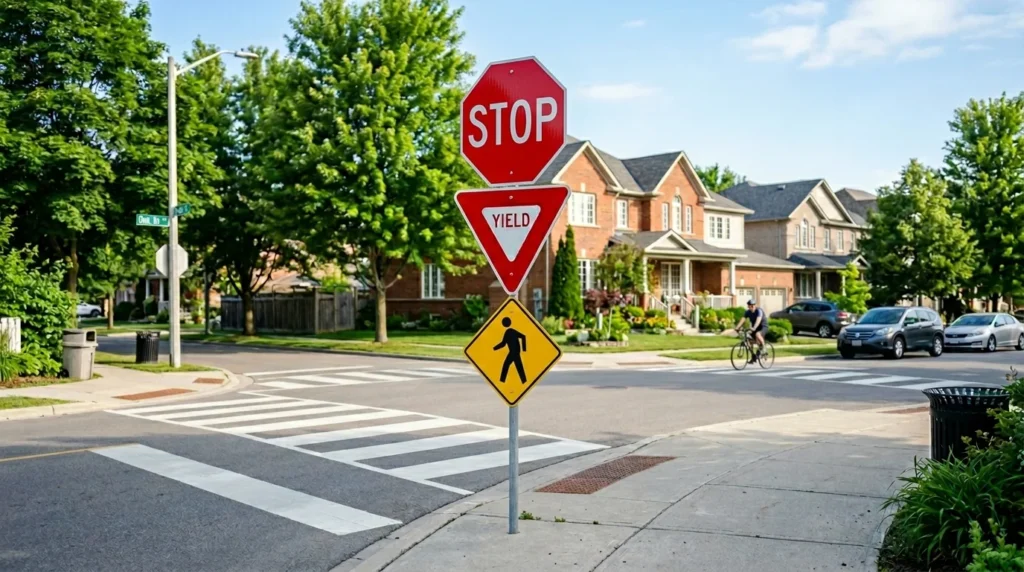
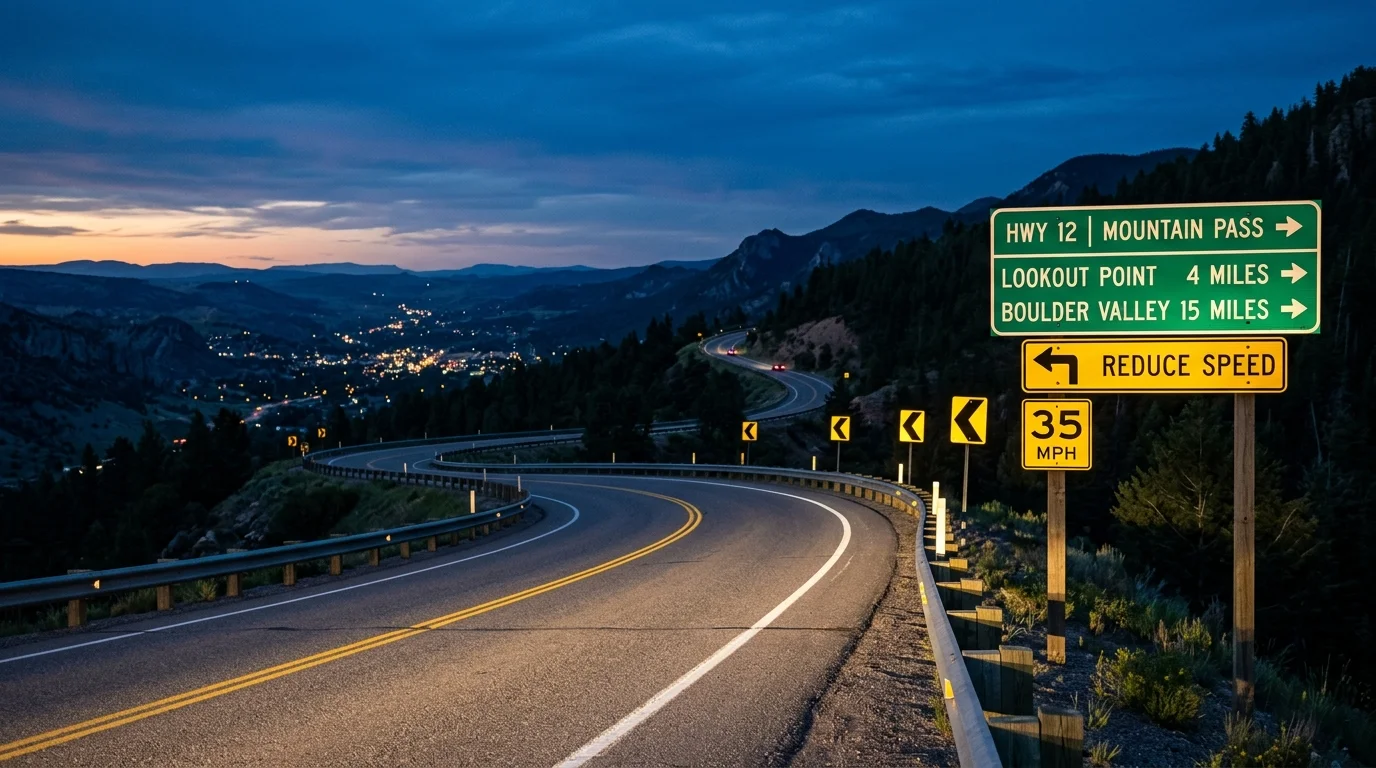
Traffic Signs Pakistan
Traffic signs in Pakistan are official road signs used to regulate, warn, guide, and inform drivers, motorcyclists, pedestrians, and other road users. They help communicate important instructions quickly, such as where to stop, which direction to follow, where certain vehicles are prohibited, and where hazards may be present. Pakistan’s National Highways and Motorway Police (NHMP) provides traffic-sign information as part of its road-safety education resources. (NHMP)
Traffic signs in Pakistan can broadly be understood through categories such as mandatory signs, warning signs, and informatory signs. NHMP educational material describes mandatory signs as generally circular and used for obligations, prohibitions, or restrictions; warning signs as triangular and used to alert road users to hazards; and informatory signs as generally rectangular and used for directions, destinations, distances, and other useful information. (NHMP)
Understanding traffic signs in Pakistan is particularly important for learner drivers preparing for a driving or theory test. Recognizing the shape, color, symbol, and meaning of a sign can help road users respond correctly and reduce the risk of accidents.
100 Road Signs and Their Meaning
100 road signs and their meaning refers to a comprehensive collection of common road and traffic signs together with explanations of what each sign instructs, prohibits, warns about, or communicates. Such a list can be useful for learner drivers, students, driving-test candidates, and anyone who wants to improve their knowledge of road safety.
Road signs generally serve different purposes. Warning signs alert drivers to potential hazards, regulatory or mandatory signs communicate rules and restrictions, while informatory signs provide directions and useful information. The exact appearance and legal meaning of signs can vary between countries, so a list of 100 road signs should be interpreted according to the relevant country’s traffic regulations.
For a Pakistan-focused article, it is better to organize the signs according to the system used by Pakistani road authorities rather than combining unrelated signs from different countries. The NHMP’s road-safety material provides examples and explanations of mandatory, warning, informatory, and motorway signs. (NHMP)
All Traffic Signs in Pakistan PDF
All traffic signs in Pakistan PDF is a commonly searched phrase for a downloadable reference containing Pakistani traffic signs and their meanings. A PDF can be especially useful for learner drivers who want to study road signs offline or prepare for a driving theory test.
The National Highways and Motorway Police (NHMP) publishes road-safety educational resources that include traffic-sign information. Its official website provides a dedicated traffic-sign resource, while its road-safety section includes traffic signs, traffic rules, videos, and other educational material. (NHMP)
When using a traffic-sign PDF, readers should check that it represents the applicable Pakistani rules and current sign system. Older or unofficial PDFs may contain outdated designs or incomplete information. For authoritative information, the NHMP is a useful starting point for Pakistan-specific road-safety resources.
Traffic Sign Test in Urdu
A traffic sign test in Urdu is a practice or educational test that presents road signs and asks the learner to identify their meanings, instructions, or appropriate driving responses in Urdu. It can help Urdu-speaking learners become familiar with traffic signs before taking a driving or theory examination.
A typical traffic sign test may include questions about stop signs, no-entry signs, speed restrictions, turns, pedestrian crossings, road hazards, compulsory directions, parking restrictions, and warning signs. Learning the visual symbol as well as its Urdu explanation can make it easier to recognize a sign quickly while driving.
Traffic-sign tests are particularly useful for beginners because road signs are designed to communicate information quickly, often through standardized shapes, symbols, and colors. However, practice tests should supplement—not replace—the official traffic rules and licensing requirements applicable in the learner’s area.
Traffic Sign Test Online
A traffic sign test online is a digital practice test that helps learners identify road signs and understand their meanings before driving or theory examinations. Online tests commonly use pictures or descriptions of signs and ask the user to select the correct meaning.
A useful traffic sign test online should cover different categories of signs, including warning signs, mandatory or regulatory signs, information signs, road markings, and traffic signals. Practicing repeatedly can help learners recognize signs more quickly and improve their understanding of road rules.
For Pakistan-specific preparation, learners should use tests that correspond to the applicable Pakistani traffic-sign system rather than relying exclusively on tests designed for another country. The NHMP provides traffic-sign and road-safety educational resources for road users in Pakistan. (NHMP)
Traffic Signs in Pakistan in English
Traffic signs in Pakistan in English refers to Pakistani road signs explained or labeled in English. English explanations can be useful for learners who are more comfortable studying traffic rules in English, including students, new drivers, and people preparing for driving tests.
Pakistani traffic signs use recognizable visual symbols and standardized sign shapes to communicate instructions and warnings. NHMP educational material identifies mandatory signs, warning signs, and informatory signs and explains their respective purposes. For example, mandatory signs communicate obligations or restrictions, warning signs alert road users to hazards, and informatory signs provide guidance such as routes and destinations. (NHMP)
Learning traffic signs in Pakistan in English can make it easier to understand both the visual sign and its written explanation. However, learners should always prioritize the official traffic rules and current guidance applicable to the province, city, highway, or road on which they drive.
Road Signs and Meanings PDF
A road signs and meanings PDF is a downloadable document that collects road signs together with explanations of what they mean. These resources are commonly used for driving-test preparation, road-safety education, and quick reference.
A comprehensive road-sign PDF may organize signs into categories such as warning signs, regulatory signs, mandatory signs, information signs, motorway signs, traffic signals, and road markings. The organization depends on the country’s road-sign system. For example, the UK’s official Highway Code separates traffic signs into orders, warnings, directions, information, road works, and other categories. (GOV.UK)
Because road signs differ between countries, users searching for a road signs and meanings PDF should make sure the document applies to their location. A UK road-sign guide, for example, should not automatically be treated as a guide to Pakistani traffic regulations.
Road Signs UK
Road signs in the UK are signs used to regulate traffic, warn road users about hazards, provide directions and information, and communicate temporary road conditions. The UK’s official Highway Code includes traffic signs used in England, Scotland, and Wales and provides guidance on their meanings and use. (GOV.UK)
UK road signs include warning signs, regulatory signs, direction signs, information signs, road-work signs, motorway signs, and signs associated with crossings and traffic signals. Warning signs are commonly triangular, while many signs giving orders use circular designs. The official Know Your Traffic Signs publication provides a more comprehensive explanation of the UK’s signing system. (GOV.UK)
Road markings are also an important part of the UK traffic-sign system. For example, yellow lines can indicate waiting restrictions, while red-route markings can indicate restrictions on stopping. (GOV.UK)
Important SEO distinction: “Traffic signs Pakistan” and “Road signs UK” should remain separate sections because traffic-sign systems and legal requirements differ by country. This geographic separation also makes the content more useful for readers searching for country-specific meanings.
What Does “Meaning Road Signs” Mean?
Quick Definition
The phrase meaning road signs refers to:
The purpose, interpretation, and message communicated by traffic signs placed along roads and highways.
These signs help road users understand rules, warnings, directions, and important safety information.
Examples
- A stop sign means drivers must come to a complete stop.
- A speed limit sign indicates the maximum legal speed.
- A pedestrian crossing sign warns drivers to watch for pedestrians.
What Road Signs Usually Mean
Road signs generally serve one of four purposes:
- Regulate traffic
- Warn about hazards
- Provide guidance
- Give information
Each sign category has specific shapes, colors, and symbols designed for quick recognition.
Why Road Signs Are Important
Understanding the meaning road signs is crucial because they:
- Improve road safety
- Reduce confusion
- Prevent accidents
- Guide travelers
- Manage traffic flow
- Protect pedestrians and cyclists
Without road signs, roads would become chaotic and significantly more dangerous.
Key Benefits
- Faster decision-making
- Better navigation
- Increased awareness
- Reduced collision risk
- Improved traffic efficiency
Main Types of Road Signs
When discussing meaning road signs, it’s important to understand the major categories.
Regulatory Signs
Regulatory signs tell drivers what they must or must not do.
Examples include:
- Stop signs
- Yield signs
- Speed limit signs
- No parking signs
- No U-turn signs
Common Features
- Usually red, white, or black
- Enforce traffic laws
- Failure to obey may result in fines
Example
A speed limit sign displaying “60” means drivers cannot legally exceed 60 mph or km/h depending on the country.
Warning Signs
Warning signs alert drivers to upcoming hazards.
Examples include:
- Sharp curves
- School zones
- Animal crossings
- Slippery roads
- Falling rocks
Common Features
- Often yellow or orange
- Diamond-shaped in many countries
- Designed to grab attention
Example
A deer crossing sign warns drivers that animals may enter the roadway.
Guide Signs
Guide signs help travelers reach destinations.
Examples include:
- Highway exits
- Street names
- Directional arrows
- Distance markers
Common Features
- Usually green, blue, or brown
- Provide navigation information
- Help with route planning
Example
A highway sign showing “Exit 15” guides drivers toward an upcoming exit.
Informational Signs
Informational signs provide useful services and facility information.
Examples include:
- Hospitals
- Gas stations
- Rest areas
- Parking facilities
- Airports
Common Features
- Often blue or green
- Easy-to-read symbols
- Help travelers locate services
Meaning of Common Road Sign Shapes
Shape plays a major role in the meaning road signs communicate.
Octagon
Used almost exclusively for:
- Stop signs
Drivers instantly recognize the shape even from a distance.
Triangle
Often indicates:
- Yield signs
- Give way signs
These signs require drivers to slow down and yield when necessary.
Circle
Often used for:
- Regulatory signs
- Restrictions
Examples include speed limits and prohibited actions.
Rectangle
Commonly used for:
- Information signs
- Direction signs
- Regulations
Diamond
Usually indicates:
- Warning signs
- Hazards ahead
Drivers should pay close attention when they see diamond-shaped signs.
Meaning of Road Sign Colors
Colors are just as important as symbols.
Red
- Stop
- Prohibition
- Danger
Examples:
- Stop signs
- No entry signs
Yellow
Yellow typically signals:
- Caution
- Warning
Examples:
- Curves
- School zones
- Intersections ahead
Green
Green commonly means:
- Directions
- Destinations
- Guidance
Examples:
- Highway exits
- City names
Blue
Blue often indicates:
- Services
- Information
Examples:
- Hospitals
- Fuel stations
- Rest areas
Brown
Brown signs usually identify:
- Recreation areas
- Historical sites
- Parks
Common Road Signs and Their Meanings
Stop Sign
Meaning:
Drivers must come to a complete stop before proceeding.
Why it’s important:
Prevents collisions at intersections.
Yield Sign
Meaning:
Give the right-of-way to other vehicles or pedestrians.
Why it’s important:
Maintains smooth traffic movement.
Speed Limit Sign
Meaning:
Shows the maximum legal speed.
Why it’s important:
Reduces accidents and improves safety.
No Entry Sign
Meaning:
Vehicles are prohibited from entering.
Why it’s important:
Prevents wrong-way driving.
Pedestrian Crossing Sign
Meaning:
Pedestrians may be crossing ahead.
Why it’s important:
Protects people on foot.
School Zone Sign
Meaning:
Children may be present nearby.
Why it’s important:
Encourages slower driving.
Railroad Crossing Sign
Meaning:
Train tracks are ahead.
Why it’s important:
Helps prevent train-related accidents.
Roundabout Sign
Meaning:
A circular intersection is approaching.
Why it’s important:
Allows drivers to prepare for traffic flow changes.
Meaning Road Signs in Different Countries
Although many signs are similar worldwide, some variations exist.
United States
The U.S. uses:
- Text-based signs
- Symbol signs
- Color-coded categories
Drivers often see both words and symbols.
Europe
European countries rely heavily on:
- Universal symbols
- Standardized designs
This helps drivers travel across borders more easily.
Australia
Australia uses:
- Symbol-heavy warning signs
- Similar regulatory signs
Many designs closely resemble international standards.
Asia
Road signs vary by country but often combine:
- Local languages
- International symbols
How Drivers Use Road Signs Every Day
Most people rely on road signs without realizing it.
Drivers use them to:
- Follow speed limits
- Avoid hazards
- Find destinations
- Understand traffic laws
- Navigate unfamiliar areas
Road signs influence nearly every driving decision.
Common Mistakes and Misunderstandings
Understanding the meaning road signs helps avoid these common mistakes.
Mistake #1: Ignoring Warning Signs
Some drivers focus only on regulatory signs.
Warning signs are equally important because they alert drivers to danger.
Mistake #2: Confusing Yield and Stop Signs
A stop sign requires a complete stop.
A yield sign requires giving way when necessary.
Mistake #3: Misreading Speed Limits
Drivers should always verify posted speed limits instead of assuming.
Mistake #4: Ignoring Temporary Signs
Construction signs often indicate temporary traffic changes.
These signs must be followed just like permanent signs.
Similar Traffic Terms and Related Signs
| Term | Meaning | Difference |
|---|---|---|
| Stop Sign | Complete stop required | Strongest regulation |
| Yield Sign | Give right-of-way | May not require full stop |
| Speed Limit Sign | Maximum speed | Controls vehicle speed |
| Warning Sign | Hazard ahead | Alerts drivers |
| Guide Sign | Navigation help | Provides directions |
| Information Sign | Service details | Identifies facilities |
| No Entry Sign | Entry prohibited | Restricts access |
| School Zone Sign | School area ahead | Protects children |
| Railroad Crossing | Tracks ahead | Warns of trains |
| Construction Sign | Roadwork present | Temporary warning |
Are Road Signs Positive, Negative, or Neutral?
The meaning road signs is generally neutral.
Road signs simply communicate information.
Positive Examples
- Rest area ahead
- Hospital nearby
- Scenic route
Negative Examples
- Road closed
- Danger ahead
- Falling rocks
Neutral Examples
- Speed limit
- Exit number
- Directional signs
Should You Learn Road Sign Meanings?
Yes, Because:
- It improves safety.
- It helps pass driving tests.
- It reduces accident risk.
- It improves confidence behind the wheel.
Important Situations
- New drivers
- International travelers
- Commercial drivers
- Driving test preparation
Avoid Assuming
Never assume a sign means the same thing everywhere.
Always pay attention to local traffic regulations.