
What Does “U.S. Government Shutdown” Mean?
Quick Definition
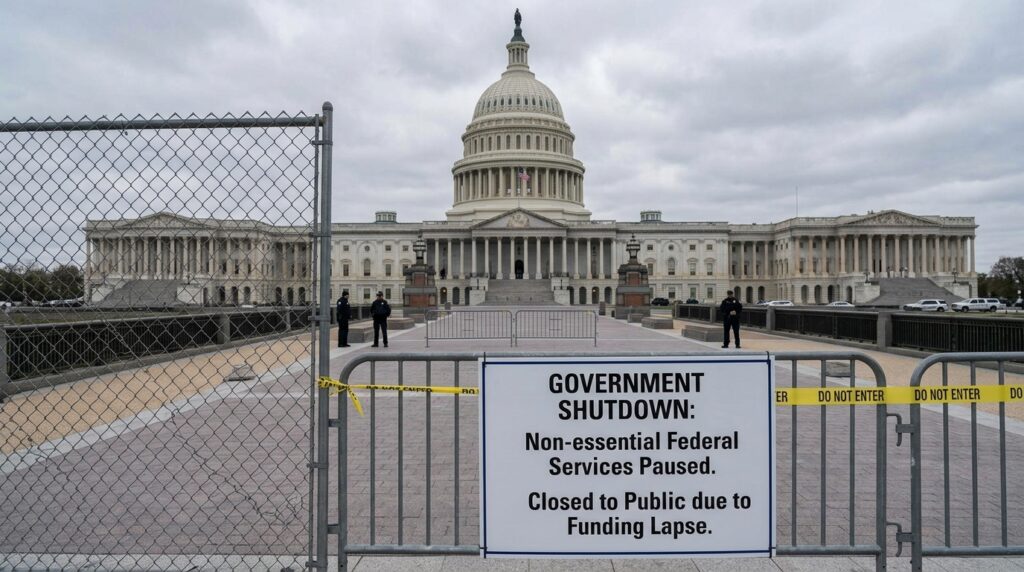
A U.S. government shutdown occurs when the federal government lacks approved funding and must temporarily suspend some non-essential operations.
What It Usually Means
When a shutdown happens:
- Some federal offices close.
- Certain employees are furloughed.
- Government services may be delayed.
- Essential services continue operating.
Literal Meaning
The term refers to a temporary interruption in government operations due to a funding lapse.
Most Common Interpretation
Most people understand a government shutdown as a period when parts of the federal government stop functioning because lawmakers have not approved spending legislation.
What Tone Does It Convey?
The term generally conveys:
- Political conflict
- Budget disputes
- Economic uncertainty
- Government disruption
What Does a Government Shutdown Mean in Different Contexts?
Federal Employees
Some workers continue working, while others may be placed on temporary unpaid leave (furlough).
Travelers
Airports generally remain open, but delays may occur if staffing shortages develop.
Businesses
Companies that rely on federal contracts or government approvals may experience delays.
National Parks and Museums
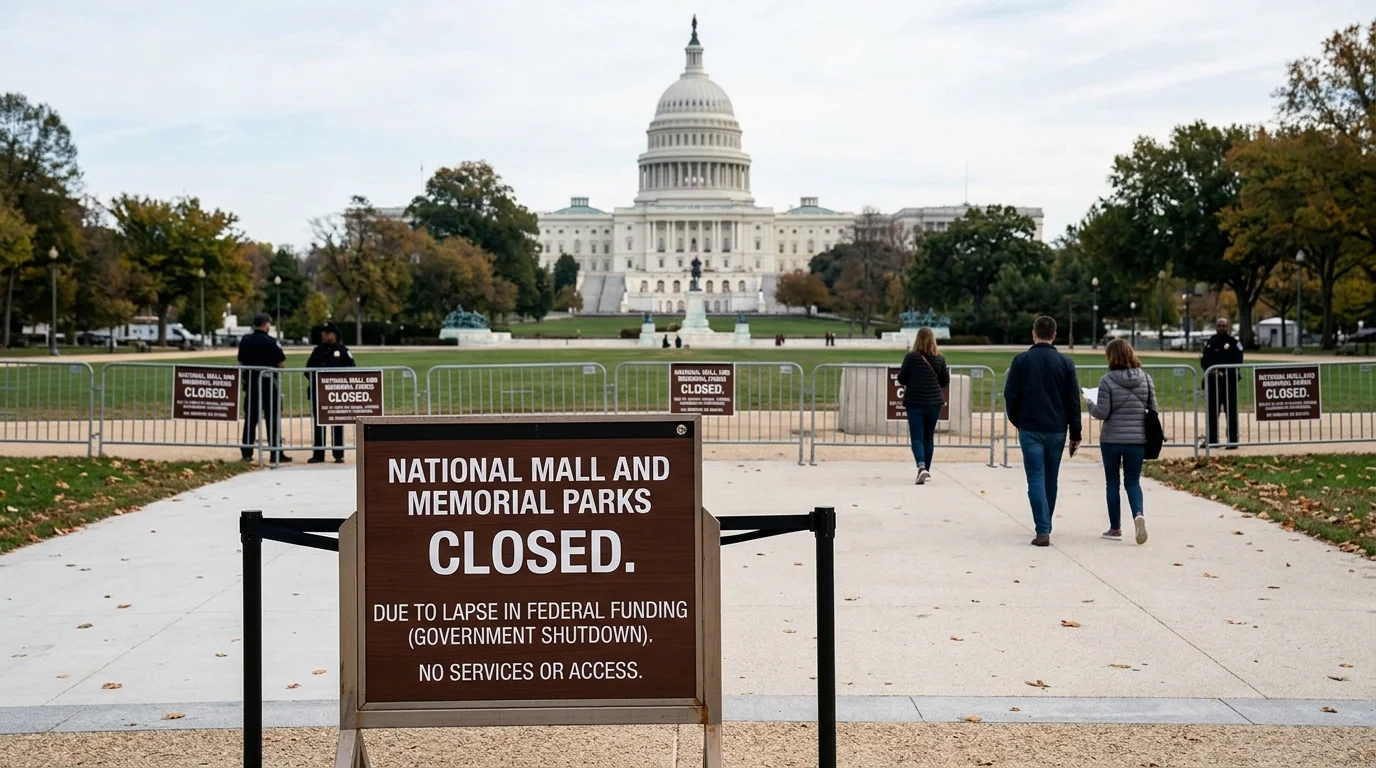
Some federally operated sites may close or reduce services.
Financial Markets
Investors often monitor shutdowns because they can create economic uncertainty.
Why Does a U.S. Government Shutdown Happen?
The Basic Cause
A shutdown occurs when federal funding expires before Congress and the President agree on new spending legislation.
Common Reasons
- Budget disagreements
- Political disputes
- Spending priorities
- Policy conflicts
- Debt and fiscal negotiations
How Funding Normally Works
- Congress passes spending bills.
- The President signs them into law.
- Agencies receive funding.
- Government operations continue.
If funding legislation is not approved before the deadline, a shutdown can occur.
Origin and History of Government Shutdowns
Government shutdowns became more common after legal interpretations in the 1980s clarified that agencies generally cannot continue non-essential operations without congressional funding.
Several shutdowns have occurred throughout modern U.S. history, varying in length and impact.
Some shutdowns lasted only a few hours or days, while others extended for weeks.
How People Actually Use the Term
Most people use “government shutdown” in news, politics, and economic discussions.
Example Usage
“The government may shut down this weekend if Congress doesn’t pass a funding bill.”
Meaning:
Federal funding could lapse.
Another Example
“The shutdown affected thousands of federal workers.”
Meaning:
Employees experienced disruptions due to funding issues.
What Services Continue During a Shutdown?
Essential services generally remain operational.
Examples include:
- Military operations
- Border security
- Air traffic control
- Emergency services
- Law enforcement
- Certain healthcare functions
These employees are often required to work even if pay is temporarily delayed.
What Services May Be Affected?
Possible disruptions include:
- Passport processing delays
- Tax assistance delays
- National park closures
- Museum closures
- Regulatory reviews
- Government grants and permits
The exact impact depends on the specific shutdown.
Real Examples of Government Shutdown in Conversations
Example 1
Person A: What does a government shutdown mean?
Person B: Some federal agencies temporarily stop operating.
Meaning: Funding interruption.
Why it was used: General explanation.
Example 2
Employee: Will I still work?
Supervisor: Essential staff usually continue working.
Meaning: Service continuity.
Why it was used: Workplace concern.
Example 3
Traveler: Should I cancel my flight?
Friend: Airports usually stay open during shutdowns.
Meaning: Essential services continue.
Why it was used: Travel planning.
Example 4
Reporter: Congress hasn’t approved funding.
Analyst: A shutdown could happen.
Meaning: Funding deadline risk.
Why it was used: Political discussion.
Example 5
Business Owner: Our permit is delayed.
Consultant: The shutdown may be affecting processing.
Meaning: Administrative delays.
Why it was used: Business operations.
Example 6
Tourist: Why is the park closed?
Ranger: The government shutdown affected operations.
Meaning: Reduced services.
Why it was used: Public information.
Example 7
Investor: Markets seem nervous.
Analyst: Shutdown uncertainty is a factor.
Meaning: Economic concern.
Why it was used: Financial discussion.
Example 8
Citizen: Is the whole government closed?
Friend: No, only certain operations.
Meaning: Common misconception.
Why it was used: Clarification.
Example 9
Student: Why does this happen?
Teacher: Lawmakers haven’t agreed on funding.
Meaning: Budget dispute.
Why it was used: Education.
Example 10
Journalist: Congress reached a deal.
Citizen: So the shutdown is over?
Meaning: Funding restored.
Why it was used: News discussion.
Common Mistakes and Misunderstandings
Mistake 1: Thinking the Entire Government Closes
Essential services usually continue operating.
Mistake 2: Assuming Social Security Stops Immediately
Many mandatory programs continue during shutdowns.
Mistake 3: Believing All Federal Workers Stop Working
Many essential employees remain on duty.
Mistake 4: Assuming Every Shutdown Has the Same Impact
Effects vary depending on duration and affected agencies.
How to Avoid Confusion
Remember:
- Shutdowns are funding-related.
- Essential services continue.
- Impacts vary by agency.
- Most shutdowns are temporary.
Similar Terms and Related Concepts
| Term | Meaning | Difference |
|---|---|---|
| Government Shutdown | Funding lapse affecting operations | Main concept |
| Federal Budget | Government spending plan | Broader topic |
| Appropriations Bill | Funding legislation | Prevents shutdowns |
| Continuing Resolution | Temporary funding measure | Avoids funding gaps |
| Federal Deficit | Spending exceeds revenue | Different issue |
| National Debt | Total government borrowing | Long-term measure |
| Furlough | Temporary unpaid leave | Shutdown consequence |
| Fiscal Year | Government budgeting period | Time framework |
| Congress | Legislative branch | Approves funding |
| Federal Agency | Government department | May be affected |
Is a Government Shutdown Positive, Negative, or Neutral?
The term is generally viewed negatively because it indicates disruption and political disagreement.
Positive Associations
- Can pressure lawmakers to reach agreements.
- Encourages budget negotiations.
Neutral Associations
- Government budgeting process.
- Legislative procedures.
Negative Associations
- Service disruptions.
- Economic uncertainty.
- Delayed government functions.
Should Citizens Be Concerned About a Shutdown?
Pay Attention If
- You work for the federal government.
- You rely on federal services.
- You operate a government-dependent business.
- You need permits or approvals.
Usually Less Impactful If
- Your activities rarely involve federal agencies.
Most shutdowns are temporary and eventually resolved through funding agreements.