
What Are the 7 Types of Poop?
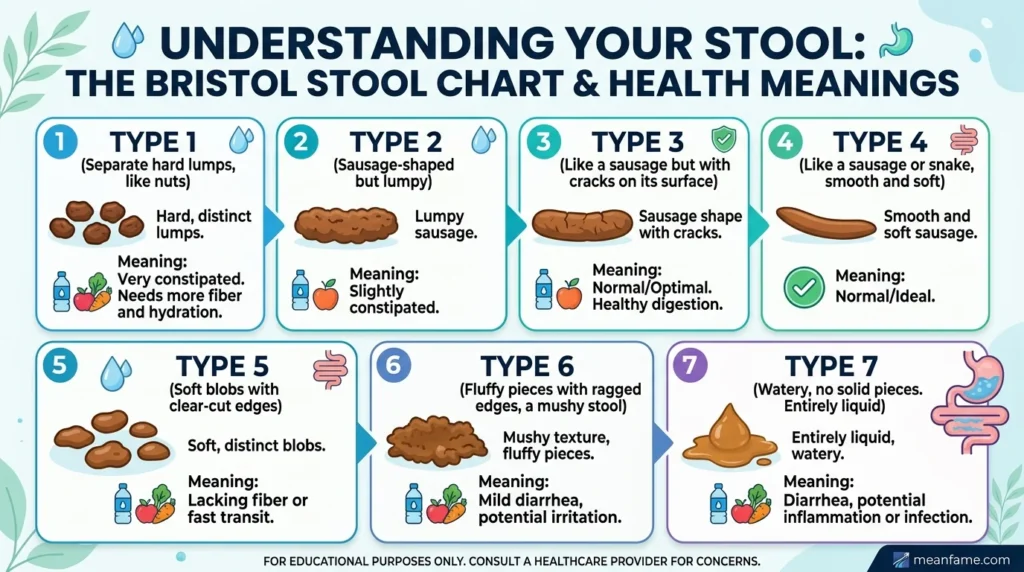
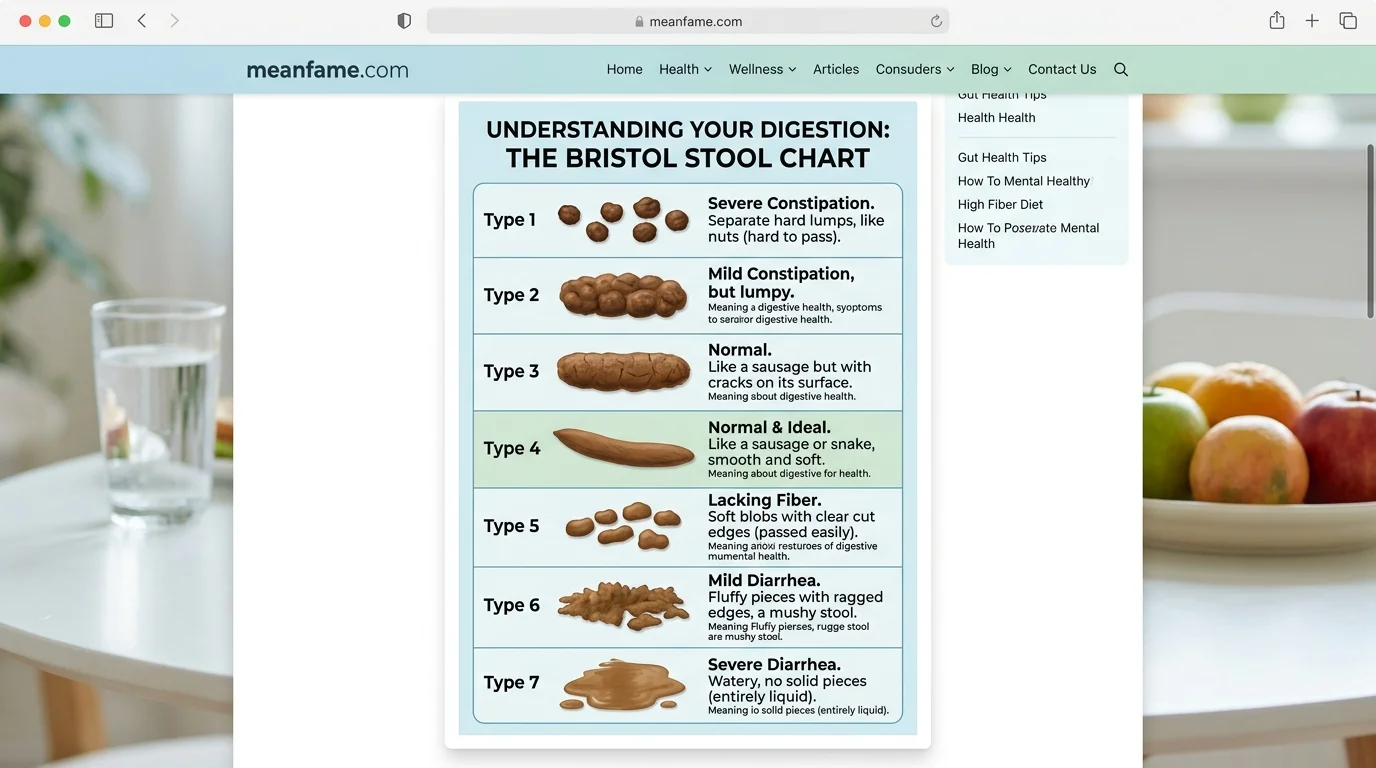
Type 1 – Separate Hard Lumps
Appearance:
- Small, hard pellets
- Difficult to pass
What it may mean:
Type 1 often suggests constipation, which may be related to:
- Low fiber intake
- Dehydration
- Lack of physical activity
- Delaying bowel movements
Type 2 – Lumpy Sausage-Shaped Stool
Appearance:
- Sausage-shaped but lumpy
- Hard texture
What it may mean:
This also commonly indicates mild constipation. Increasing water and fiber intake may help, though persistent constipation should be discussed with a healthcare provider.
Type 3 – Sausage with Cracks
Appearance:
- Sausage-like
- Surface has cracks
What it may mean:
Type 3 is generally considered within the healthy range.
Type 4 – Smooth, Soft Sausage or Snake
Appearance:
- Smooth
- Soft
- Easy to pass
What it may mean:
Type 4 is often regarded as the ideal stool type, suggesting healthy digestion and normal bowel function.
Type 5 – Soft Blobs with Clear Edges
Appearance:
- Soft pieces
- Easy to pass
What it may mean:
This may occur when food moves through the intestines a little faster than usual. It can also be seen in people with lower fiber intake.
Type 6 – Mushy Stool
Appearance:
- Fluffy pieces
- Ragged edges
- Mushy consistency
What it may mean:
Type 6 often suggests mild diarrhea or rapid intestinal transit.
Possible causes include:
- Viral infections
- Food intolerance
- Stress
- Certain medications
Type 7 – Watery Stool
Appearance:
- Completely liquid
- No solid pieces
What it may mean:
Type 7 usually indicates diarrhea.
Common causes include:
- Gastrointestinal infections
- Food poisoning
- Certain medications
- Digestive disorders
Staying hydrated is especially important. Seek medical care if diarrhea is severe, persistent, or accompanied by fever, dehydration, or blood.
Stool Color and What It May Mean
Color can provide additional clues.
| Stool Color | Possible Meaning |
|---|---|
| Brown | Normal and healthy due to bile pigments. |
| Green | May result from leafy vegetables, food coloring, iron supplements, or food moving quickly through the intestines. |
| Yellow | Can sometimes indicate excess fat in the stool or problems absorbing nutrients; persistent yellow stool should be evaluated. |
| Black | May result from iron supplements or certain medications, but it can also indicate bleeding in the upper digestive tract and requires prompt medical evaluation if unexplained. |
| Red | May come from foods like beets, but unexplained bright red stool can signal bleeding in the lower digestive tract and should be assessed by a healthcare provider. |
| White or Clay-Colored | May indicate a lack of bile reaching the intestines and should be medically evaluated. |
What Affects the Appearance of Poop?
Many everyday factors influence stool.
These include:
- Diet
- Hydration
- Exercise
- Stress
- Medications
- Antibiotics
- Fiber intake
- Digestive conditions
- Recent illness
Temporary changes are common.
Healthy Poop Characteristics
A healthy bowel movement is typically:
- Medium to dark brown
- Soft but well-formed
- Easy to pass
- Type 3 or Type 4 on the Bristol Stool Chart
- Passed without significant straining
- Occurring anywhere from three times a day to three times a week, depending on the individual
Normal bowel habits vary from person to person.
Common Mistakes and Misunderstandings
Mistake: Everyone should poop every day.
Correct: Healthy bowel frequency varies. Many people are perfectly healthy without daily bowel movements.
Mistake: Any color change means something serious.
Correct: Foods, medications, and supplements can temporarily change stool color. Persistent or unexplained changes deserve medical attention.
Mistake: Diarrhea is always caused by food poisoning.
Correct: Diarrhea has many possible causes, including infections, medications, stress, and chronic digestive conditions.
Mistake: Constipation is only caused by low fiber.
Correct: Dehydration, medications, medical conditions, and lifestyle factors can also contribute.
When Should You See a Doctor?
Contact a healthcare provider if you notice:
- Blood in your stool (unless a known harmless cause has been confirmed)
- Black, tarry stool without an obvious explanation
- White or clay-colored stool
- Severe abdominal pain
- Persistent diarrhea lasting more than a couple of days (or longer in certain situations)
- Ongoing constipation that doesn’t improve
- Unexplained weight loss
- Fever with diarrhea
- Signs of dehydration, such as dizziness, dry mouth, or reduced urination
Prompt evaluation is especially important if symptoms are severe or accompanied by fainting, significant weakness, or ongoing bleeding.
Tips for Healthy Bowel Movements
To support digestive health:
- Eat plenty of fruits and vegetables.
- Include whole grains and other fiber-rich foods.
- Drink enough water throughout the day.
- Exercise regularly.
- Avoid delaying bowel movements when you feel the urge.
- Limit highly processed foods if they affect your digestion.
Follow your healthcare provider’s advice if you have a digestive condition
Lorem ipsum dolor sit amet, consectetur adipiscing elit. Ut elit tellus, luctus nec ullamcorper mattis, pulvinar dapibus leo.