
What Does “Suburb” Mean?
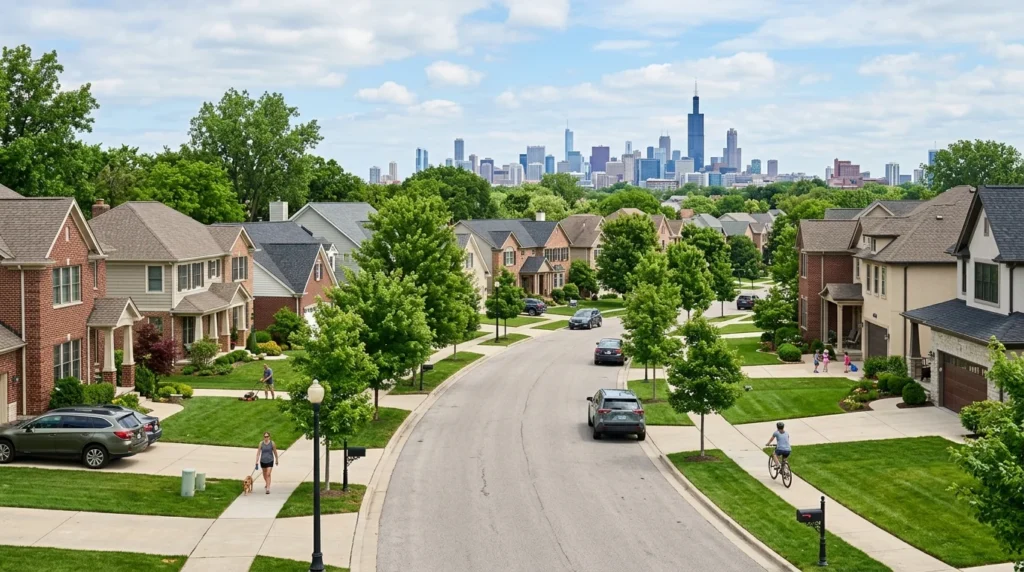
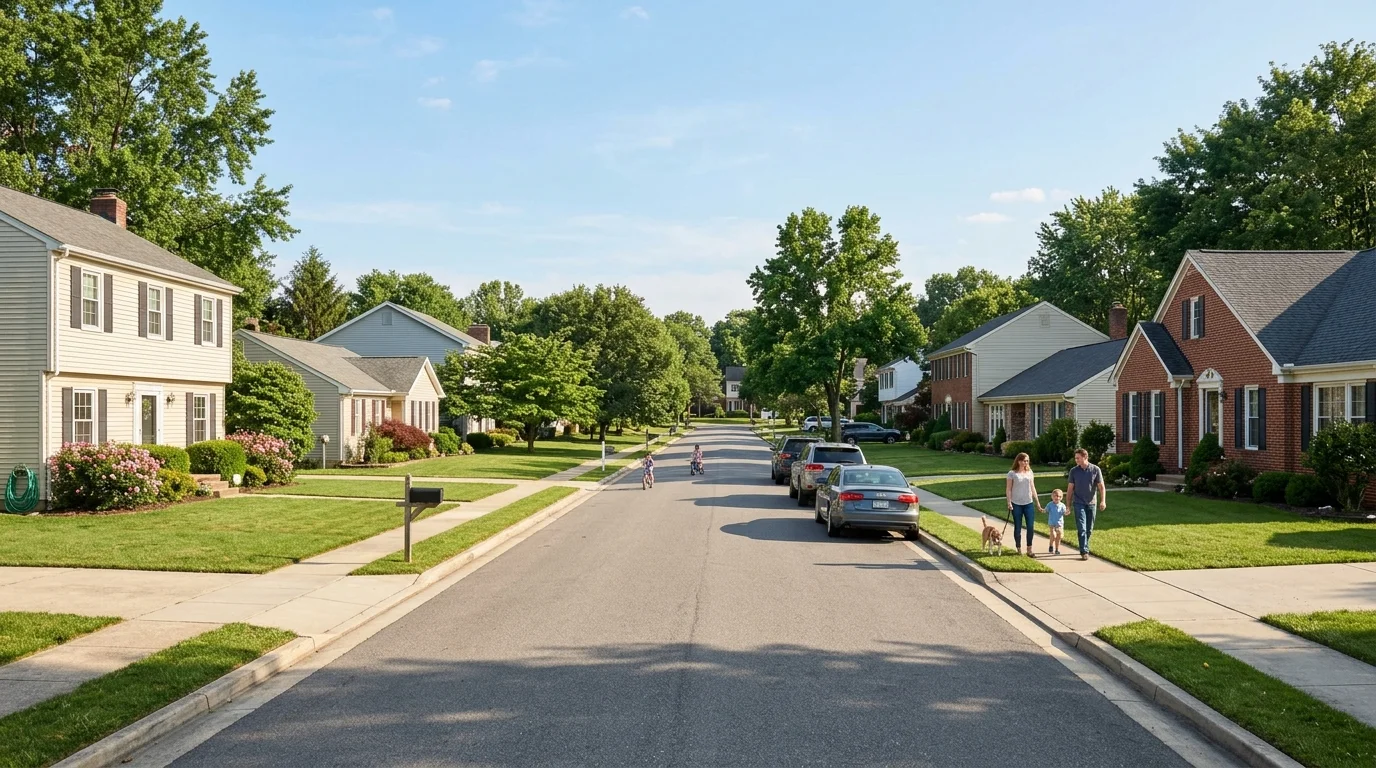
The suburb meaning refers to a community located near a city.
Quick Definition
Suburb (noun):
A residential district or community situated on the edge of or near a city, often connected to the city by roads or public transportation.
What It Usually Means
Suburbs commonly feature:
- Residential neighborhoods
- Single-family homes
- Schools and parks
- Shopping centers
- Local businesses
- Easy access to a nearby city
Many people commute from suburbs to cities for work or school.
Origin and History of Suburb
The suburb meaning comes from the Latin word suburbium, which combines:
- sub = under or near
- urbs = city
Together, the term originally meant “the area outside a city.”
As cities expanded during the Industrial Revolution and throughout the 20th century, suburbs grew rapidly to accommodate increasing populations and provide more living space.
Characteristics of a Suburb
Most suburbs share several common features.
Residential Focus
Housing is usually the primary land use.
Lower Population Density
Suburbs generally have fewer people per square mile than city centers.
Green Spaces
Many suburbs include parks, playgrounds, and tree-lined streets.
Family-Friendly Environment
Suburbs often attract families due to schools, larger homes, and quieter neighborhoods.
Access to Cities
Residents can usually travel to nearby cities for employment, education, shopping, or entertainment.
Real Examples of Suburb
Example 1
“They moved to a suburb after having children.”
Meaning: They chose a residential area outside the city.
Example 2
“He commutes from the suburbs every morning.”
Meaning: He travels from a suburban community to the city.
Example 3
“The suburb has excellent public schools.”
Meaning: The residential area is known for its schools.
Example 4
“We found a larger house in the suburbs.”
Meaning: Homes outside the city offered more space.
Example 5
“Many suburbs have shopping malls and parks.”
Meaning: These communities provide local amenities.
Example 6
“She prefers suburban living to downtown life.”
Meaning: She enjoys quieter residential neighborhoods.
Example 7
“The suburb is connected to the city by train.”
Meaning: Public transportation links the two areas.
Example 8
“Property prices in some suburbs have increased.”
Meaning: Home values have risen in residential communities.
Example 9
“They enjoy the peaceful atmosphere of their suburb.”
Meaning: Their neighborhood is quieter than the city center.
Example 10
“The suburb continues to grow as more families move in.”
Meaning: Population growth is expanding the residential area.
Suburb vs. City vs. Town vs. Rural Area
These terms describe different types of communities.
| Place | Meaning | Difference |
|---|---|---|
| Suburb | Residential area near a city | Usually connected to a metropolitan area |
| City | Large urban area | Dense population and major business center |
| Town | Smaller populated community | May or may not be near a city |
| Rural Area | Countryside with low population density | Farms, villages, and open land |
Advantages of Living in a Suburb
Many people choose suburban living because of:
- Larger homes
- Quieter neighborhoods
- More green space
- Family-friendly communities
- Good schools
- Lower noise levels
- Access to parks and recreation
- Close proximity to major cities
Keep in mind that these benefits vary by location.
Common Mistakes and Misunderstandings
Mistake: Every suburb is far from the city.
Correct: Many suburbs are only a short drive or train ride from downtown.
Mistake: All suburbs are the same.
Correct: Suburbs vary widely in size, population, housing styles, and amenities.
Mistake: Suburbs have no businesses.
Correct: Many suburbs include shopping centers, restaurants, offices, and entertainment venues.
Mistake: Only families live in suburbs.
Correct: Suburbs are home to people of all ages, including young professionals, retirees, and students.
Is “Suburb” Positive, Negative, or Neutral?
The suburb meaning is generally neutral.
Depending on the context, it may carry positive associations such as:
- Peaceful living
- Safety
- Spacious homes
- Community atmosphere
Or it may be viewed less favorably by those who prefer the convenience and energy of city life.
Should You Use “Suburb”?
Use “suburb” when:
- Referring to a residential area near a city.
- Discussing housing or real estate.
- Comparing urban and suburban lifestyles.
- Talking about commuting or metropolitan regions.
Avoid using it when:
- Describing remote countryside areas.
- Referring to independent towns that are not part of a metropolitan area.