

What Does “Schism” Mean?
Quick Definition
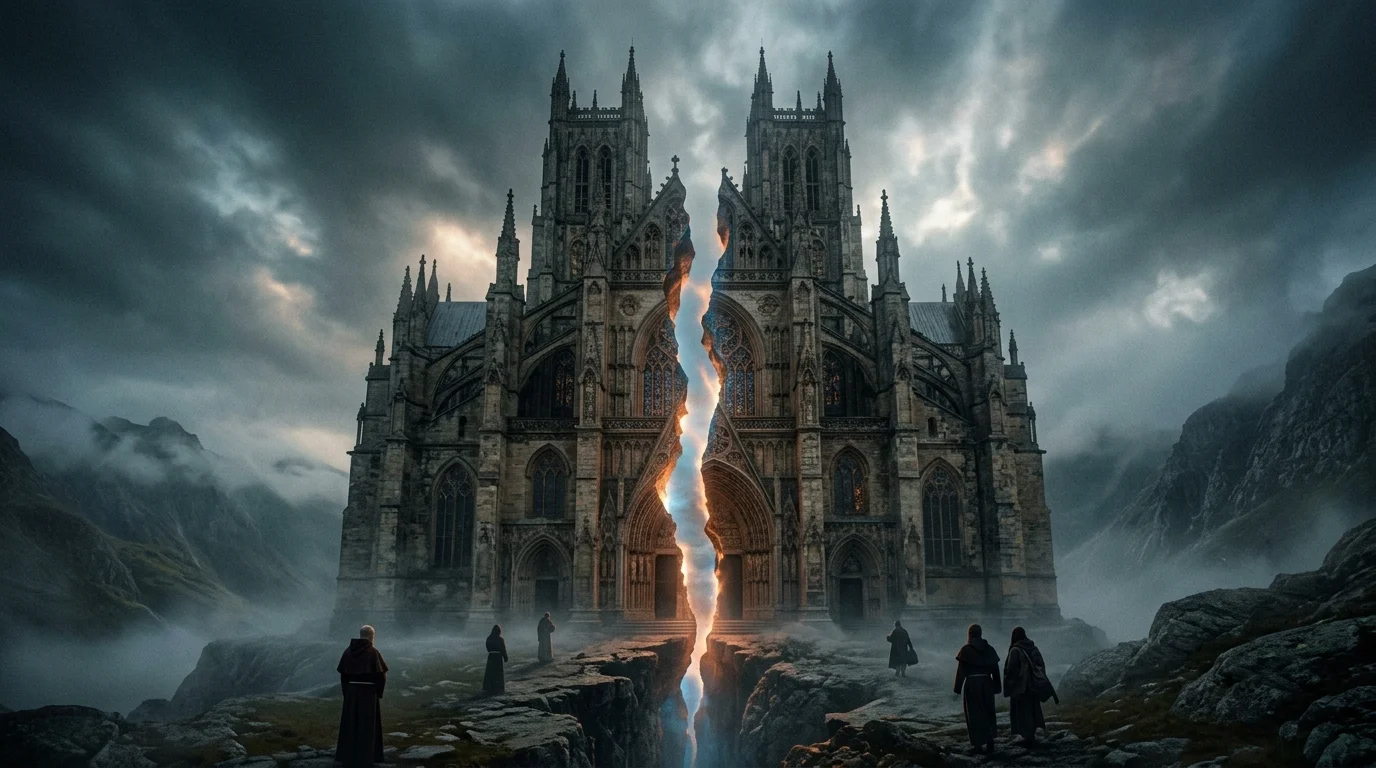
Schism is a noun that means a division or split within a group, organization, or movement, creating opposing factions . The schism meaning implies a break in unity that results in separate, often hostile, groups.
What It Usually Means In Conversations
When people talk about the schism meaning in everyday conversation, they’re usually referring to one of these things:
Religious division: The most powerful schism meaning comes from church history. A schism is a formal break within a church or religious body over differences in doctrine, authority, or practice .
Organizational split: The schism meaning can describe any group—political parties, companies, unions, clubs—splitting into opposing factions over disagreements .
General division: The schism meaning can simply describe a break between people or groups, like a rift between friends or a split in a community .
What Tone Does It Convey?
| Context | Tone | Example |
|---|---|---|
| Religious | Formal, significant | “The Great Schism divided Christendom” |
| Organizational | Serious, critical | “A schism threatened to tear the union apart” |
| General | Neutral, descriptive | “There was a schism between the two branches of the family” |
Schism vs. Heresy: Understanding the Difference
One of the most important aspects of the schism meaning is how it differs from “heresy.” These terms are often confused, but they have distinct meanings.
Heresy
Heresy involves the denial or doubt of core beliefs or doctrines . When someone commits heresy, they are rejecting a truth that their religion considers essential.
Example: A Christian who denies the divinity of Jesus commits heresy because they reject a core doctrine of the faith.
Schism
Schism involves a break in communion and unity, not necessarily a rejection of core beliefs . A schismatic group may still believe the same doctrines but has separated itself from authority or fellowship.
Example: A group that leaves a church over disagreements about leadership—while still believing the same doctrines—would be in schism.
The Key Distinction
According to Catholic canon law, heresy is “the obstinate denial or doubt of some truth which must be believed by divine and Catholic faith,” while schism is “the refusal of submission to the supreme pontiff or of communion with the members of the Church subject to him” . As one source explains, “by rejecting part of the Faith, heresy strikes at faith, while by rejecting communion, schism strikes at charity” .
Famous Historical Schisms
Understanding the schism meaning is easier when you know these famous examples:
The Great Schism of 1054 (East-West Schism)
The schism meaning is perhaps most associated with the Great Schism of 1054, which divided Christianity into Western (Roman Catholic) and Eastern (Orthodox) branches .
Causes of the schism:
Growing estrangement between the churches in Constantinople and Rome
Theological differences rooted in Greek philosophy versus Roman law
The “Filioque” clause—the West added a phrase to the Nicene Creed without consulting the East
Disputes over papal authority
In 1054, mutual excommunications occurred, solidifying the split . Although the excommunications were lifted in 1965, the schism has never fully healed .
The Western Schism (1378–1417)
The Western Schism was a period when there were rival popes—one in Rome and one in Avignon, France, and later even a third . This event significantly damaged the prestige of the papacy.
The Protestant Reformation (1517)
From the Roman Catholic perspective, the Protestant Reformation is one of the greatest Christian schisms . However, Protestants often see it as a fundamental reform and reinvigoration of Christianity rather than a schism .
Modern Schisms
The schism meaning applies to modern religious divisions as well. At the end of 2023, more than a quarter of the United Methodist Church’s 30,000 congregations planned to disaffiliate over LGBTQ+ pastors and same-sex marriage . The language of “schism” has been broadly applied to this division .
Schism Meaning in Other Religions
While the schism meaning is most heavily associated with Christianity, schisms exist in other religions too:
Islam: The division between Sunni, Shia, and Kharijite Islam in 632 CE over the rightful successor to Muhammad
Buddhism: The first schism was set up by Devadatta during Buddha’s life, and various early schools developed after his death
Judaism: Major denominations include Orthodox, Reform, Conservative, and Reconstructionist
Jainism: The first schism happened around the fourth century BCE, leading to the Digambara and Svetambara sects
Real Examples of Schism in Conversations
Example 1: Religious Context
Person A: “What was the Great Schism?”
Person B: “It was the split between the Eastern and Western Christian churches in 1054. They disagreed about the Pope’s authority.”
Meaning: Describing a major historical religious division.
Why it was used: To explain a key event in church history.
Example 2: Organizational Context
Person A: “Why did the company split?”
Person B: “There was a schism between the founders over how to grow the business.”
Meaning: A division within an organization.
Why it was used: To explain a company breakup.
Example 3: Political Context
Person A: “The party seems divided.”
Person B: “There’s a schism between the moderates and the progressives.”
Meaning: A division in a political party.
Why it was used: To describe ideological differences.
Example 4: Personal Context
Person A: “Why don’t they talk anymore?”
Person B: “There was a schism in the family after the inheritance dispute.”
Meaning: A division within a family.
Why it was used: To explain a family rift.
Common Mistakes and Misunderstandings
Confusing Schism with Heresy
The most common mistake is using the schism meaning to describe belief differences. Schism is about breaking unity, while heresy is about rejecting core beliefs . A group can be in schism without being heretical.
Thinking Schism Only Applies to Religion
While the schism meaning is most powerful in religious contexts, it applies to any group division . Political parties, companies, and even families can experience schisms.
Using It Casually
The schism meaning is formal and describes serious, significant divisions. Using it for a minor disagreement is often overly dramatic.
Similar Terms and Related Words
| Term | Meaning | Difference from Schism |
|---|---|---|
| Heresy | Rejection of core beliefs | About doctrine, not unity |
| Apostasy | Total rejection of faith | Complete abandonment, not division |
| Division | General splitting | Less formal, less serious |
| Rift | A break in unity | Less formal, can be smaller |
| Schismatic | A person who creates schism | The person, not the event |
Is Schism Positive, Negative, or Neutral?
The schism meaning is generally negative because it describes division and broken unity:
Negative aspects:
Represents conflict and division
Can cause lasting damage to organizations
Often involves painful disputes
Positive aspects (rare):
Can lead to reform and renewal
May allow groups to follow their conscience