
Rococo Meaning in English
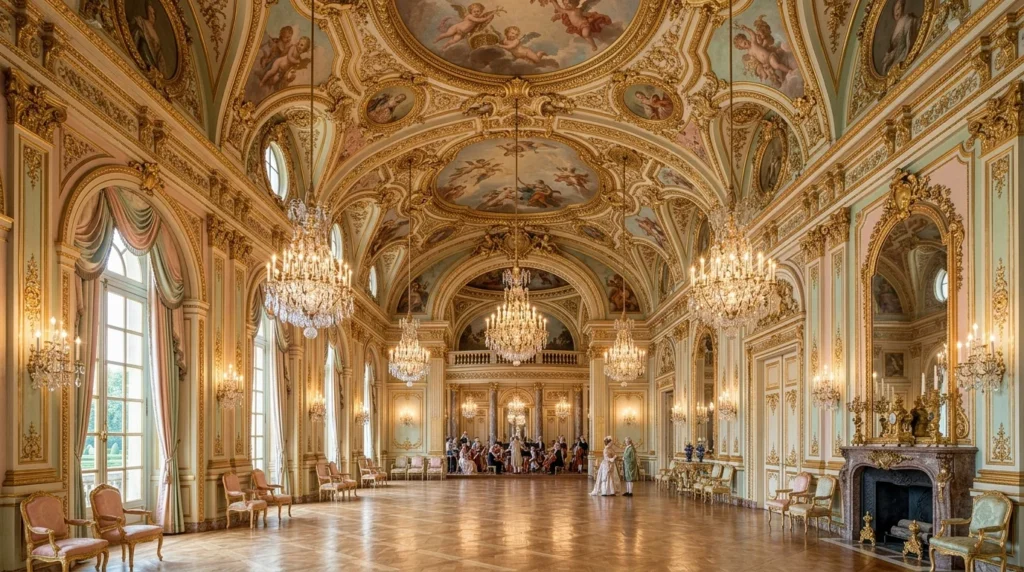
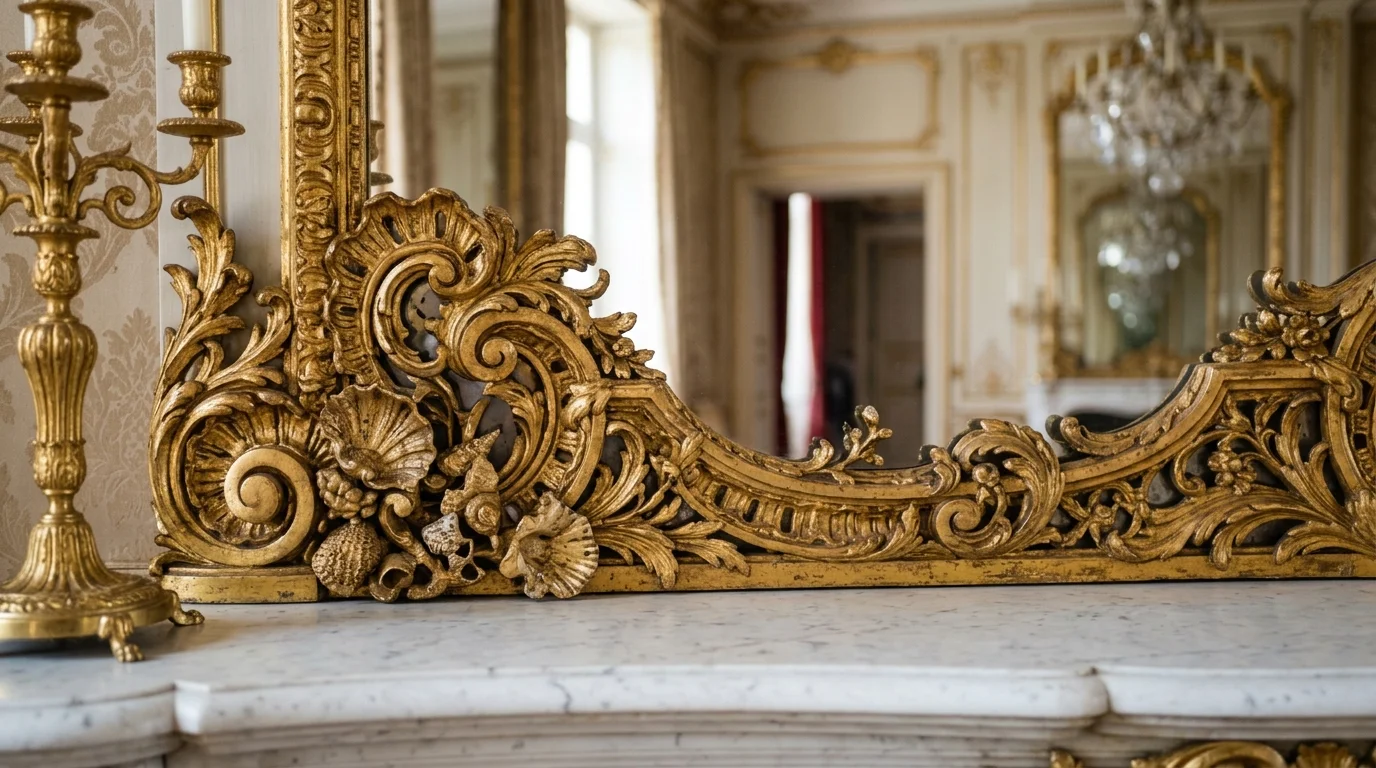
Rococo is an artistic and decorative style that originated in France in the early 18th century. The Rococo meaning in English describes a style known for its elegant, ornate, delicate, playful, and highly decorative appearance. It is especially recognized for curved shapes, asymmetrical designs, pastel colors, floral motifs, shells, scrolls, mirrors, and elaborate ornamentation.
Rococo began primarily as an interior-design and decorative-art style but eventually influenced painting, sculpture, architecture, furniture, fashion, and music throughout Europe.
The word can also be used more generally to describe something that is excessively elaborate, ornate, or intricately decorated.
Example:
The hotel lobby has a Rococo design with ornate mirrors, curved furniture, and intricate gold decorations.
Rococo Meaning in Art
The Rococo meaning in art refers to an artistic movement that flourished mainly during the 18th century. Rococo art is characterized by light colors, graceful forms, decorative details, romantic subjects, playful scenes, and an emphasis on pleasure and elegance.
Unlike some earlier Baroque works that focused heavily on religious drama, political power, and intense emotion, Rococo artists often portrayed romance, leisure, gardens, mythology, entertainment, and aristocratic life.
Characteristics of Rococo Art
Soft pastel colors
Curved and flowing lines
Delicate ornamentation
Asymmetrical compositions
Romantic themes
Playful and cheerful scenes
Elegant figures
Floral and natural motifs
Decorative backgrounds
Scenes of leisure and luxury
Important Rococo artists include Jean-Antoine Watteau, François Boucher, and Jean-Honoré Fragonard. Fragonard’s The Swing is one of the best-known examples of Rococo painting.
Rococo Fashion
Rococo fashion refers to the elaborate clothing and accessories associated with 18th-century European aristocratic society. It emphasized luxury, elegance, ornamentation, elaborate fabrics, lace, ribbons, embroidery, decorative patterns, and intricate hairstyles.
Women’s Rococo clothing commonly featured wide dresses, decorated bodices, layers of fabric, floral patterns, ribbons, lace, and elaborate hairstyles. Men’s fashion included richly decorated coats, waistcoats, breeches, stockings, lace cuffs, embroidery, and ornamental accessories.
Rococo fashion was not simply about clothing. It was also a way of communicating wealth, social position, refinement, and taste.
Today, Rococo-inspired fashion may refer to modern designs that use bows, lace, pastel colors, floral details, pearls, ornate patterns, and romantic silhouettes.
Example:
Her Rococo-inspired dress featured layers of pastel fabric, lace, ribbons, and floral embroidery.
Rococo Meaning in Music
The Rococo meaning in music refers to an elegant and decorative musical style associated with the 18th century. Rococo music generally favored lightness, graceful melodies, ornamentation, clarity, and refinement.
The style developed during a period when some composers began moving away from the complexity and dramatic intensity associated with high Baroque music toward a lighter and more elegant musical language.
Rococo and the related galant style emphasized:
Graceful melodies
Light musical textures
Decorative ornamentation
Clear musical phrases
Elegant rhythms
Refined expression
Less emphasis on dense counterpoint
Composers associated with Rococo and related 18th-century styles include François Couperin, Jean-Philippe Rameau, and Carl Philipp Emanuel Bach.
The term can therefore describe a musical aesthetic that sounds delicate, polished, ornamental, and sophisticated.
Rococo Architecture
Rococo architecture is an 18th-century European architectural and interior-design style known for ornate decoration, curved forms, intricate stucco, mirrors, floral motifs, shells, scrolls, pastel colors, and gilded details.
Rococo architecture is particularly noticeable in interiors. Rather than relying primarily on monumental scale, Rococo designers often created intimate spaces filled with elaborate decorative elements.
Features of Rococo Architecture
Curving forms
Asymmetrical ornamentation
Decorative stucco
Shell and floral motifs
Gilded details
Large mirrors
Pastel colors
Elaborate ceilings
Intricately decorated furniture
Decorative wall panels
Rococo architecture became particularly influential in France, Germany, Austria, and other parts of Europe.
One notable example is the Amalienburg in Munich, whose highly decorated interior demonstrates many characteristic Rococo features.
Rococo Meaning in French
The Rococo meaning in French is associated with the French word rococo, which describes the artistic and decorative style that developed in France during the 18th century.
The term is historically connected with rocaille, a French decorative style involving rock, shell, and natural forms. Rococo decoration frequently incorporated shells, plants, flowers, curves, and other organic motifs.
In French, rococo can refer to the historical artistic movement, while it can also be used more broadly for something that appears overly ornate, elaborate, or excessively decorative.
French example:
Le style rococo est célèbre pour ses décorations élégantes et complexes.
English meaning:
The Rococo style is famous for its elegant and intricate decorations.
Rococo vs Baroque
Rococo vs. Baroque is a common comparison because Rococo developed partly from the Baroque tradition. Although both styles use elaborate decoration, their overall character is different.
| Feature | Rococo | Baroque |
|---|---|---|
| Main period | Early–mid 18th century | Late 16th–18th century |
| Mood | Light, playful, intimate | Dramatic, powerful, emotional |
| Decoration | Delicate and intricate | Grand and monumental |
| Colors | Often pastel and light | Often rich and intense |
| Themes | Romance, leisure, pleasure | Religion, history, power |
| Forms | Curved and asymmetrical | Dynamic and dramatic |
| Atmosphere | Elegant and playful | Serious and theatrical |
In simple terms, Baroque is generally more dramatic and monumental, while Rococo is lighter, more intimate, playful, and decorative.
However, the two styles are closely connected, and the transition from Baroque to Rococo was gradual rather than sudden.
Rococo Examples
There are many famous Rococo examples in painting, architecture, interior design, furniture, and decorative arts.
Famous Rococo Art Examples
The Swing by Jean-Honoré Fragonard
The Embarkation for Cythera by Jean-Antoine Watteau
Paintings by François Boucher depicting mythology, romance, and aristocratic leisure
Rococo Architecture Examples
Amalienburg in Munich
Asam Church in Munich
Rococo interiors of European palaces
18th-century French aristocratic salons
Rococo Design Examples
Rococo-inspired objects and interiors commonly feature:
Ornate mirrors
Curved furniture
Floral carvings
Shell motifs
Gold ornamentation
Pastel colors
Elaborate wall decorations
Intricate furniture details
Today, Rococo remains influential in interior design, fashion, visual art, photography, theater, and popular culture. When someone describes a room, outfit, or artwork as “Rococo,” they usually mean that it has a luxurious, ornate, romantic, delicate, and highly decorative appearance.
What Does “Rococo” Mean?
Quick Definition
Rococo is an 18th-century artistic style characterized by elaborate ornamentation, intricate patterns, asymmetrical designs, and a light, elegant, and playful overall effect . The rococo meaning is most often used to describe a style that is exceptionally detailed, decorative, and sometimes excessive .
The Core Meaning
The rococo meaning encompasses a few key aspects:
Artistic Style: The primary rococo meaning describes an art and design movement. It is characterized by lightness, grace, playfulness, and excessive ornamentation .
Ornate and Decorative: Something described as “rococo” is highly detailed and elaborate, often with curving, asymmetrical forms. It can be used for visual arts, architecture, furniture, or even music .
A Reaction to Baroque: The rococo meaning is also defined by its contrast to the earlier Baroque style. In contrast to Baroque’s grandeur, gravity, and religious themes, Rococo was lighthearted, intimate, and secular .
What Tone Does It Convey?
The tone of rococo depends on the context:
| Context | Tone | Example |
|---|---|---|
| Art History | Neutral, descriptive | “The Rococo period was known for its asymmetrical designs” |
| Describing Decoration | Playful, ornate | “An exquisite gilded rococo mirror” |
| Figurative Use | Slightly negative, excessive | “They sat me next to Diana, who told me the whole rococo story of her European vacation” |
The Origin and History of Rococo
The Birth of Rococo in France
The rococo meaning began in Paris in the early 1700s. It was a reaction against the heavy grandeur of the Baroque style and the opulent Palace of Versailles under Louis XIV . After the king’s death in 1715, French nobility moved away from Versailles, and their new Parisian townhouses demanded a more intimate and elegant style . This shift in environment was the birthplace of the rococo meaning.
The Word “Rococo”
The word “rococo” is a combination of the French word “rocaille” (shell or pebble) and “barocco” (the Italian word for Baroque) . “Rocaille” refers to the shell-covered rockwork used to decorate artificial grottoes in gardens . The term was originally used sarcastically by critics in the late 18th century, implying the style was frivolous and outdated . However, by the mid-19th century, the rococo meaning was formally accepted by art historians .
Key Characteristics
To understand the rococo meaning, it’s helpful to look at its distinct characteristics:
Asymmetry: One of the most defining features of the rococo meaning is its use of asymmetrical, or unbalanced, designs. This was a deliberate break from the symmetry of the Baroque period .
“S” and “C” Curves: Rococo designs are dominated by graceful, curving lines, often forming the shapes of the letters “S” and “C” .
Nature Motifs: The rococo meaning is deeply connected to nature. Artists used natural themes like shells, flowers, leaves, birds, and vines .
Light Colors: Instead of Baroque’s dark and rich colors, Rococo favored delicate pastels—pale blues, soft pinks, and creamy whites .
Lighthearted Themes: The subjects were secular, celebrating love, leisure, and pleasure. The rococo meaning is often associated with scenes of aristocratic romance and entertainment .
The Spread of Rococo
While it began in France, the rococo meaning quickly spread across Europe, particularly influencing Germany and Austria . In German-speaking lands, it was adopted with enthusiasm and merged with local Baroque traditions to create a spectacular, stucco-covered style often seen in pilgrimage churches, like the Wieskirche in Bavaria . In England, it was often referred to as the “French taste” and was never fully adopted in architecture, but it significantly influenced silverwork, porcelain, and furniture design .
Rococo Meaning on Different Platforms
Interior Design
The rococo meaning in interior design is about creating a total, immersive experience of elegance, lightness, and comfort . Rococo rooms were designed as a complete work of art. Curving forms and asymmetrical decorations were applied to everything from the wall moldings to the furniture.
Example: The Salon de Monsieur le Prince in the Petit Château at Chantilly, France, designed by Jean Aubert .
Painting
Rococo painting is known for its easygoing, lighthearted treatment of themes like love and mythology, featuring delicate brushwork and sensuous coloring . The rococo meaning in painting is all about romance and leisure. In France, it began with Antoine Watteau’s graceful, melancholic paintings, culminating in the playful and sensuous works of François Boucher and Jean-Honoré Fragonard .
Example: Jean-Honoré Fragonard’s “The Swing” .
Decorative Arts and Furniture
The rococo meaning shines in furniture and decorative arts, showcasing exuberant detail, grace, and playfulness . French Rococo furniture is famous for its curving, three-dimensional forms, intricate marquetry, and lavish use of gilded bronze ornamentation . In England, Thomas Chippendale’s furniture designs are the most famous adaptation of the rococo meaning .
Example: Furniture designs by Thomas Chippendale in England .
Rococo vs. Baroque
Understanding the rococo meaning requires comparing it to its predecessor, Baroque:
| Aspect | Baroque (17th century) | Rococo (18th century) |
|---|---|---|
| Mood | Grand, dramatic, serious, religious | Light, playful, intimate, secular |
| Themes | Religion, power, heroism | Love, nature, leisure, entertainment |
| Colors | Rich, dark primary colors | Light, pale pastels |
| Design | Symmetrical, majestic | Asymmetrical, delicate curving forms |
Real Examples of Rococo in Conversations
Example 1: Art History
Person A: “I love all the curves and gold in this palace room.”
Person B: “That’s the essence of rococo. It was all about elegance and playfulness.”
Meaning: Describing the artistic style’s key traits.
Why it was used: To identify the historical design.
Example 2: Figurative Use
Person A: “The story she told was so rococo, with so many unnecessary, decorative details.”
Person B: “It was probably embellished beyond belief.”
Meaning: Describing something as over-ornamented or excessively detailed.
Why it was used: To indicate an embellished story .
Example 3: Describing Furniture
Person A: “That mirror is so ornate!”
Person B: “Yes, it’s a beautiful example of rococo style with its shell-like curves.
Meaning: Identifying the intricate design.
Why it was used: To specify the decorative art style.
Common Mistakes and Misunderstandings
Confusing Rococo with Baroque
This is one of the most common mistakes. While Rococo evolved from Baroque, the rococo meaning is distinct. The two styles have different moods and characteristics. Whereas Baroque was grand, serious, and religious, Rococo was light, playful, and secular .
Thinking it was always a compliment
The word “rococo” was originally a derogatory term used by critics to mock the style as frivolous and overly decorative . The rococo meaning shifted over time, and it is now accepted by art historians.
Applying it to the wrong era
The rococo meaning is specific to the 18th century. It’s important to use it correctly when discussing art history.
Similar Terms and Related Words
| Term | Meaning | Connection to Rococo |
|---|---|---|
| Baroque | 17th-century artistic style with dramatic, grand designs | The predecessor and influence on Rococo |
| Neoclassicism | A reaction to Rococo, seeking seriousness and order | The style that replaced Rococo |
| Chinoiserie | European imitation of Chinese artistic styles | A popular theme within Rococo design |
| Fête galante | A painting genre depicting elegant outdoor gatherings | An iconic Rococo painting subject popularized by Watteau |
Is Rococo Positive, Negative, or Neutral?
The rococo meaning is neutral as an art term, but its reception has varied:
Positive aspects:
Celebrated for its elegance, beauty, and playful spirit
Inspired highly skilled craftsmanship
A major period in European art history
Negative aspects (historically):
Originally criticized for being frivolous and superficial
Considered lacking in moral seriousness compared to Neoclassicism
Should You Use “Rococo”?
You might use it when:
Discussing 18th-century art, architecture, or design
Describing something with elaborate, ornate detail
Comparing different artistic periods
You should avoid it if:
You simply mean something is “complicated” or “fancy”
The context requires a neutral description of a “decorative” style