
What Does “Michaelmas” Mean?
Quick Definition
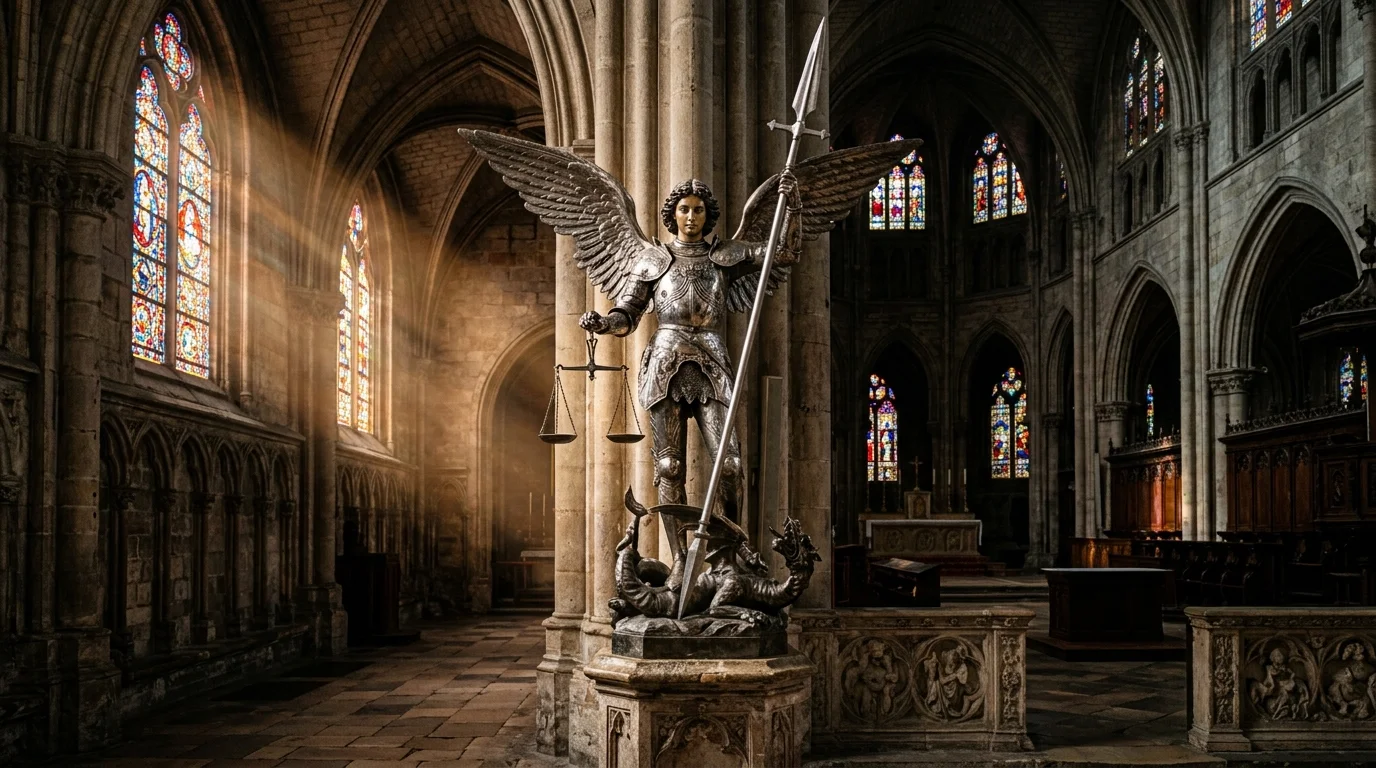
Michaelmas (pronounced MIK-əl-məs) is the Christian feast day of St. Michael the Archangel, celebrated on September 29 in Western Christianity. The name comes from a shortening of “Michael’s Mass,” similar to how Christmas comes from “Christ’s Mass” .
What It Usually Means In Conversations
When people use the word Michaelmas in everyday conversation, they’re usually talking about one of these things:
The religious meaning: A Christian festival honoring St. Michael the Archangel, celebrated on September 29. In the Roman Catholic Church, it’s now more commonly celebrated as the Feast of Saints Michael, Gabriel, and Raphael .
The seasonal meaning: A marker of autumn. Because it falls near the autumnal equinox, Michaelmas signals the end of harvest, the shortening of days, and the beginning of the darker half of the year .
The quarter day meaning: In England, Wales, and Ireland, Michaelmas was one of the four quarter days—days when accounts were settled, rent was due, and leases began or ended .
The academic meaning: Many universities in the UK, Ireland, and Commonwealth countries call their autumn term the “Michaelmas Term” because it begins around this time .
What Tone Does It Convey?
The tone of Michaelmas depends on the context:
| Context | Tone | Example |
|---|---|---|
| Religious observance | Reverent, traditional | “We’re attending Michaelmas mass at the cathedral” |
| Seasonal celebration | Festive, warm | “Let’s host a Michaelmas dinner to welcome autumn” |
| Academic context | Formal, institutional | “The Michaelmas term starts on October 1” |
| Historical discussion | Informative, nostalgic | “Michaelmas was one of the medieval quarter days” |
| Folklore | Whimsical, charming | “Don’t pick blackberries after Michaelmas!” |
What Does Michaelmas Mean on Different Platforms?
Text Messages
In texts, Michaelmas is rarely used casually. You’re more likely to see it when someone’s talking about university terms, planning a seasonal celebration, or referencing British traditions.
Example: “Are you back for Michaelmas term next week?”
Snapchat
On Snapchat, you might see Michaelmas in stories about autumn activities, harvest celebrations, or seasonal food traditions.
Example: A snap of a roasted goose with the caption “Michaelmas traditions”
Instagram users post about Michaelmas in seasonal content, food photography (especially goose and seasonal dishes), and posts about autumn festivals. Gardeners might post about Michaelmas daisies.
Example: “Celebrating the start of autumn with a traditional Michaelmas feast”
TikTok
TikTok creators share content about Michaelmas in videos about seasonal traditions, historical celebrations, and autumn folklore. Some make videos explaining the festival and its customs.
Example: “Here’s why you should eat goose on Michaelmas”
Discord
In Discord servers, especially those focused on history, seasonal living, or British culture, Michaelmas might appear in discussions about traditions and festivals.
Example: “Anyone else celebrating Michaelmas this week?”
Reddit has discussions about Michaelmas in subreddits like r/history, r/christianity, r/autumn, and r/AskHistorians. Users share traditions, recipes, and information about the festival.
Example: “What are your Michaelmas traditions?”
Dating Apps
On dating apps, Michaelmas is rare, but you might see it in bios from history enthusiasts, British expats, or people who love autumn traditions.
Example: “Swipe right if you know what Michaelmas is”
Origin and History of Michaelmas
The Michaelmas meaning has a long and fascinating history that spans centuries and continents.
Origins in the Early Church
The veneration of St. Michael began in the Eastern Church in the 4th century and spread to Western Christianity by the 5th century . The Archangel Michael was regarded as the leader of the heavenly armies, a warrior who defeated Satan in the war in heaven .
In the Roman Catholic Church, Michaelmas is now more commonly celebrated as the Feast of Saints Michael, Gabriel, and Raphael, the archangels. In the Anglican Church, its proper name is the Feast of St. Michael and All Angels .
The Name’s Origin
The word Michaelmas is a shortening of “Michael’s Mass.” It follows the same pattern as:
Christmas (Christ’s Mass)
Candlemas (Candle Mass, where candles are blessed)
Lammas (Loaf Mass, celebrating the first harvest)
Michaelmas in Medieval England
During the Middle Ages, Michaelmas was a great religious feast. It was celebrated as a Holy Day of Obligation, though this requirement was abolished in the 18th century .
In medieval England, Michaelmas marked the end of the husbandman’s year. Harvest was over, and the bailiff or reeve of the manor would be making out the accounts for the year . It was also one of the English, Welsh, and Irish quarter days—days when accounts were settled, rent was due, and contracts were signed .
Michaelmas and the Academic Year
The Michaelmas meaning extends to education. Many universities in the UK, Ireland, and Commonwealth countries call their autumn term the “Michaelmas Term” because it begins around September 29 . These include Oxford, Cambridge, Durham, London, and Trinity College Dublin .
Michaelmas and the Legal Profession
The Inns of Court of the English Bar and the Honorable Society of King’s Inns in Ireland also have a Michaelmas term as one of their dining terms . In the US, the Supreme Court begins its term on the first Monday in October, just a few days after Michaelmas, loosely following the English custom .
How People Actually Use Michaelmas
When to Use It
You might discuss Michaelmas when:
Talking about Christian feast days or church traditions
Discussing the start of autumn or harvest season
Referring to university terms in the UK or Ireland
Mentioning English quarter days or historical financial calendars
Planning a seasonal celebration or feast
When Not to Use It
You might want to avoid using Michaelmas when:
The person you’re talking to doesn’t know the tradition (you’d need to explain it)
You’re in a context where a simpler term would be clearer
The conversation doesn’t involve British, Irish, or Christian traditions
Michaelmas Traditions and Celebrations
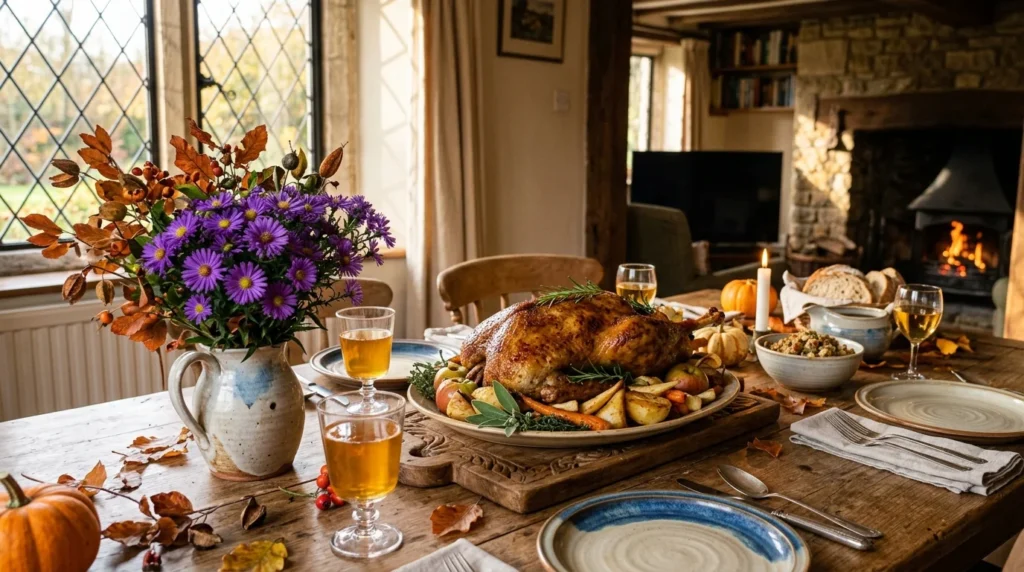
The Michaelmas Goose
One of the most famous Michaelmas traditions is eating a goose on September 29. There was a saying that “if you eat goose on Michaelmas Day you will never lack money all year” .
Why goose? There are several legends explaining the connection:
Legend 1: The son of an Irish king choked on a goose bone and was brought back to life by St. Patrick. The king ordered a goose to be sacrificed every Michaelmas in honor of the saint .
Legend 2: Queen Elizabeth I was eating a goose when she heard of the defeat of the Spanish Armada and proclaimed that geese should be eaten in commemoration. However, this legend doesn’t hold up historically, as the connection between geese and Michaelmas existed at least a century earlier .
In Ireland, the Michaelmas goose was called “Fómhar na nGéanna” and was presented as gifts or donated to the poor .
The Struan Cake
In the Scottish Hebrides, a special bread called the “Struan” or “Michaelmas Bannock” was baked. The recipe called for equal parts of barley, oats, and rye, made without using any metal implements. The cake was blessed at an early morning Mass and given to the poor in remembrance of absent friends or those who had died .
Blackberry Folklore
There’s a charming bit of folklore that says you shouldn’t pick blackberries after Michaelmas. The legend says that when St. Michael expelled Satan from heaven, the devil fell into a blackberry bush, cursed the fruit, and made them unfit for eating .
As a result, a Michaelmas pie is made from the last of the season’s blackberries .
The Michaelmas Daisy
One of the few flowers still blooming at this time of year is the Michaelmas daisy, also known as asters. Giving a Michaelmas daisy as a present was thought to protect against the darkness of approaching winter .
Irish Traditions
In Ireland, pilgrimages to holy wells associated with St. Michael were common. The greeting “May Michaelmas on you” was traditional, and boys born on this day were often christened Michael or Micheál .
In Tramore, County Waterford, a procession with an effigy of St. Michael called the “Micilín” was brought through town to mark the end of the fishing season .
American Traditions
In Mifflin County, Pennsylvania, Michaelmas has been observed since 1786 as “Goose Day.” Local tradition holds that eating goose on September 29 will bring prosperity. The tradition is still honored today with goose dinners, festivals, and painted fiberglass goose statues throughout the county .
Michaelmas in Modern Times
In the Church
Today, Michaelmas is still observed in many Christian traditions. In the Catholic Church, it is the Feast of Saints Michael, Gabriel, and Raphael. In the Anglican Church, it is the Feast of St. Michael and All Angels .
In Lutheran and Anglican traditions, three to four archangels are recognized: Michael, Gabriel, Raphael, and sometimes Uriel .
In Academia
The Michaelmas meaning lives on in education. Many universities in the UK, Ireland, and Commonwealth countries still call their autumn term the “Michaelmas Term” . These include:
University of Cambridge
University of Oxford
Durham University
University of London
University of St. Andrews
Lancaster University
Trinity College Dublin
University of Wales, Aberystwyth
In Waldorf Schools
Michaelmas is still celebrated in Waldorf schools. Rudolf Steiner considered it the second most important festival after Easter. The celebration teaches the importance of facing fears and strengthening resolve .
In the City of London
In the City of London, Michaelmas is the day when the new Lord Mayor of London is elected in the Common Hall .
The Blue Mass
Because Saint Michael is the patron of police officers, Michaelmas may also see a Blue Mass celebrated in honor of those who serve in law enforcement .
Real Examples of Michaelmas in Conversations
Example 1: Religious Context
Person A: “What are you doing on September 29?”
Person B: “I’m going to Michaelmas mass at the cathedral. It’s the feast of St. Michael.”
Meaning: Person B is attending a church service celebrating the archangel.
Why it was used: To describe a religious observance.
Example 2: Seasonal Celebration
Person A: “The nights are really drawing in now.”
Person B: “It’s Michaelmas week. Time to embrace autumn properly.”
Meaning: Person B is marking the start of autumn.
Why it was used: To note the changing season.
Example 3: Academic Context
Person A: “When do you go back to university?”
Person B: “At the start of Michaelmas term, early October.”
Meaning: Person B is referring to the autumn term.
Why it was used: To describe the academic calendar.
Example 4: Traditional Food
Person A: “What’s for dinner?”
Person B: “Roast goose. It’s Michaelmas tradition!”
Meaning: Person B is following the tradition of eating goose on September 29.
Why it was used: To celebrate a folk tradition.
Example 5: Historical Reference
Person A: “Why are all these old contracts dated September 29?”
Person B: “That’s Michaelmas. It was one of the quarter days when rents were due.”
Meaning: Person B is explaining a historical practice.
Why it was used: To provide historical context.
Example 6: Folklore Discussion
Person A: “These blackberries are amazing.”
Person B: “Enjoy them now. You can’t pick them after Michaelmas!”
Meaning: Person B is referencing the folklore about blackberries.
Why it was used: To share a tradition.
Example 7: Garden Chat
Person A: “What’s that flower?”
Person B: “It’s a Michaelmas daisy. It always blooms around this time.”
Meaning: Person B is identifying a seasonal flower.
Why it was used: To talk about garden plants.
Example 8: Planning an Event
Person A: “Let’s have a dinner party to welcome autumn.”
Person B: “Perfect timing with Michaelmas coming up.”
Meaning: Person B is suggesting a seasonal celebration.
Why it was used: To plan a gathering.
Example 9: American Tradition
Person A: “Is there an event in Lewistown this weekend?”
Person B: “Yes, it’s Goose Day for Michaelmas.”
Meaning: Person B is referencing the Pennsylvania tradition.
Why it was used: To describe a local festival.
Example 10: Teaching Children
Person A: “Why do we eat goose today?”
Person B: “It’s Michaelmas, a very old tradition to bring good luck.”
Meaning: Person B is explaining the festival to a child.
Why it was used: To share cultural knowledge.
Common Mistakes and Misunderstandings
Thinking It’s Only About the Archangel
While Michaelmas is primarily a Christian feast honoring St. Michael, it’s also about harvest, autumn, and the changing seasons. The Michaelmas meaning is richer than just the religious element .
Assuming It’s Still a Major Holiday
Michaelmas was once a major festival, but today it’s much quieter. It’s still observed, but not with the same widespread celebration as Christmas or Easter .
Confusing It With Other Festivals
Michaelmas is sometimes confused with other autumn festivals. It’s distinct from Thanksgiving, Halloween, or the autumnal equinox, though it occurs near the equinox.
Not Knowing About the Quarter Day Connection
Many people don’t realize that Michaelmas was one of the English quarter days, alongside Lady Day (March 25), Midsummer (June 24), and Christmas (December 25) .
Forgetting the Academic Connection
The Michaelmas meaning in academia is still very much alive. People unfamiliar with UK or Commonwealth universities might not know about the Michaelmas term .
Misunderstanding the Goose Tradition
Some people think the Michaelmas goose tradition is just a random custom. It actually has a long history, with the goose fattened on the stubble of harvested fields and eaten as a way to mark the end of the agricultural year .
Similar Festivals and Terms
Here are words and concepts that are similar to or related to the Michaelmas meaning.
| Word/Concept | Meaning | Difference from Michaelmas |
|---|---|---|
| Christmas | Celebration of Christ’s birth | Different feast day (December 25) |
| Lammas | The feast of the first harvest | Celebrated on August 1 |
| Candlemas | Feast of the Presentation | Celebrated on February 2 |
| Lady Day | Feast of the Annunciation | March 25 quarter day |
| Midsummer | Summer solstice celebration | June 24 quarter day |
| Martinmas | Feast of St. Martin | November 11; Scottish academic term |
| Autumnal Equinox | Astronomical start of autumn | Around September 22-23; not Christian |
| Harvest Festival | Celebration of the harvest | Varies by region and tradition |
| Quarter Day | Days for settling accounts | Michaelmas is one of four in England |
| Michaelmas Daisy | A flower blooming in autumn | Named for the festival |
Is Michaelmas Positive, Negative, or Neutral?
The Michaelmas meaning is overwhelmingly positive.
Positive aspects:
Celebrates the archangel as a protector against evil
Marks the end of harvest and the bounty of the season
Brings communities together for feasts and celebrations
Connects people with seasonal rhythms and traditions
Preserves cultural heritage and folklore
Potential challenges:
Some Christian traditions object to the veneration of angels
The religious observance may not resonate with everyone
Commercialization is limited, but interest in seasonal traditions is growing
Overall, the Michaelmas meaning is a positive, life-affirming festival that celebrates abundance, protection, and the turning of the seasons.
Should You Celebrate Michaelmas?
You might celebrate Michaelmas if:
You’re part of a Christian tradition that observes it
You enjoy seasonal festivals and traditions
You want to mark the start of autumn
You’re interested in British, Irish, or Scottish cultural heritage
You like the idea of a feast day with food and community
You’re part of a university or legal institution that observes the Michaelmas term
You might not observe it if:
Your Christian tradition doesn’t observe angel feast days
You’re not interested in seasonal festivals
The religious aspects don’t resonate with you
If you’re in a Christian tradition that objects to angel veneration, you’re free to enjoy the seasonal aspects like food and fellowship without the religious observance .