

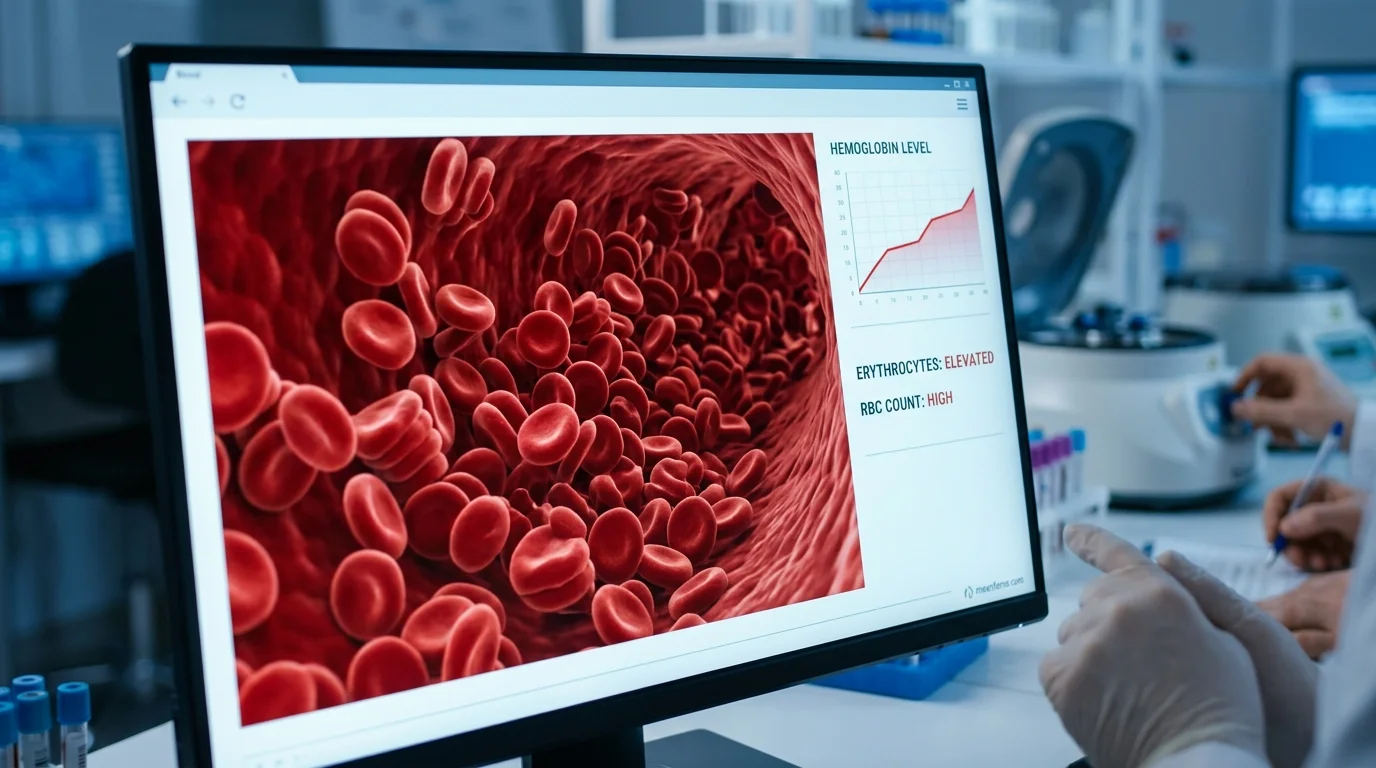
What Is Hemoglobin?
Hemoglobin is an iron-rich protein found inside red blood cells.
Its main functions are to:
- Carry oxygen from the lungs to the body’s tissues.
- Transport carbon dioxide back to the lungs for exhalation.
- Help maintain healthy oxygen delivery throughout the body.
Without enough hemoglobin, your organs cannot receive adequate oxygen. Conversely, too much hemoglobin can sometimes make the blood thicker than normal, depending on the cause.
What Does High Hemoglobin Mean?
High hemoglobin means your hemoglobin level is above the normal reference range used by the laboratory.
General Adult Reference Ranges
Normal ranges vary slightly between laboratories, but typical values are:
| Group | Typical Hemoglobin Range |
|---|---|
| Adult men | 13.8–17.2 g/dL |
| Adult women | 12.1–15.1 g/dL |
| Children | Varies by age |
A result above your laboratory’s reference range is considered elevated. Your healthcare provider will interpret the result in the context of your age, sex, health, and any medical conditions.
Common Causes of High Hemoglobin
Several factors can lead to elevated hemoglobin levels.
1. Dehydration
When you lose body fluids, your blood becomes more concentrated, making hemoglobin appear higher than it actually is.
2. Living at High Altitudes
People living at higher elevations often produce more red blood cells because there is less oxygen in the air.
3. Smoking
Smoking reduces the amount of oxygen available in the blood, prompting the body to produce more red blood cells.
4. Chronic Lung Disease
Conditions such as chronic obstructive pulmonary disease (COPD) can lower blood oxygen levels and stimulate increased red blood cell production.
5. Heart Disease
Certain heart conditions that reduce oxygen delivery may contribute to higher hemoglobin levels.
6. Sleep Apnea
Obstructive sleep apnea can repeatedly reduce oxygen levels during sleep, which may cause the body to increase hemoglobin production.
7. Polycythemia Vera
This rare bone marrow disorder causes the body to produce too many red blood cells, leading to persistently high hemoglobin and hematocrit levels.
8. Performance-Enhancing Drugs
The use of erythropoietin (EPO) or anabolic steroids may increase red blood cell production.
Symptoms of High Hemoglobin
Some people have no symptoms, especially when the increase is mild.
When symptoms occur, they may include:
- Headaches
- Dizziness
- Fatigue
- Blurred vision
- Flushing or redness of the face
- High blood pressure
- Itching, especially after a warm shower (commonly associated with polycythemia vera)
- Shortness of breath
- Numbness or tingling in the hands or feet
Symptoms depend on the underlying cause and how elevated the hemoglobin level is.
Is High Hemoglobin Dangerous?
It can be.
Persistently elevated hemoglobin may increase blood thickness (viscosity), which in some cases raises the risk of:
- Blood clots
- Stroke
- Heart attack
- Deep vein thrombosis (DVT)
- Pulmonary embolism
The level of risk depends on the cause and severity of the elevation. Mild increases due to dehydration often resolve after adequate fluid intake.
How Is High Hemoglobin Diagnosed?
Your healthcare provider may recommend:
- Complete blood count (CBC)
- Hematocrit measurement
- Red blood cell count
- Blood oxygen testing
- Kidney and liver function tests
- Evaluation for sleep apnea if suspected
- Genetic testing (for certain blood disorders)
- Bone marrow testing in selected cases
Additional tests help determine the underlying cause rather than relying on the hemoglobin level alone.
Treatment for High Hemoglobin
Treatment depends on the underlying cause.
Possible approaches include:
- Drinking enough fluids if dehydration is the cause.
- Quitting smoking.
- Treating lung or heart disease.
- Managing sleep apnea, often with appropriate therapy.
- Therapeutic phlebotomy (removing blood) for certain conditions such as polycythemia vera.
- Medications prescribed by a healthcare professional when appropriate.
Do not attempt to lower hemoglobin without medical guidance.
Lifestyle Tips
Healthy habits that may support overall blood health include:
- Stay well hydrated.
- Avoid smoking.
- Exercise regularly, as recommended by your healthcare provider.
- Eat a balanced diet.
- Manage chronic health conditions.
- Attend follow-up appointments if your blood tests are abnormal.
Common Mistakes and Misunderstandings
Mistake: High hemoglobin always means you’re healthy.
Correct: While athletes or people living at high altitude may naturally have slightly higher levels, persistent elevation can signal an underlying medical condition.
Mistake: High hemoglobin always causes symptoms.
Correct: Many people have no symptoms and discover it during routine blood work.
Mistake: Drinking more water always fixes high hemoglobin.
Correct: Hydration helps only when dehydration is the cause. Other causes require medical evaluation and treatment.
Mistake: High hemoglobin and high iron are the same.
Correct: Hemoglobin and iron are related, but a high hemoglobin level does not necessarily mean your iron level is elevated.
When Should You See a Doctor?
Seek medical evaluation if:
- Your blood test repeatedly shows high hemoglobin.
- You develop severe headaches, dizziness, or vision changes.
- You experience chest pain or shortness of breath.
- You notice symptoms of a blood clot, such as sudden leg swelling or pain.
- You have unexplained fatigue or persistent facial redness.
Prompt evaluation is especially important if high hemoglobin is accompanied by other abnormal blood test results.