
What Does “Haboob” Mean?
Quick Definition
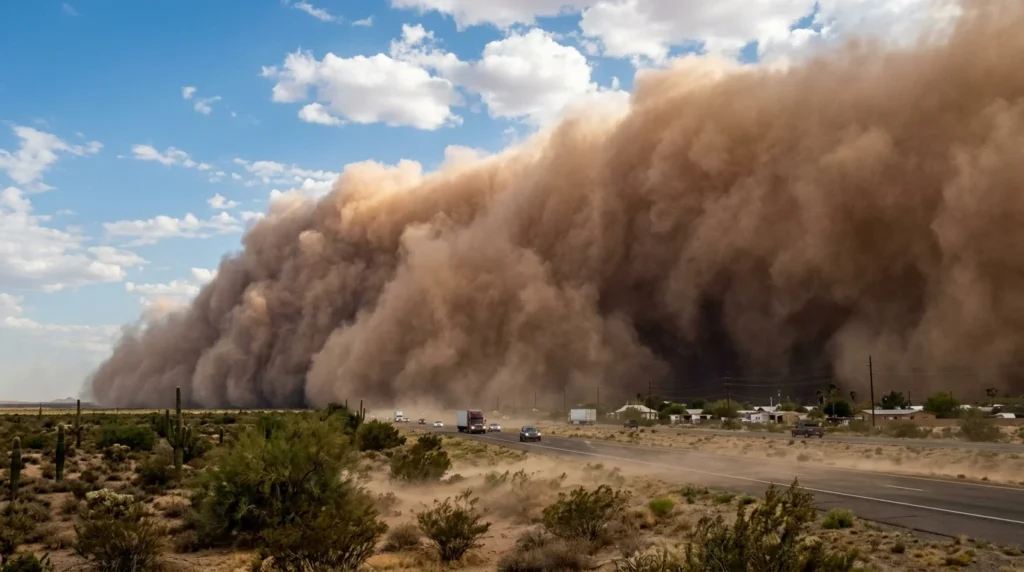
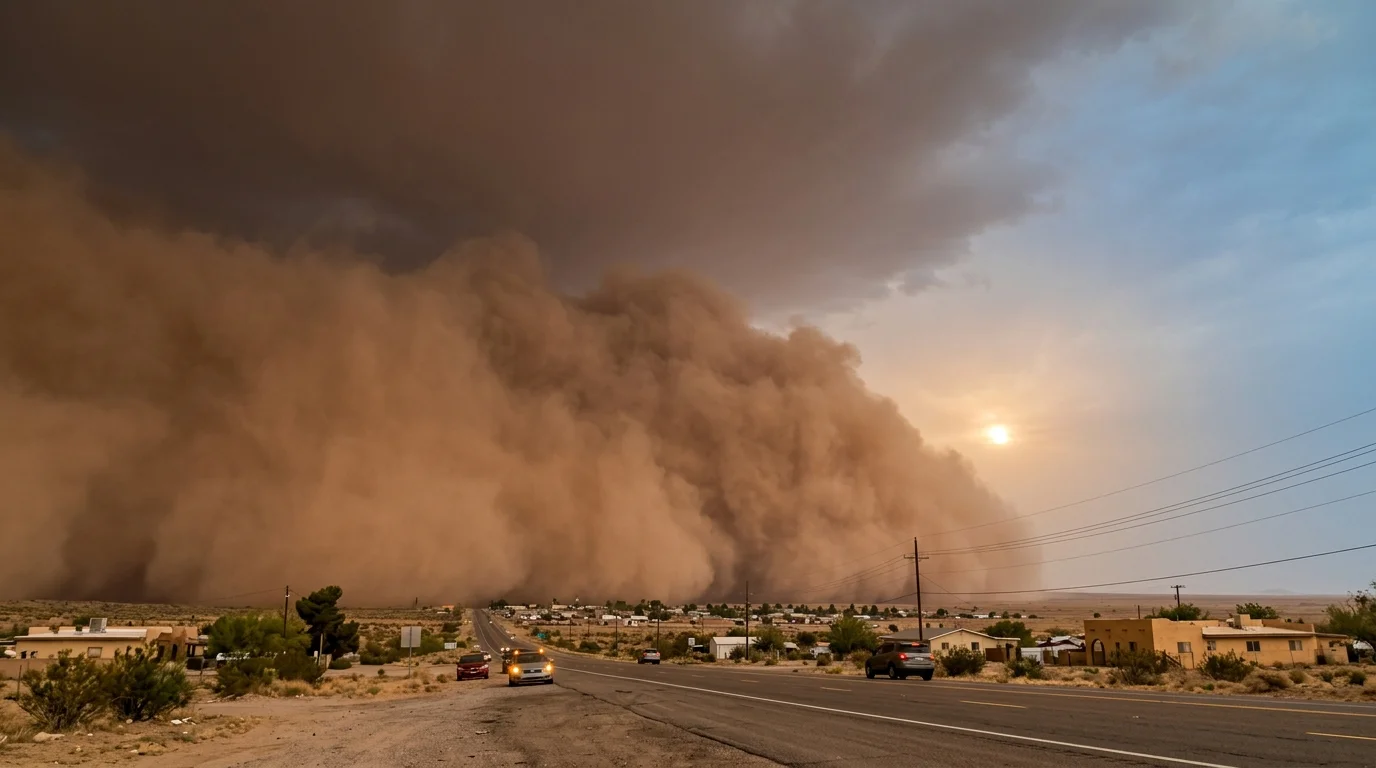
Haboob (noun): A powerful dust or sandstorm created by strong winds flowing outward from a thunderstorm.
What It Usually Means
A haboob is characterized by:
- A towering wall of dust
- Strong, gusty winds
- Rapidly decreasing visibility
- Large amounts of airborne sand and soil
- Fast movement across the landscape
These storms can stretch for miles and reach heights of several thousand feet.
What Causes a Haboob?
Haboobs usually form during or after thunderstorms.
Here’s how they develop:
- A thunderstorm produces rain.
- Cool, dense air sinks rapidly toward the ground.
- The air spreads outward when it reaches the surface.
- Powerful winds pick up loose dust and sand.
- A massive wall of dust moves ahead of the storm.
This process creates the dramatic appearance commonly associated with a haboob.
Where Do Haboobs Occur?
Haboobs are most common in dry regions with loose soil.
They frequently occur in:
- Arizona
- New Mexico
- Texas
- Sudan
- Saudi Arabia
- Egypt
- Iraq
- Australia
In the United States, Arizona’s summer monsoon season is especially known for producing haboobs.
Origin and History of the Word “Haboob”
The word haboob comes from the Arabic word هبوب (habūb), meaning strong wind or blowing wind.
Meteorologists adopted the term because it accurately describes the intense dust storms that occur in arid regions.
Today, haboob is the accepted scientific and weather-related term used in forecasts and news reports.
How People Actually Use “Haboob”
In Weather Reports
Meteorologists may issue warnings such as:
“A haboob is moving toward the city.”
In News Articles
News stories often describe:
- Reduced visibility
- Highway closures
- Flight delays
- Air quality concerns
In Everyday Conversation
Residents of desert regions might say:
“We drove through a haboob yesterday.”
Real Examples of Haboob
Example 1
“A massive haboob swept across Phoenix.”
Meaning: A large dust storm moved through the city.
Example 2
“Drivers pulled over as the haboob reduced visibility.”
Meaning: The dust storm made travel dangerous.
Example 3
“The approaching haboob looked like a giant brown wall.”
Meaning: The storm had the classic appearance of a dust wall.
Example 4
“Air quality worsened during the haboob.”
Meaning: Dust particles filled the air.
Example 5
“The weather service warned residents about an incoming haboob.”
Meaning: A dust storm was expected.
Example 6
“Haboobs often accompany desert thunderstorms.”
Meaning: They frequently form after thunderstorm downdrafts.
Example 7
“The airport delayed flights because of the haboob.”
Meaning: Poor visibility affected operations.
Example 8
“People stayed indoors until the haboob passed.”
Meaning: They avoided exposure to blowing dust.
Example 9
“The haboob covered everything in a layer of dust.”
Meaning: Dust settled after the storm.
Example 10
“The photographer captured stunning images of the approaching haboob.”
Meaning: The dust storm created dramatic scenery.
Safety Tips During a Haboob
If you encounter a haboob:
- Stay indoors if possible.
- Close windows and doors.
- Avoid driving through the dust.
- If driving, pull completely off the road, turn off your lights, and wait until visibility improves if it is safe to do so.
- Wear a mask if you must be outside and conditions warrant it.
- Follow local weather warnings.
Dust storms can reduce visibility to nearly zero within seconds.
Common Mistakes and Misunderstandings
Mistake: Every dust storm is a haboob.
Correct: A haboob is specifically a dust storm caused by thunderstorm outflow winds.
Mistake: Haboobs only happen in the Middle East.
Correct: They also occur in the southwestern United States, Australia, and other dry regions.
Mistake: Haboobs are tornadoes.
Correct: A haboob is a dust storm, not a rotating column of air.
Mistake: Haboobs only carry sand.
Correct: They often contain fine dust, soil particles, and debris as well.
Similar Weather Terms
| Term | Meaning | Difference |
|---|---|---|
| Dust Storm | Wind carrying dust | General term |
| Sandstorm | Wind carrying mostly sand | May not be thunderstorm-related |
| Haboob | Dust storm caused by thunderstorm outflow | Specific type of dust storm |
| Tornado | Rotating column of air | Different weather phenomenon |
| Dust Devil | Small rotating column of dust | Much smaller than a haboob |
| Thunderstorm | Storm with lightning and thunder | Can produce a haboob |
| Monsoon | Seasonal weather pattern | May create conditions for haboobs |
| Windstorm | Strong winds | Broader weather event |
Is “Haboob” Positive, Negative, or Neutral?
Haboob is a neutral scientific term.
However, the event itself is generally viewed negatively because it can cause:
- Dangerous driving conditions
- Poor air quality
- Property damage
- Flight disruptions
- Health concerns for people with respiratory conditions
Should You Use “Haboob”?
Use “haboob” when:
- Referring to a dust storm created by thunderstorm outflow.
- Discussing desert weather.
- Writing about meteorology.
- Explaining weather events in arid regions.
Avoid using it when:
- Referring to ordinary windstorms or non-thunderstorm dust events.