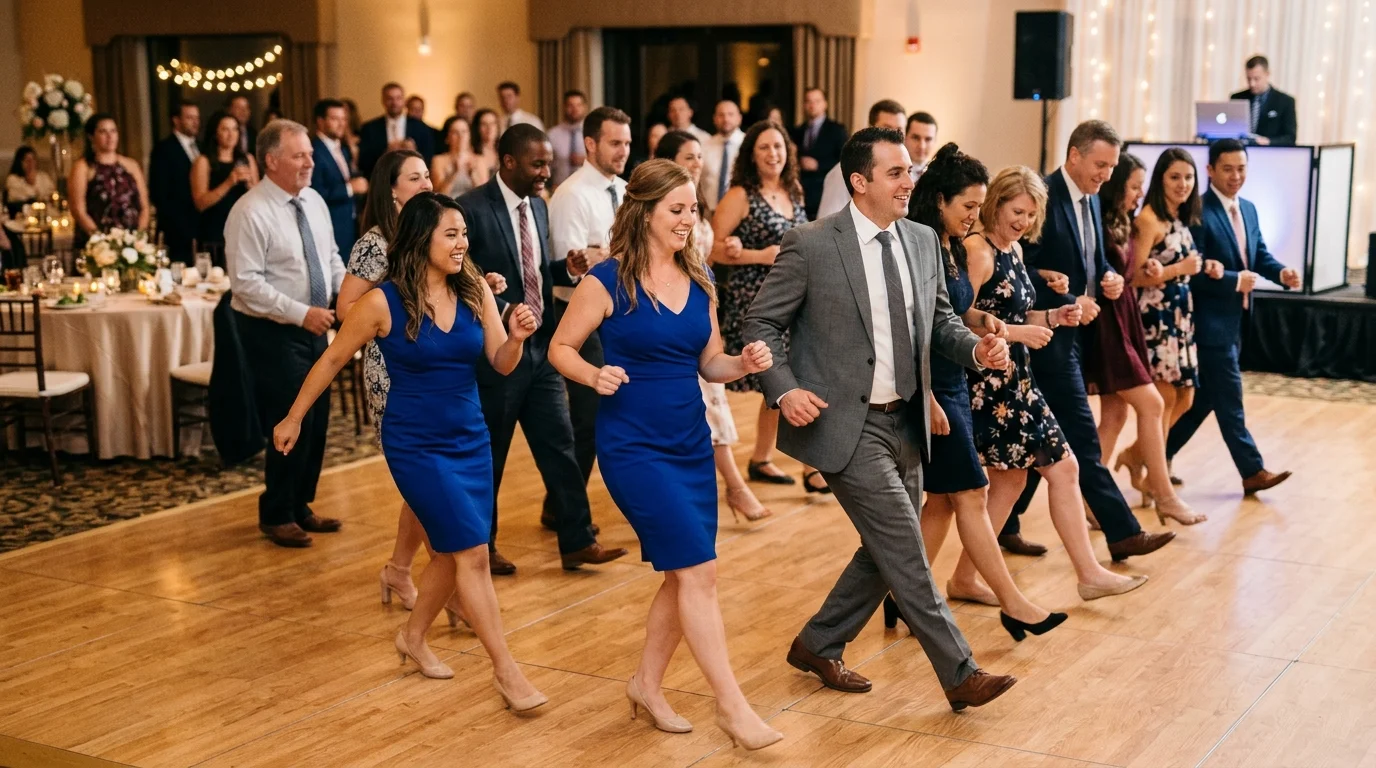
What Does “Electric Slide” Mean?
Quick Definition
The Electric Slide is a choreographed line dance performed by groups of people moving together in a repeating sequence of steps.
What It Usually Means
When someone says “Let’s do the Electric Slide,” they are inviting others to participate in the famous line dance.
Literal Meaning
The name combines:
- Electric = energetic, lively, and dynamic.
- Slide = a movement where dancers slide or step smoothly across the floor.
Most Common Interpretation
Most people simply recognize the Electric Slide as a classic party dance.
What Tone Does It Convey?
The term generally conveys:
- Fun
- Celebration
- Community
- Nostalgia
- Excitement
What Does Electric Slide Mean in Different Contexts?
Weddings
The Electric Slide is one of the most frequently requested group dances at wedding receptions.
Family Reunions
Many families perform it together as part of long-standing traditions.
School Events
Schools often use the dance during celebrations and social gatherings.
Community Festivals
The dance is commonly performed at fairs, festivals, and public events.
Pop Culture
The Electric Slide is frequently referenced in movies, television shows, and social media content.
Origin and History of the Electric Slide
The Electric Slide was choreographed by Ric Silver in 1976.
The dance was originally created for the song Electric Boogie by Marcia Griffiths.
Over time:
- The dance spread through clubs and social events.
- It gained popularity at weddings and parties.
- New variations emerged.
- It became a cultural phenomenon.
Although many people associate the dance directly with the song, the Electric Slide often appears alongside many different songs today.
How People Actually Use the Term
Most people use “Electric Slide” in one of two ways.
Meaning 1: The Dance
Example:
“We did the Electric Slide at the wedding.”
Meaning:
The group performed the line dance.
Meaning 2: The Song Cue
Example:
“The DJ played the Electric Slide.”
Meaning:
The song associated with the dance was played.
When People Mention It
You’ll often hear:
- “Everyone got up for the Electric Slide.”
- “Do you know the Electric Slide?”
- “The dance floor filled during the Electric Slide.”
Why It Remains Popular
The dance is:
- Easy to learn
- Social
- Suitable for all ages
- Fun in large groups
Basic Electric Slide Steps
Although variations exist, the classic sequence includes:
- Step to the right.
- Bring feet together.
- Repeat side movements.
- Step backward.
- Step forward.
- Turn and repeat.
Many beginners learn the dance within minutes.
Real Examples of Electric Slide in Conversations
Example 1
Person A: Are you going to dance tonight?
Person B: Definitely if they play the Electric Slide.
Meaning: Referring to the line dance.
Why it was used: Party discussion.
Example 2
DJ: Who knows the Electric Slide?
Crowd: Everyone!
Meaning: Recognized group dance.
Why it was used: Event participation.
Example 3
Friend: The dance floor was empty.
Response: Until the Electric Slide started.
Meaning: Popular crowd favorite.
Why it was used: Social observation.
Example 4
Parent: We used to do that dance years ago.
Child: The Electric Slide?
Meaning: Nostalgic reference.
Why it was used: Family conversation.
Example 5
Teacher: Let’s learn a line dance today.
Student: Is it the Electric Slide?
Meaning: Familiar dance.
Why it was used: Educational activity.
Example 6
Guest: Everyone joined in.
Friend: That’s the power of the Electric Slide.
Meaning: Community participation.
Why it was used: Group bonding.
Example 7
Bride: My favorite wedding moment was the Electric Slide.
Meaning: Group celebration.
Why it was used: Event memory.
Example 8
Festival Organizer: The crowd loved it.
Meaning: Successful performance.
Why it was used: Public event discussion.
Example 9
Friend: I don’t know many dances.
Response: You can learn the Electric Slide quickly.
Meaning: Beginner-friendly dance.
Why it was used: Encouragement.
Example 10
Guest: That dance always brings people together.
Meaning: Shared social experience.
Why it was used: Cultural appreciation.
Common Mistakes and Misunderstandings
Mistake 1: Thinking It’s a Song Only
The Electric Slide is primarily a dance, although many people associate it with a specific song.
Mistake 2: Assuming Everyone Dances It the Same Way
Different regions and communities often perform slightly different versions.
Mistake 3: Believing It’s Difficult
The dance is actually considered beginner-friendly.
Mistake 4: Confusing It With Other Line Dances
The Electric Slide is distinct from dances such as the Cupid Shuffle or Cha Cha Slide.
How to Avoid Confusion
Remember:
- Electric Slide = line dance.
- Originally linked to “Electric Boogie.”
- Common at social events.
- Features repeating movements.
Similar Dances and Related Terms
| Dance | Meaning | Difference |
|---|---|---|
| Electric Slide | Classic line dance | Original focus |
| Cupid Shuffle | Modern line dance | Different choreography |
| Cha Cha Slide | Interactive dance | Includes spoken instructions |
| Macarena | Group dance | Different movement pattern |
| Boot Scootin’ Boogie | Country line dance | Country style |
| YMCA | Group dance song | Simpler gestures |
| Wobble | Popular party dance | Different rhythm |
| Line Dancing | Dance category | Broader concept |
| Square Dance | Traditional partner dance | Structured format |
| Hustle | Disco dance style | Different technique |
Is Electric Slide Positive, Negative, or Neutral?
The term is overwhelmingly positive.
Positive Associations
- Fun
- Celebration
- Community
- Nostalgia
- Entertainment
Neutral Associations
- Dance instruction
- Event planning
- Cultural discussions
Negative Associations
There are very few negative associations with the Electric Slide.
Most people connect it with enjoyable social experiences.
Should You Learn the Electric Slide?
Yes If
- You attend weddings.
- You enjoy social dancing.
- You want an easy group dance.
- You like party traditions.
You Don’t Need To If
- You’re not interested in dancing.
- You prefer solo dance styles.
Still, learning it can make social events more enjoyable.