
What Does “DEFCON 1” Mean?
Quick Definition
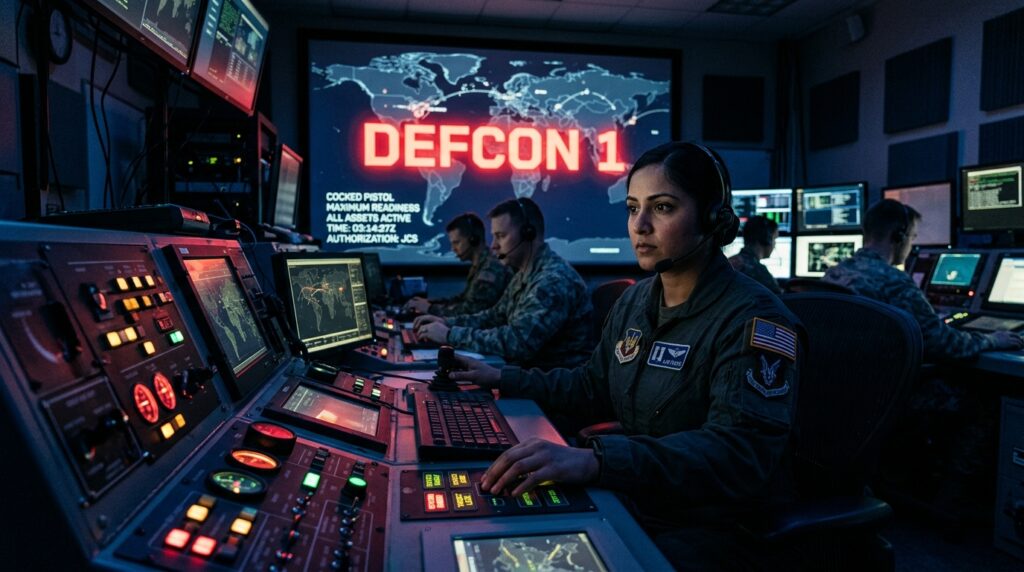
DEFCON 1 is the highest level of alert in the U.S. military’s Defense Readiness Condition system. It represents “maximum force readiness” and is reserved for situations where an enemy attack is imminent or already underway, specifically indicating the outbreak of nuclear warfare .
What It Usually Means In Conversations
When people talk about the DEFCON 1 meaning in everyday conversation, they’re usually referring to one of these things:
The highest military alert: The most common DEFCON 1 meaning describes the maximum state of military readiness. It’s the level where the U.S. military is prepared to execute war plans and respond immediately to an attack . According to the original Joint Chiefs of Staff memo, DEFCON 1 represents “a maximum readiness posture requiring the highest state of preparedness to execute war plans” .
Nuclear war imminent: The DEFCON 1 meaning is almost always associated with nuclear war. At this level, an attack is perceived as imminent or already occurring. This isn’t just a general military alert—it’s specifically about the potential or ongoing use of nuclear weapons . The exercise term for DEFCON 1 is “Cocked Pistol,” which paints a vivid picture of just how ready the military is at this level .
The worst-case scenario: In informal usage, the DEFCON 1 meaning has become shorthand for any extreme crisis or emergency. People might say their day is “DEFCON 1” to describe a terrible situation, but it’s important to remember that the actual military meaning is far more serious .
What Tone Does It Convey?
| Context | Tone | Example |
|---|---|---|
| Military/Government | Serious, formal | “The President authorized DEFCON 1” |
| Popular Culture | Dramatic, exaggerated | “We’re at DEFCON 1!” in movies |
| Casual Conversation | Hyperbolic, humorous | “My boss is at DEFCON 1 today” |
Origin and History of the DEFCON System
The Cold War Creation
The DEFCON 1 meaning is deeply tied to the Cold War. The Defense Readiness Condition system was created in 1959 by the Joint Chiefs of Staff to provide a uniform way for U.S. forces to respond to escalating threats . This was at the height of Cold War tension when the fear of nuclear war with the Soviet Union was constant. A Joint Chiefs of Staff memo from that time stated: “A uniform system of progressive readiness is essential in ensuring timely, accurate and clear direction of commands” .
The Five Levels
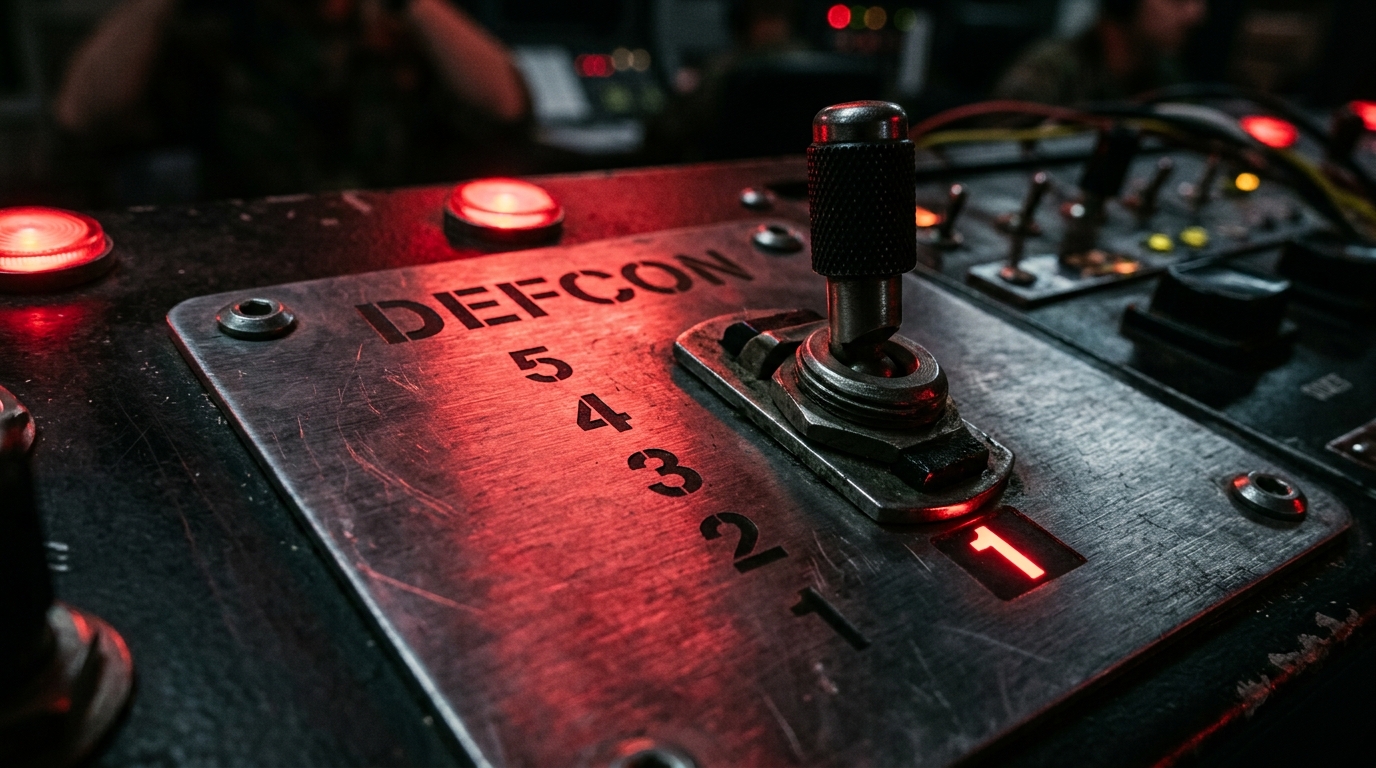
The DEFCON system consists of five graduated levels of readiness, increasing in severity from DEFCON 5 (least severe, peacetime normal) to DEFCON 1 (most severe). Each level corresponds to a specific threat situation:
DEFCON 5: Normal peacetime readiness
DEFCON 4: Increased intelligence watch and strengthened security
DEFCON 3: Increase in force readiness above normal readiness
DEFCON 2: Further increase in force readiness, but less than maximum
DEFCON 1: Maximum force readiness; nuclear war imminent or underway
The Exercise Terms
To prevent confusion between actual orders and training exercises, each DEFCON level has a specific exercise term :
| DEFCON Level | Exercise Term |
|---|---|
| DEFCON 1 | Cocked Pistol |
| DEFCON 2 | Fast Pace |
| DEFCON 3 | Round House |
| DEFCON 4 | Double Take |
| DEFCON 5 | Fade Out |
How People Use “DEFCON 1” Today
When to Use It
Use the DEFCON 1 meaning when:
Discussing U.S. military alert levels: The primary DEFCON 1 meaning is for describing the highest state of military readiness, reserved for imminent or ongoing nuclear war .
Analyzing historical crises: You can use it when talking about how close the world has come to nuclear war and whether the U.S. ever reached DEFCON 1 (which it hasn’t) .
When Not to Use It
Avoid the DEFCON 1 meaning when:
Describing a personal crisis: The DEFCON 1 meaning is for nuclear war, not a bad day at work. Using it casually can downplay its serious significance.
In unqualified contexts: If you’re not discussing the U.S. military alert system, it’s better to use other terms. For example, a completely different “DEFCON” system exists for cleaning professionals that has a DEFCON 1 meaning of “safest risk level” !
Real Examples of DEFCON 1 in Conversations
Example 1: Discussing Military History
Person A: “Has the U.S. ever reached DEFCON 1?”
Person B: “No, the highest they’ve ever gone was DEFCON 2 during the Cuban Missile Crisis.”
Meaning: Discussing the most severe alert level ever reached.
Why it was used: To provide historical context about the DEFCON system.
Example 2: The “Never Reached” Fact
Person A: “What does DEFCON 1 mean?”
Person B: “It’s the highest alert. Nuclear war is literally about to start. Thankfully, we’ve never gotten there.”
Meaning: Explaining the DEFCON 1 meaning in simple terms.
Why it was used: To clarify the definition.
Example 3: Casual Use
Person A: “My mom is at DEFCON 1 because I forgot to do the dishes.”
Person B: “That’s not what DEFCON 1 means. It’s for nuclear war!”
Meaning: Humorous misuse of the term.
Why it was used: To show how the term is sometimes used incorrectly.
Example 4: Movie/TV Reference
Person A: “The movie said they went to DEFCON 1, but I think that’s wrong.”
Person B: “Most movies get it wrong. They usually use it for drama.”
Meaning: Discussing inaccurate pop culture representations.
Why it was used: To point out a common misconception.
Example 5: Classroom Explanation
Person A: “What’s the difference between DEFCON 2 and DEFCON 1?”
Person B: “DEFCON 2 means an attack is expected. DEFCON 1 means it’s actually happening or is guaranteed to happen.”
Meaning: Clarifying the distinction between the two highest levels.
Why it was used: To provide an educational explanation.
Common Mistakes and Misunderstandings
Confusing DEFCON 1 with DEFCON 5
One of the most common mistakes is confusing the DEFCON 1 meaning with DEFCON 5. Because the numbers go down as the threat level goes up, many people mistakenly use “DEFCON 5” to describe the most dangerous situation. In fact, DEFCON 5 is the lowest level of alert and represents normal, peacetime readiness .
Thinking DEFCON 1 Has Been Reached
A major misunderstanding is believing the U.S. has been at DEFCON 1. According to military records, the U.S. has never officially declared DEFCON 1 since the system was established in 1959 . The highest level ever reached was DEFCON 2, during the 1962 Cuban Missile Crisis and again in 1991, but even then, it was only for specific commands like the Strategic Air Command . The meaning of DEFCON 1 is that nuclear war is imminent or already happening, so it’s a good thing we’ve never gotten there.
Believing DEFCON is Publicly Announced
Many people think that the U.S. government publicly announces the current DEFCON level. In reality, the current DEFCON level is classified and never officially released to the public . The entire purpose of the system is for internal military communication. Any information you see online about the “current DEFCON level” is speculation or intelligence estimates.
Using DEFCON Casually
Because of its dramatic sound, the term “DEFCON” is often used casually to describe any tense situation. This dramatically underplays the DEFCON 1 meaning, which is reserved for the most catastrophic military scenario imaginable.
Similar Military Terms and Systems
| Term | Meaning | Connection to DEFCON 1 |
|---|---|---|
| LERTCON | Alert Condition | The overarching system that includes DEFCON and EMERGCON |
| EMERGCON | Emergency Condition | National-level reaction to an ICBM attack, which automatically triggers DEFCON 1 for other forces |
| FPCON | Force Protection Condition | Measures for protecting military personnel from terrorist threats |
| REDCON | Readiness Condition | A similar system used by individual units |
| WATCHCON | Watch Condition | A system for intelligence watch levels |
Is “DEFCON 1” Positive, Negative, or Neutral?
The DEFCON 1 meaning is overwhelmingly negative. It represents the absolute worst-case scenario for national security—the outbreak of nuclear war. There is no positive aspect to reaching this level.
Negative aspects:
Imminent or ongoing nuclear war
Maximum military deployment
Potential loss of millions of lives
Global catastrophe
Should You Use “DEFCON 1”?
You might use it when:
Discussing U.S. military alert levels: The primary and most accurate use.
Describing a genuine crisis: When you want to convey the most extreme level of seriousness in a factual context.
You should avoid it if:
Describing minor problems: Using it for everyday frustrations trivializes its actual meaning.
You are not sure of the military context: The term can be confusing and is often misunderstood.