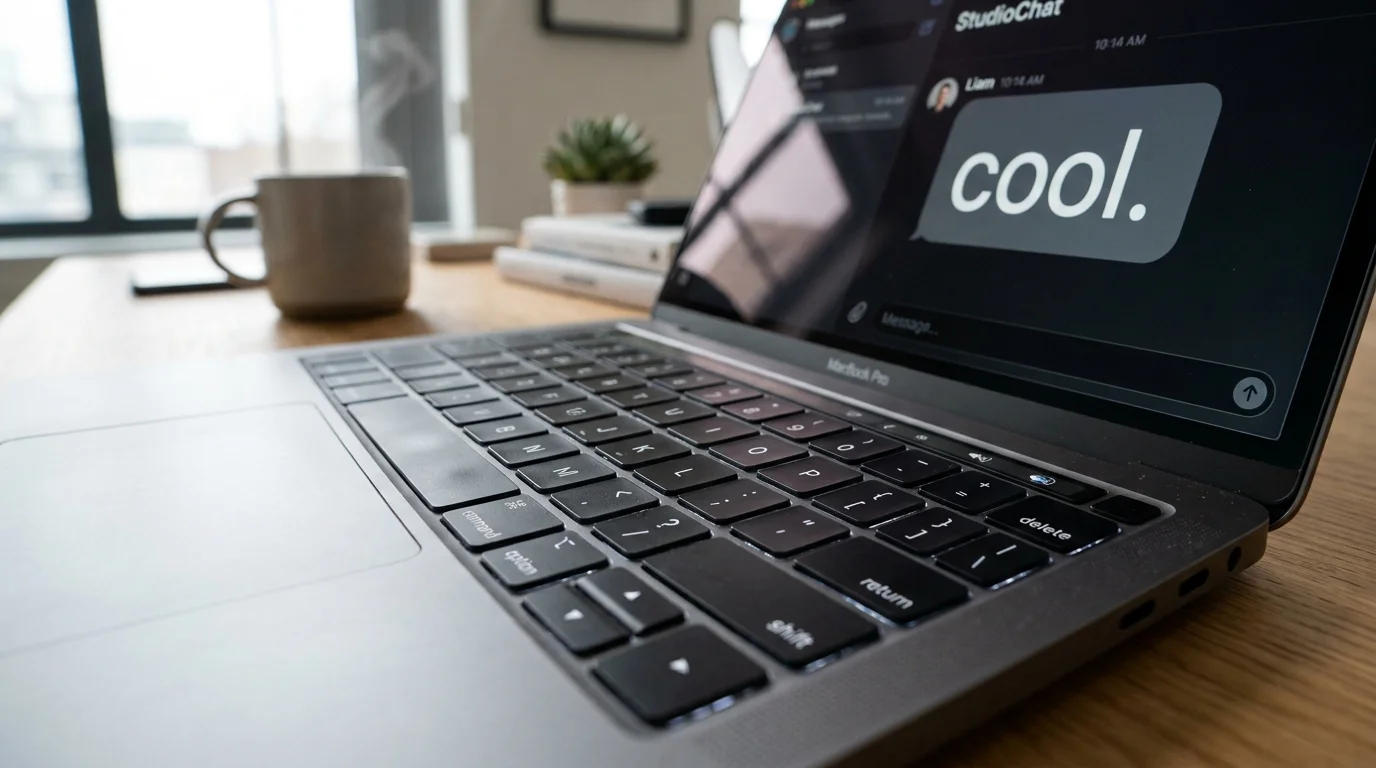
What Does “Cool” Mean in Chat?
Quick Definition
In chat and texting, cool generally means “good,” “agreed,” “okay,” or “stylish/impressive.” It’s used to express approval, show agreement, or indicate a relaxed, accepting attitude toward something. The cool meaning in chat is incredibly flexible.
What It Usually Means In Chats
When people use cool in digital conversations, they’re usually referring to one of these things:
Approval or admiration: Something is impressive, stylish, or worthy of praise. For example, “That jacket looks cool” means it looks great. This is a positive cool meaning in chat.
Agreement or acceptance: Acknowledging and accepting what someone has said. “Cool, I’ll meet you at 7” means “Okay, that works for me.” This is a neutral cool meaning in chat.
Low-effort acknowledgment: A minimal response that shows you’ve seen the message without investing emotional energy. This is a very common cool meaning in chat and can sometimes signal disinterest.
Relaxed attitude: Describing someone who is calm, composed, and unfazed by pressure. “He’s so cool under stress” refers to someone who stays calm. This is a descriptive cool meaning in chat.
What Tone Does It Convey?
The tone of cool in chat depends entirely on context:
| Context | Tone | Example |
|---|---|---|
| Enthusiastic response | Positive, excited | “Cool! I’m so glad you said yes!” |
| Simple agreement | Neutral, casual | “Cool, see you then.” |
| Low-effort reply | Disengaged, indifferent | “Cool.” (one-word response with a period) |
| Sarcastic | Passive-aggressive, dismissive | “Cool.” (said when it’s actually not cool) |
| Repetition | Overwhelmed, amused | “Cool, cool, cool” |
| Approval of style | Admiring, impressed | “That outfit is so cool!” |
What Does “Cool” Mean on Different Platforms?
Text Messages
In SMS and iMessage, cool is one of the most common responses. It can be a genuine reply or a conversation-ender. The cool meaning in chat here depends heavily on punctuation—”Cool!” is enthusiastic, while “Cool.” can feel dismissive.
Example: “I can pick you up at 8.” / “Cool. See you then.”
Snapchat
On Snapchat, cool appears in chats and as a reaction to snaps. It’s often used to quickly acknowledge a snap without typing a lengthy response. The cool meaning in chat here is usually casual and brief.
Example: A one-word reply “cool” to a story or direct snap.
On Instagram, cool appears in DMs, comments, and as a reaction. It’s frequently used to show appreciation for posts, stories, or Reels. The cool meaning in chat here is generally positive and approving.
Example: “This is so cool!” in response to a travel video.
TikTok
On TikTok, cool is used in comments, DMs, and as a reaction to videos. It’s often combined with other slang terms like “cool, cool” or used in ironic ways. The cool meaning in chat here is often playful.
Example: “That trick was so cool!” on a skateboarding video.
Discord
In Discord servers, cool appears in gaming and community chats. It’s used to agree with strategies, acknowledge messages, or just keep conversations moving. The cool meaning in chat here is practical and functional.
Example: “Cool, I’ll join your team.”
On Reddit, cool is used in comments and replies. It’s often a short way to agree with or appreciate someone’s post without adding much else. The cool meaning in chat here can be sincere or sarcastic.
Example: “Cool story, bro” (often sarcastic).
Why “Cool” Is So Versatile
The Swiss Army Knife of Slang
Cool has been slang for “awesome” or “fashionable” since the early 20th century. It started with jazz musicians in the 1940s and spread through hip-hop culture and beyond. What makes the cool meaning in chat so flexible is that it can express approval without being overly dramatic. The cool meaning in chat has evolved to fit almost any conversational context.
Low-Effort Communication
In chat, cool is perfect for low-stakes conversations. It acknowledges the message without demanding a lengthy response. The cool meaning in chat allows you to participate in conversations without investing significant emotional energy. However, when used too often, it can come across as robotic or fake.
Emotional Nuance
The cool meaning in chat can signal:
Genuine enthusiasm (“That’s so cool!”)
Neutral acknowledgment (“Cool, noted.”)
Passive-aggression (“Cool.” with a period)
Sarcasm (when said in response to something clearly not okay)
How to Recognize Different “Cool” Meanings
The Enthusiastic “Cool!”
When someone uses an exclamation point and adds extra words, the cool meaning in chat is genuinely positive. “Cool! I can’t wait!” shows real excitement.
Example: “I got tickets to the concert!” / “Cool! That’s amazing!”
The Dismissive “Cool.”
A period after “cool” can change everything. The cool meaning in chat here is often dismissive or low-effort. It’s the digital equivalent of a shoulder shrug—you’re not annoyed, but you’re not excited either.
Example: “I just got promoted!” / “Cool.” (unenthusiastic)
The Repetitive “Cool, cool, cool”
Made famous by Jake Peralta in Brooklyn Nine-Nine, this version of cool is often used when someone is slightly overwhelmed but acknowledging the situation. The cool meaning in chat here is often nervous or amused.
Example: “We have three deadlines tomorrow.” / “Cool, cool, cool.”
The Sarcastic “Cool”
When used sarcastically, the cool meaning in chat becomes “not cool.” It’s often used when someone is annoyed but doesn’t want to start an argument.
Example: “I accidentally deleted your files.” / “Cool.” (definitely not cool)
The Agreement “Cool, see you there”
This is the most straightforward cool meaning in chat—simple agreement and acknowledgment.
Example: “Let’s meet at 7.” / “Cool, see you there.”
The Approval “Cool outfit!”
Here, cool means “stylish,” “impressive,” or “admirable.” This is a positive cool meaning in chat.
Example: “I love your jacket.” / “Cool, right? I just got it.”
Real Examples of “Cool” in Conversations
Example 1: Enthusiastic Response
Person A: “I got the job!”
Person B: “Cool! That’s amazing news. I’m so happy for you!”
Meaning: Genuine enthusiasm and approval.
Why it was used: To celebrate a friend’s success.
Example 2: Simple Agreement
Person A: “I’ll pick you up at 8.”
Person B: “Cool, see you then.”
Meaning: Agreement and acknowledgment.
Why it was used: To confirm plans.
Example 3: Low-Effort Reply
Person A: “I just got promoted and I’m moving to a new city.”
Person B: “Cool.”
Meaning: Minimal acknowledgment, low engagement.
Why it was used: The person isn’t fully invested in the conversation.
Example 4: Sarcastic Use
Person A: “I accidentally broke your phone.”
Person B: “Cool. That’s just what I needed today.”
Meaning: Definitely not cool; frustration.
Why it was used: To express irritation sarcastically.
Example 5: Approval of Style
Person A: “What do you think of my new jacket?”
Person B: “That’s so cool! Where did you get it?”
Meaning: Genuine admiration.
Why it was used: To compliment someone.
Example 6: Ending an Argument
Person A: “I can’t believe you said that.”
Person B: “Cool.”
Meaning: Shutting down the conversation.
Why it was used: To avoid further conflict.
Example 7: Agreement in Gaming
Person A: “I’ll cover you while you grab the flag.”
Person B: “Cool, I’m going in.”
Meaning: Agreement and readiness.
Why it was used: Team coordination in a game.
Example 8: Passive-Aggressive
Person A: “I’m going to be an hour late.”
Person B: “Cool, I’ll just wait here.”
Meaning: Mild annoyance.
Why it was used: Expressing frustration politely.
Example 9: Approving a Plan
Person A: “What if we get pizza?”
Person B: “Cool, I’m starving.”
Meaning: Agreement and enthusiasm.
Why it was used: To show approval of the plan.
Example 10: The “Cool, cool, cool” Overwhelm
Person A: “We have three deadlines tomorrow and I haven’t started.”
Person B: “Cool, cool, cool. Let’s figure this out.”
Meaning: Acknowledging overwhelm but staying calm.
Why it was used: To manage stress.
Example 11: Emoji “Cool” Button
Person A: “Did you see my new post?”
Person B: “🆒”
Meaning: Quick acknowledgment of coolness.
Why it was used: Low-effort but positive reaction.
Example 12: Slang Variations
Person A: “That movie was awesome!”
Person B: “Kewl! I want to see it too.”
Meaning: Phonetic spelling of cool.
Why it was used: Informal, playful style.
Common Mistakes and Misunderstandings
Taking “Cool” Literally When It’s Sarcastic
One of the biggest misunderstandings about cool meaning in chat is missing sarcasm. If someone says “cool” in response to bad news, they probably aren’t happy. Learning to read the cool meaning in chat requires paying attention to context.
Assuming “Cool” Means Agreement Every Time
Not every “cool” means “yes.” Sometimes it just means “I heard you” without any commitment. The cool meaning in chat can be a non-committal acknowledgment rather than genuine agreement.
Overusing “Cool” Until It Loses Meaning
Using cool too often can make it seem robotic or fake. When every response is “cool,” the word loses its impact. The cool meaning in chat becomes diluted with overuse.
Misinterpreting One-Word Replies
A single “cool” without punctuation or emojis often signals disinterest. Adding an exclamation point or emoji makes the cool meaning in chat more positive.
Confusing “Cool” with Genuine Agreement
When someone says “cool” but doesn’t follow up, they may not actually agree—they’re just avoiding conflict. The cool meaning in chat can be a way to end a conversation politely.
Using “Cool” in Formal Settings
Cool is informal slang. Using it in professional emails or formal writing can come across as unprofessional. The cool meaning in chat is best reserved for casual conversations.
Similar Slang Terms and Related Words
| Term | Meaning | Difference from Cool |
|---|---|---|
| Awesome | Remarkable or impressive | More enthusiastic than cool |
| Lit | Exciting or excellent | More modern slang |
| Dope | Very good or impressive | More casual, street slang |
| Rad | Very good or attractive | Retro slang, similar to cool |
| Sweet | Pleasing or satisfactory | Friendlier, warmer than cool |
| Kewl | Phonetic spelling of cool | Playful, informal texting style |
| Chill | Relaxed or calm | Similar attitude, less about approval |
| Neat | Very good or pleasing | More wholesome, less edgy |
| Nice | Pleasant or satisfactory | More formal, less versatile |
Is “Cool” Positive, Negative, or Neutral?
The cool meaning in chat is neutral on its own, but its tone depends entirely on context:
Positive Cool:
Enthusiastic exclamations (“Cool!” with exclamation point)
Compliments about style or personality
Genuine agreement (“Cool, I’m in!”)
Negative Cool:
Sarcastic use in response to bad news
Dismissive one-word replies (“Cool.” with a period)
Passive-aggressive conversational ending
Neutral Cool:
Simple acknowledgment (“Cool, noted.”)
Agreement without enthusiasm (“Cool, whatever works.”)
Should You Use “Cool”?
You might use it when:
You want to express approval or agreement casually
You need a low-effort response in a low-stakes conversation
You’re chatting with friends in an informal setting
You want to keep the conversation light and friendly
You should avoid it if:
You’re in a professional or formal setting
You want to show genuine enthusiasm (use “Awesome!” or “That’s amazing!”)
You’re ending a conversation without closure
The situation is serious and requires a thoughtful response