

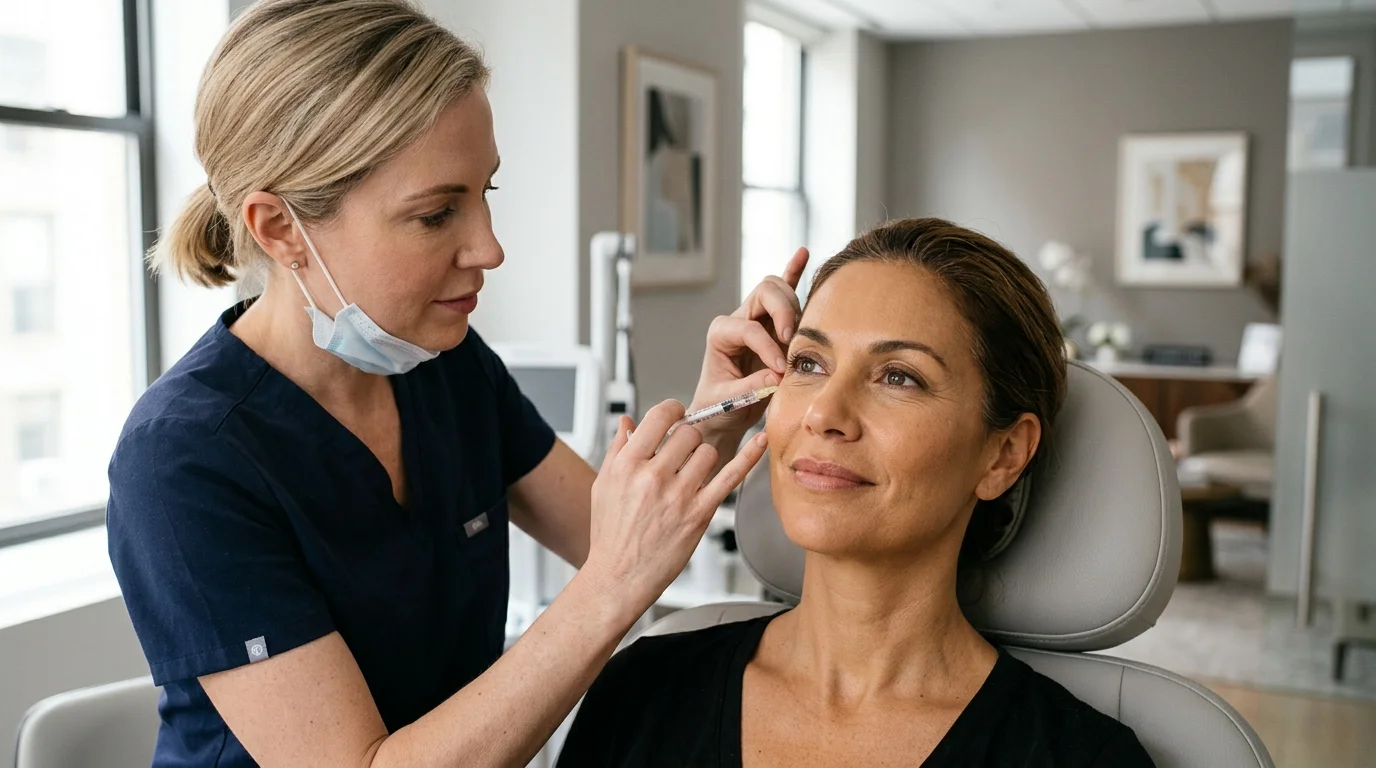
What Does “Botox” Mean?
The Botox meaning refers to a brand name for a medication containing onabotulinumtoxinA, a purified protein derived from Clostridium botulinum bacteria.
Quick Definition
Botox (noun):
A prescription injectable medicine that temporarily relaxes specific muscles by blocking nerve signals.
What It Usually Means
Most people use Botox to refer to:
- Cosmetic wrinkle treatments
- Anti-aging injections
- Medical injections for muscle disorders
- Migraine treatment
- Excessive sweating treatment
Origin and History of Botox
Botox was originally developed for medical purposes.
Researchers first studied botulinum toxin to treat eye muscle disorders such as crossed eyes (strabismus) and uncontrolled eyelid spasms. Later, doctors noticed that treated areas also developed fewer wrinkles.
Botox eventually became one of the world’s most popular cosmetic procedures while continuing to expand into many medical treatments.
How Does Botox Work?
Botox works by temporarily blocking the nerve signals that tell muscles to contract.
When the targeted muscle relaxes:
- Wrinkles become less noticeable.
- Muscle spasms decrease.
- Migraine frequency may improve.
- Excessive sweating can be reduced by blocking nerve signals to sweat glands.
The effects are temporary and usually wear off over time.
Common Uses of Botox
The Botox meaning varies depending on the reason it’s being used.
Cosmetic Uses
Botox is widely used to reduce the appearance of:
- Forehead lines
- Frown lines (between the eyebrows)
- Crow’s feet around the eyes
- Bunny lines on the nose
- Chin dimpling
- Neck bands
Medical Uses
Doctors may prescribe Botox for:
- Chronic migraines
- Overactive bladder
- Excessive sweating (hyperhidrosis)
- Muscle stiffness (spasticity)
- Cervical dystonia
- Eyelid spasms (blepharospasm)
- Crossed eyes (strabismus)
Real Examples of Botox
Example 1
“She received Botox to reduce forehead wrinkles.”
Meaning: Cosmetic treatment.
Example 2
“His neurologist recommended Botox for chronic migraines.”
Meaning: Medical treatment.
Example 3
“Botox helped reduce excessive sweating.”
Meaning: Treatment for hyperhidrosis.
Example 4
“The dermatologist explained how Botox works.”
Meaning: Cosmetic consultation.
Example 5
“My Botox appointment lasted less than 30 minutes.”
Meaning: Quick outpatient procedure.
Example 6
“The results became noticeable after several days.”
Meaning: Botox effects develop gradually.
Example 7
“Botox relaxed the muscle causing facial spasms.”
Meaning: Medical use.
Example 8
“Many people choose Botox for non-surgical facial rejuvenation.”
Meaning: Cosmetic enhancement.
Example 9
“The doctor reviewed the possible side effects before treatment.”
Meaning: Medical consultation.
Example 10
“Botox is one of the most commonly performed cosmetic procedures.”
Meaning: Popular aesthetic treatment.
Botox vs. Fillers
These treatments are often confused.
| Treatment | Purpose | Difference |
|---|---|---|
| Botox | Relaxes muscles to reduce dynamic wrinkles | Prevents muscle movement |
| Dermal Fillers | Add volume beneath the skin | Fill lines and restore facial volume |
| Chemical Peel | Improves skin texture | Removes damaged outer skin layers |
| Laser Resurfacing | Treats skin texture and pigmentation | Uses laser energy rather than injections |
Benefits of Botox
Depending on the treatment area, Botox may:
- Reduce facial wrinkles
- Create a smoother appearance
- Help prevent deeper expression lines
- Relieve chronic migraines
- Reduce muscle spasms
- Control excessive sweating
- Improve certain bladder symptoms
Possible Side Effects
Like any medical treatment, Botox may cause side effects.
Common side effects include:
- Mild pain at the injection site
- Bruising
- Swelling
- Headache
- Temporary drooping of the eyelid or eyebrow
- Flu-like symptoms
Serious side effects are uncommon but require prompt medical attention. Botox should only be administered by a qualified healthcare professional.
Common Mistakes and Misunderstandings
Mistake: Botox is only for older adults.
Correct: Adults of various ages may receive Botox for cosmetic or medical reasons based on their healthcare provider’s recommendations.
Mistake: Botox permanently removes wrinkles.
Correct: Botox is temporary, and results usually last a few months before repeat treatment may be needed.
Mistake: Botox and fillers are the same.
Correct: Botox relaxes muscles, while fillers restore lost volume beneath the skin.
Mistake: Botox is only used for cosmetic procedures.
Correct: It is also widely used to treat several medical conditions.
Is Botox Safe?
For most healthy adults, Botox is generally considered safe when administered by a qualified healthcare professional using approved techniques.
However, it may not be appropriate for everyone. Your healthcare provider will review your medical history, medications, and treatment goals before recommending Botox.