
What Does “Acapella” Mean?
Quick Definition
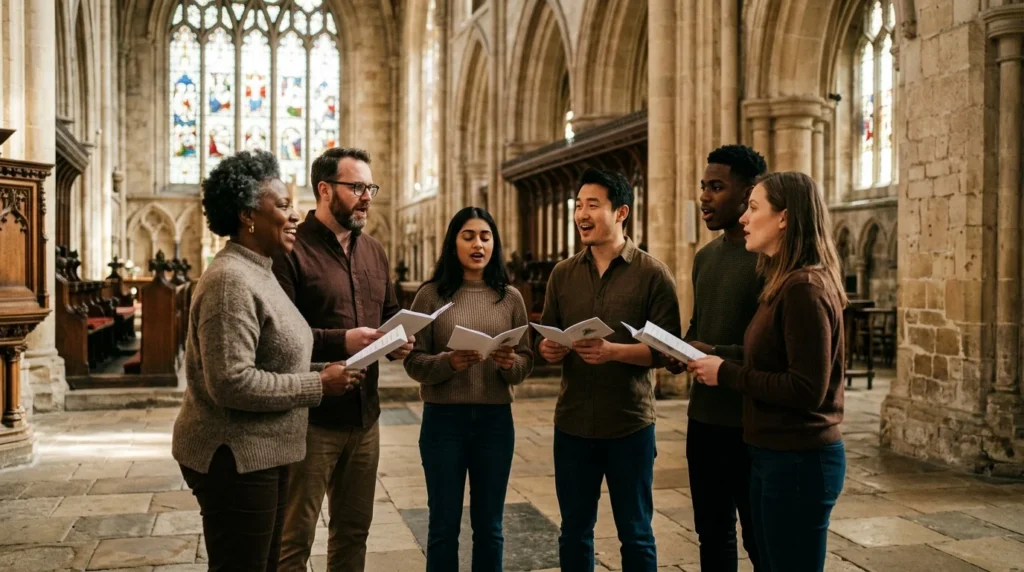
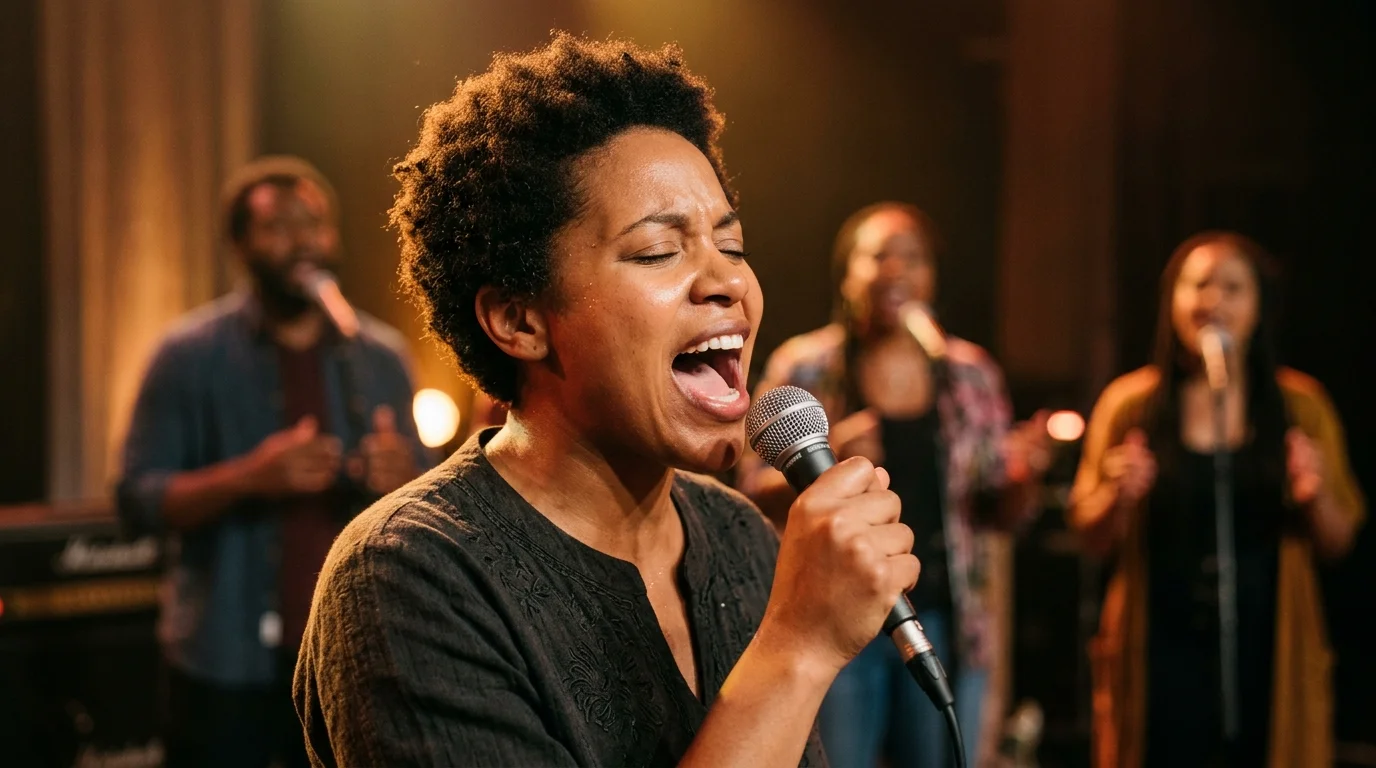
Acapella (also spelled a cappella) is music performed by a singer or singing group without any instrumental accompaniment . The acapella meaning encompasses everything from solo vocal performances to large choirs, from classical Gregorian chant to modern pop covers .
What It Usually Means In Conversations
When people talk about the acapella meaning in everyday conversation, they’re usually referring to one of these things:
Vocal-only music: The most common acapella meaning describes any music where the only sounds are human voices. No instruments, no backing tracks—just pure vocals.
Group vocal harmony: The acapella meaning often brings to mind groups of singers creating rich harmonies, like barbershop quartets or modern collegiate a cappella groups. Some groups even use their voices to mimic instruments, creating percussion sounds and bass lines with their mouths .
A performance style: The acapella meaning can describe how a performance is delivered, such as when a rapper performs “acapella” without a beat .
What Tone Does It Convey?
| Context | Tone | Example |
|---|---|---|
| Musical description | Neutral, technical | “The choir performed an acapella arrangement” |
| Performance setting | Impressive, intimate | “They sang acapella and it was incredible” |
| Religious context | Traditional, reverent | “The Gregorian chant was performed acapella” |
| Modern pop culture | Creative, impressive | “Their acapella cover went viral on TikTok” |
What Does Acapella Mean on Different Platforms?
TikTok and Social Media
The acapella meaning on TikTok often refers to viral videos where creators layer their own vocal tracks to create full songs. Many viral “sound” trends feature acapella singing that users duet or remix.
Example: A TikToker posts an acapella cover of a popular song, and others duet it with their own harmonies.
YouTube
On YouTube, the acapella meaning is often associated with groups like Pentatonix, who have millions of subscribers. These videos showcase complex vocal arrangements and beatboxing.
Example: “Pentatonix’s incredible acapella version of ‘Bohemian Rhapsody'”
Music Streaming
The acapella meaning in streaming contexts often refers to vocal-only versions of songs used for remixing or karaoke. Artists sometimes release “acapella versions” of their tracks.
Example: “The album includes the original track and an acapella version”
Hip-Hop and Rap
In hip-hop, the acapella meaning refers to rapping without a beat . It’s a raw display of lyrical skill and flow.
Example: “He rapped the entire song acapella and the crowd went wild”
Origin and History of Acapella
The acapella meaning has a rich and fascinating history that spans centuries and musical traditions .
Italian Roots
The acapella meaning begins with the Italian phrase “a cappella,” which literally translates to “in the manner of the chapel” or “according to the chapel” . The word cappella means “chapel” in Italian, and *a* means “in the style of.”
Origin: The term was first recorded in English around 1875–1880 . It referred to the style of church music sung in chapels, which—unlike large churches with organs—often had no instrumental accompaniment .
Religious Music
The acapella meaning is deeply rooted in religious traditions. Gregorian chant, one of the oldest forms of Western music, was traditionally performed a cappella . The term originally distinguished between Renaissance polyphony (multiple independent vocal lines) and Baroque concertato style (which used instruments) .
Important nuance: According to music historians, the term actually originally meant that instruments were doubling the vocal parts, not that there were no instruments at all . It was only in the 19th century, during a revival of interest in Renaissance music, that people misunderstood this and assumed the music was unaccompanied. This misunderstanding eventually became the standard acapella meaning we use today !
Doo-Wop and Street Corner Harmony
The acapella meaning took on new life in the 1950s with the doo-wop tradition. Groups like the Nutmegs recorded early acapella hits like “Story Untold” in 1955 . Doo-wop groups famously practiced on street corners and in apartment hallways, using only their voices to create rich harmonies .
Modern Acapella
Today, the acapella meaning has expanded to include virtually any vocal-only music. Modern groups like Pentatonix and collegiate a cappella groups have brought the style to mainstream audiences, creating complex arrangements using only voices .
How People Actually Use Acapella
When to Use It
Use acapella when:
Describing music without instruments
Referring to vocal performances
Discussing choral or group singing
When Not to Use It
Avoid acapella if:
Music has any instrumental backing
You’re describing a solo performance with a backing track
You’re referring to karaoke (which has instrumentals)
Real Examples of Acapella in Conversations
Example 1: Music Discussion
Person A: “Did you hear that new song?”
Person B: “The acapella version? It’s so good. No instruments, just pure voices.”
Meaning: Referring to a vocal-only version.
Why it was used: To describe a specific arrangement.
Example 2: Describing a Performance
Person A: “How did the concert go?”
Person B: “They finished with an acapella number. The harmonies were incredible.”
Meaning: A song performed without instruments.
Why it was used: To highlight the vocal performance.
Example 3: Cover Version
Person A: “I love their version of that pop song.”
Person B: “That’s because it’s acapella. You can really hear the vocals.”
Meaning: Describing a vocal-only cover.
Why it was used: To explain why the cover stands out.
Example 4: Hip-Hop Context
Person A: “He just started rapping without the beat.”
Person B: “That’s a bold acapella move. It shows real skill.”
Meaning: Rapping without instrumental backing .
Why it was used: To describe a raw performance style.
Example 5: Audition Context
Person A: “How should I prepare for the audition?”
Person B: “They want you to sing acapella. No backing tracks allowed.”
Meaning: Singing without accompaniment.
Why it was used: To explain audition requirements.
Common Mistakes and Misunderstandings
Confusing Acapella with “Vocal Only”
Myth: Acapella only means “vocal music.”
Reality: While acapella is vocal music, not all vocal music is acapella. The acapella meaning specifically describes music without any instrumental accompaniment.
Assuming It’s Only for Groups
Myth: Acapella is only for choirs or groups.
Reality: The acapella meaning includes solo performances, such as vocalists singing without backing tracks or rappers rapping without a beat .
Thinking It’s a Modern Invention
Myth: Acapella is a modern trend.
Reality: The acapella meaning has roots in ancient religious music, with Gregorian chant being one of the earliest examples .
Mispronouncing It
Myth: Acapella is pronounced “ah-kuh-PEL-uh.”
Reality: The correct pronunciation is ah kə-PEL-ə . The “a” is pronounced like the “a” in “about.”
Forgetting the Religious Origins
Myth: Acapella just means “no instruments.”
Reality: The acapella meaning comes from “in the style of the chapel.” Understanding its origins adds depth to the term .
Similar Musical Terms and Related Concepts
| Term | Meaning | Difference from Acapella |
|---|---|---|
| Unaccompanied | Without accompaniment | A synonym for acapella |
| Vocal | Relating to the voice | Broader term; not all vocal music is acapella |
| Choral | Relating to a choir | Can include instrumental accompaniment |
| Polyphony | Multiple independent vocal lines | A style, not a lack of instruments |
| Cantata | Accompanied singing | The opposite of acapella |
Is Acapella Positive, Negative, or Neutral?
The acapella meaning is neutral—it describes a style of music. However, the perception of acapella can be positive or negative:
Positive aspects:
Shows vocal skill and talent
Creates intimate, powerful performances
Showcases harmony and arrangement
Negative aspects:
Sometimes seen as “less than” full-band music
Can feel sparse or empty to some listeners
Associated with religious or “uncool” stereotypes
Neutral aspects:
It’s simply a musical style
Different listeners have different preferences
Should You Use Acapella?
You might use it when:
Describing vocal-only music
Referring to a specific performance style
Discussing musical arrangements
You should avoid it if:
The music has instruments
You’re not sure if the term applies
A simpler word like “vocal” would work