

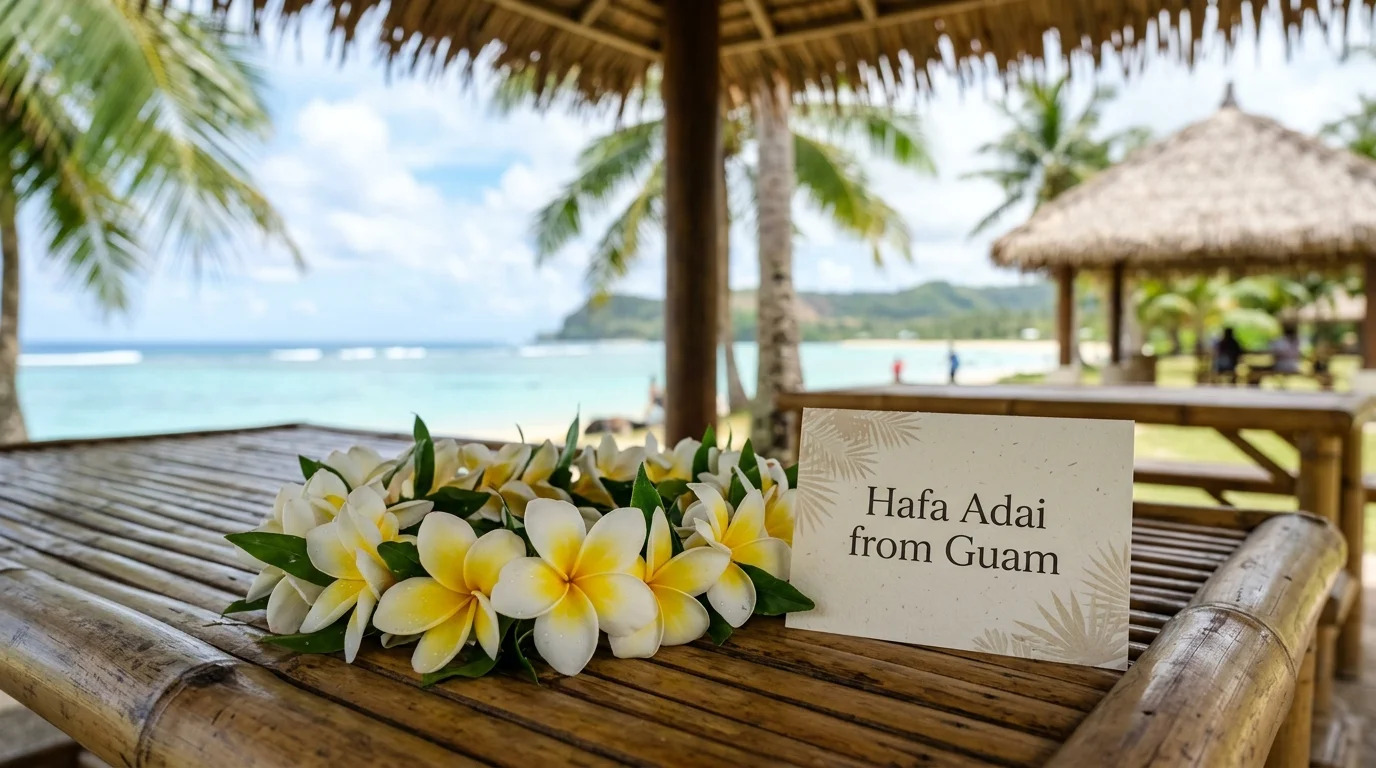
What Does “Hafa Adai” Mean?
The hafa adai meaning is commonly translated as “hello,” “hi,” “greetings,” or “welcome.”
Quick Definition
Hafa Adai: A traditional Chamorro greeting used to say hello, welcome someone, or express friendly acknowledgment.
Literal Meaning
The phrase originates from the Chamorro language, the indigenous language of Guam and the Northern Mariana Islands.
While English translations often simplify it as “hello,” the phrase conveys a broader sense of friendliness and goodwill.
Most Common Interpretation
Today, the most common hafa adai meaning is a warm greeting offered to friends, family members, visitors, and strangers.
Examples:
- “Hafa Adai!”
- “Hafa Adai and welcome to Guam.”
- “Hafa Adai, how are you today?”
What Tone Does It Convey?
The phrase almost always carries a positive tone.
Friendly
Used when greeting friends and neighbors.
Welcoming
Frequently used toward visitors and tourists.
Respectful
Suitable for both casual and formal situations.
Community-Oriented
Reflects a sense of belonging and togetherness.
Positive
Associated with kindness and hospitality.
What Does Hafa Adai Mean in Different Contexts?
The hafa adai meaning remains consistent, but its usage may vary depending on the situation.
Everyday Conversations
People use the phrase just as English speakers use “hello.”
Example:
“Hafa Adai! How’s your day going?”
Tourism
Tourism campaigns often feature the phrase.
Example:
“Hafa Adai and welcome to Guam.”
Business Settings
Many local businesses use the greeting when welcoming customers.
Example:
“Hafa Adai! How can we help you today?”
Cultural Events
The phrase frequently appears during festivals and celebrations.
Example:
“Hafa Adai and thank you for joining our event.”
Social Media
Users often include the phrase in posts celebrating island culture.
Example:
“Hafa Adai from beautiful Guam!”
Educational Settings
Schools may teach the phrase as part of cultural education.
Example:
“Today’s lesson focuses on the hafa adai meaning and Chamorro traditions.”
Origin and History of Hafa Adai
Understanding the hafa adai meaning requires exploring its cultural roots.
Chamorro Origins
The phrase comes from the Chamorro language, spoken by the indigenous people of Guam and the Northern Mariana Islands.
Historical Development
Chamorro has evolved over centuries through contact with various cultures, including Spanish influences during colonial periods.
Despite linguistic changes, hafa adai remains one of the most recognizable expressions in the language.
Symbol of Identity
Over time, the phrase became more than a greeting.
It evolved into a symbol of:
- Chamorro heritage
- Island pride
- Community spirit
- Cultural resilience
Modern Recognition
Today, the hafa adai meaning is known worldwide thanks to:
- Tourism initiatives
- Cultural exchange programs
- Social media
- Travel content
- Educational resources
How to Pronounce Hafa Adai
One reason people search for hafa adai meaning is to learn the correct pronunciation.
Common Pronunciation
Most English speakers pronounce it approximately as:
HAH-fah uh-DYE
or
HA-fa AH-dye
Pronunciation Tips
- “Hafa” sounds similar to “ha-fa.”
- “Adai” rhymes loosely with “eye.”
Listening to native Chamorro speakers is the best way to learn authentic pronunciation.
Cultural Significance of Hafa Adai
The hafa adai meaning extends beyond a simple greeting.
Hospitality
The phrase represents the famous hospitality of Guam and the Mariana Islands.
Respect
Using the greeting demonstrates courtesy and acknowledgment.
Community
The phrase reflects strong social connections within Chamorro culture.
Pride
Many residents view the greeting as an important expression of cultural identity.
Tradition
Generations have used the phrase to maintain cultural continuity.
How People Actually Use Hafa Adai
The hafa adai meaning becomes clearer when viewed in everyday situations.
Most people use it:
- To greet visitors
- To welcome customers
- To start conversations
- To express friendliness
- To celebrate local culture
You’ll often hear it in:
- Airports
- Hotels
- Restaurants
- Schools
- Government offices
- Community events
When to Use It
Use the phrase when greeting someone warmly.
Examples:
- Meeting a new person
- Welcoming guests
- Beginning a conversation
When Not to Use It
There are few restrictions because the greeting is broadly accepted and positive.
However, it should be used respectfully and sincerely.
Real Examples of Hafa Adai in Conversations
Example 1
Person A: Hafa Adai!
Person B: Hafa Adai! Nice to see you.
Meaning: Friendly greeting.
Why it was used: To say hello.
Example 2
Person A: Hafa Adai and welcome to Guam.
Person B: Thank you!
Meaning: Warm welcome.
Why it was used: Hospitality.
Example 3
Person A: Hafa Adai, how are you?
Person B: I’m doing great.
Meaning: Casual greeting.
Why it was used: Start a conversation.
Example 4
Person A: Hafa Adai, everyone.
Person B: Good morning!
Meaning: Group greeting.
Why it was used: Address a crowd.
Example 5
Person A: Hafa Adai! Need any help?
Person B: Yes, please.
Meaning: Friendly customer service.
Why it was used: Welcome a customer.
Example 6
Person A: Hafa Adai from Guam!
Person B: Beautiful island!
Meaning: Greeting from a location.
Why it was used: Social media post.
Example 7
Person A: Hafa Adai, friends.
Person B: Hello!
Meaning: Friendly acknowledgment.
Why it was used: Casual conversation.
Example 8
Person A: Hafa Adai and thank you for attending.
Person B: Glad to be here.
Meaning: Event welcome.
Why it was used: Hospitality.
Example 9
Person A: Hafa Adai, class.
Person B: Good morning, teacher.
Meaning: Educational greeting.
Why it was used: Begin a lesson.
Example 10
Person A: Hafa Adai!
Person B: Hafa Adai!
Meaning: Mutual greeting.
Why it was used: Social interaction.
Common Mistakes and Misunderstandings
Mistake #1: Thinking It Means Only “Hello”
While hello is the most common translation, the hafa adai meaning also includes welcome, greetings, and goodwill.
Mistake #2: Assuming It’s Hawaiian
Many visitors mistakenly believe the phrase comes from Hawaii.
It is actually Chamorro.
Mistake #3: Mispronouncing It
Learning the correct pronunciation helps show respect for the culture.
Mistake #4: Ignoring Cultural Importance
The phrase represents more than vocabulary; it reflects identity and tradition.
Similar Greetings and Related Expressions
| Greeting | Meaning | Difference |
|---|---|---|
| Hello | Standard English greeting | More general |
| Hi | Informal greeting | Less cultural significance |
| Welcome | Greeting newcomers | Specific purpose |
| Aloha | Hawaiian greeting | Different culture |
| Buenas | Spanish greeting | Different language |
| Greetings | Formal hello | Broader usage |
| Good Morning | Time-specific greeting | Limited by time |
| Salutations | Formal greeting | Less common |
| Hey | Casual greeting | Informal |
| Hågu | Chamorro expression | Different meaning |
Is Hafa Adai Positive, Negative, or Neutral?
The hafa adai meaning is overwhelmingly positive.
Positive Usage
The phrase is associated with:
- Warmth
- Friendship
- Hospitality
- Respect
- Community
Neutral Usage
It can function simply as a greeting.
Negative Usage
Negative uses are extremely rare.
The phrase itself carries no negative meaning.
Should You Use Hafa Adai?
Use It If:
- You’re greeting someone from Guam.
- You’re visiting the Mariana Islands.
- You’re discussing Chamorro culture.
- You’re participating in cultural events.
Examples
- “Hafa Adai! Nice to meet you.”
- “Hafa Adai and welcome.”
Avoid It If:
- You’re mocking the phrase.
- You’re using it disrespectfully.
- You’re intentionally misrepresenting the culture.
Respectful usage is always appreciated.