

What Does “Death Rattle Meaning” Mean?
Quick Definition
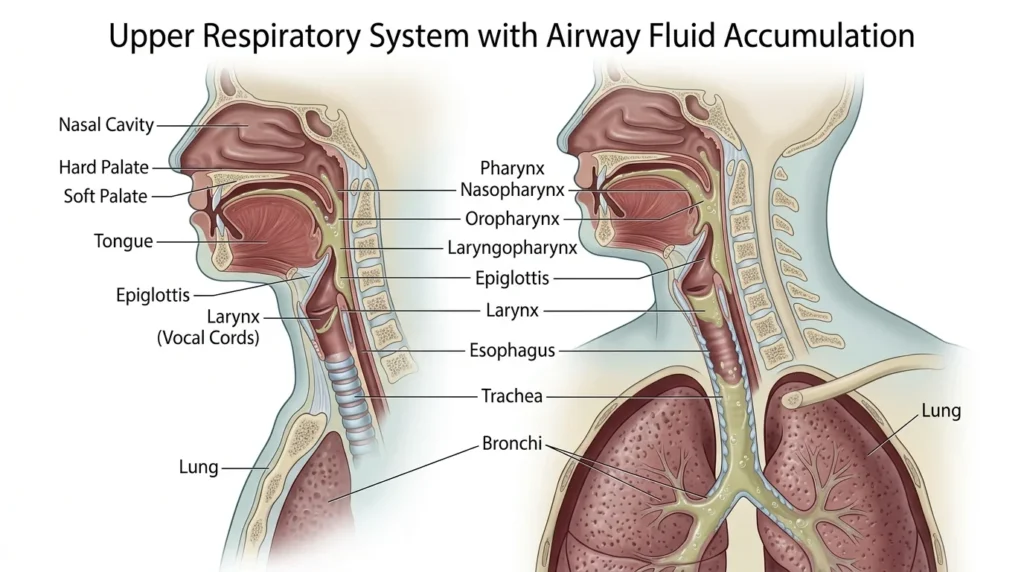
The death rattle meaning describes a rattling or gurgling breathing sound caused by saliva and mucus collecting in the throat when a person can no longer swallow or cough effectively.
What It Usually Means in Medical Settings
In healthcare settings, the death rattle is considered a common sign that the body is shutting down. It often occurs in people receiving hospice or palliative care.
Medical professionals typically associate it with:
- Reduced swallowing ability
- Weak cough reflex
- Relaxed throat muscles
- Accumulation of secretions
- Advanced stages of terminal illness
What Tone Does It Convey?
The term is generally serious because it relates to end-of-life care.
Depending on context, it may be:
- Medical
- Educational
- Emotional
- Compassionate
- Figurative
Unlike internet slang, the death rattle meaning has a specific medical definition that remains consistent across most situations.
What Does Death Rattle Meaning on Different Platforms?
Text Messages
People usually use the term literally when discussing a loved one’s condition.
Example:
“The hospice nurse said Dad has developed a death rattle.”
Snapchat
The phrase is uncommon on Snapchat but may appear in discussions about caregiving experiences.
Users often mention the death rattle meaning in educational posts, hospice awareness content, and personal stories about grief.
TikTok
Many hospice nurses create videos explaining the death rattle to help families understand what to expect.
Discord
Health-focused communities sometimes discuss the death rattle while sharing experiences and asking questions.
The term frequently appears in caregiver and medical discussion forums where users seek reassurance and information.
Dating Apps
The phrase rarely appears on dating apps unless used metaphorically.
Origin and History of Death Rattle Meaning
The death rattle meaning did not originate from texting culture, social media, or internet slang.
Instead, it comes from traditional medical observations that date back centuries. Physicians and caregivers historically used the phrase to describe the rattling breathing sound often heard near the end of life.
The exact first use of the term is difficult to determine, but references to noisy breathing during the dying process appear in historical medical writings from hundreds of years ago.
Because the sound is so distinctive, the phrase remained part of medical vocabulary and continues to be used today in hospitals, nursing homes, and hospice settings.
Unlike many modern expressions, the death rattle meaning has remained relatively unchanged over time.
How People Actually Use Death Rattle Meaning
Most people encounter the phrase in medical or caregiving situations.
Common Situations
People use it when:
- Discussing hospice care
- Talking with healthcare providers
- Researching end-of-life symptoms
- Sharing caregiving experiences
- Learning about palliative medicine
When Not to Use It
Avoid using the phrase casually or jokingly.
Many people associate the term with the loss of loved ones, so using it in an insensitive way can be upsetting.
Appropriate Usage
The death rattle meaning is appropriate in:
- Medical conversations
- Educational articles
- Hospice discussions
- Family caregiving situations
- Healthcare training
Figurative Usage
Sometimes people use the term metaphorically.
Example:
“That failed product launch was the company’s death rattle.”
In this context, it refers to the final sign of decline before something ends.
Real Examples of Death Rattle Meaning in Conversations
Example 1
Person A: What is that rattling sound?
Person B: The nurse said it’s called a death rattle.
Meaning: A symptom that can occur near the end of life.
Why it was used: Medical explanation.
Example 2
Person A: Is Grandma struggling to breathe?
Person B: The doctor explained that the death rattle doesn’t always mean discomfort.
Meaning: Clarifying a common concern.
Why it was used: Providing reassurance.
Example 3
Person A: Why does breathing sound wet?
Person B: It may be related to the death rattle.
Meaning: Discussion of airway secretions.
Why it was used: Identifying a symptom.
Example 4
Person A: I’ve never heard that sound before.
Person B: Many families learn about the death rattle during hospice care.
Meaning: Educational explanation.
Why it was used: Sharing information.
Example 5
Person A: The hospice nurse mentioned the death rattle.
Person B: That usually happens when secretions collect in the throat.
Meaning: Medical clarification.
Why it was used: Explaining the cause.
Example 6
Person A: Is the death rattle painful?
Person B: Healthcare providers generally say it isn’t necessarily painful.
Meaning: Addressing fears.
Why it was used: Reassurance.
Example 7
Person A: I saw a video explaining the death rattle meaning.
Person B: Those videos help families know what to expect.
Meaning: Educational discussion.
Why it was used: Raising awareness.
Example 8
Person A: The company keeps losing money.
Person B: This could be its death rattle.
Meaning: Final stage before failure.
Why it was used: Metaphorical usage.
Example 9
Person A: Should we call the nurse?
Person B: Yes, especially if the death rattle has just started.
Meaning: Seeking professional guidance.
Why it was used: Medical care.
Example 10
Person A: I was frightened when I heard it.
Person B: Many people feel that way when they first encounter the death rattle.
Meaning: Emotional support.
Why it was used: Validation and education.
Common Mistakes and Misunderstandings
Mistake #1: Assuming It Means Severe Pain
Many people think the sound means a person is suffering.
In reality, healthcare professionals often explain that the sound itself does not necessarily indicate pain.
Mistake #2: Believing It Happens to Everyone
Not every dying person experiences a death rattle.
Its presence varies depending on individual circumstances.
Mistake #3: Thinking It Can Always Be Prevented
Certain medications and positioning techniques may help reduce secretions, but the sound cannot always be eliminated.
Mistake #4: Confusing It With Normal Snoring
The death rattle has a distinct wet or gurgling quality that differs from ordinary snoring.
Mistake #5: Assuming Death Will Occur Immediately
The death rattle often indicates that death may be approaching, but timing varies from person to person.
Similar Medical Terms and Related Expressions
| Term | Meaning | Difference |
|---|---|---|
| Hospice Care | End-of-life support | Broader care approach |
| Palliative Care | Comfort-focused treatment | Can occur at any stage |
| Terminal Illness | Disease expected to lead to death | Condition, not symptom |
| Labored Breathing | Difficult breathing | Different cause |
| Apnea | Temporary breathing pause | Not the same sound |
| Agonal Breathing | Abnormal breathing near death | Different breathing pattern |
| Respiratory Secretions | Mucus and saliva in airways | Cause of the sound |
| End-of-Life Signs | Symptoms before death | Broader category |
| Comfort Care | Symptom management | Treatment approach |
| Active Dying | Final stage of life | Overall process |
Is Death Rattle Meaning Positive, Negative, or Neutral?
The death rattle meaning is generally considered neutral from a medical perspective but emotionally difficult for families.
Positive Aspects
- Helps healthcare providers recognize end-of-life changes
- Allows families to prepare emotionally
- Encourages comfort-focused care
Negative Aspects
- Can be upsetting to hear
- Often signals that death is approaching
- May create anxiety for loved ones
Overall Tone
The term is best described as medically neutral but emotionally significant.
Should You Use the Term?
Use It If:
- You are discussing healthcare topics
- You are explaining hospice care
- You are describing end-of-life symptoms
- You are seeking medical information
Avoid It If:
- You are joking about serious situations
- You are speaking to someone grieving unless necessary
- You are using it casually without understanding its meaning
The death rattle meaning should be used respectfully because of its connection to end-of-life experiences.