

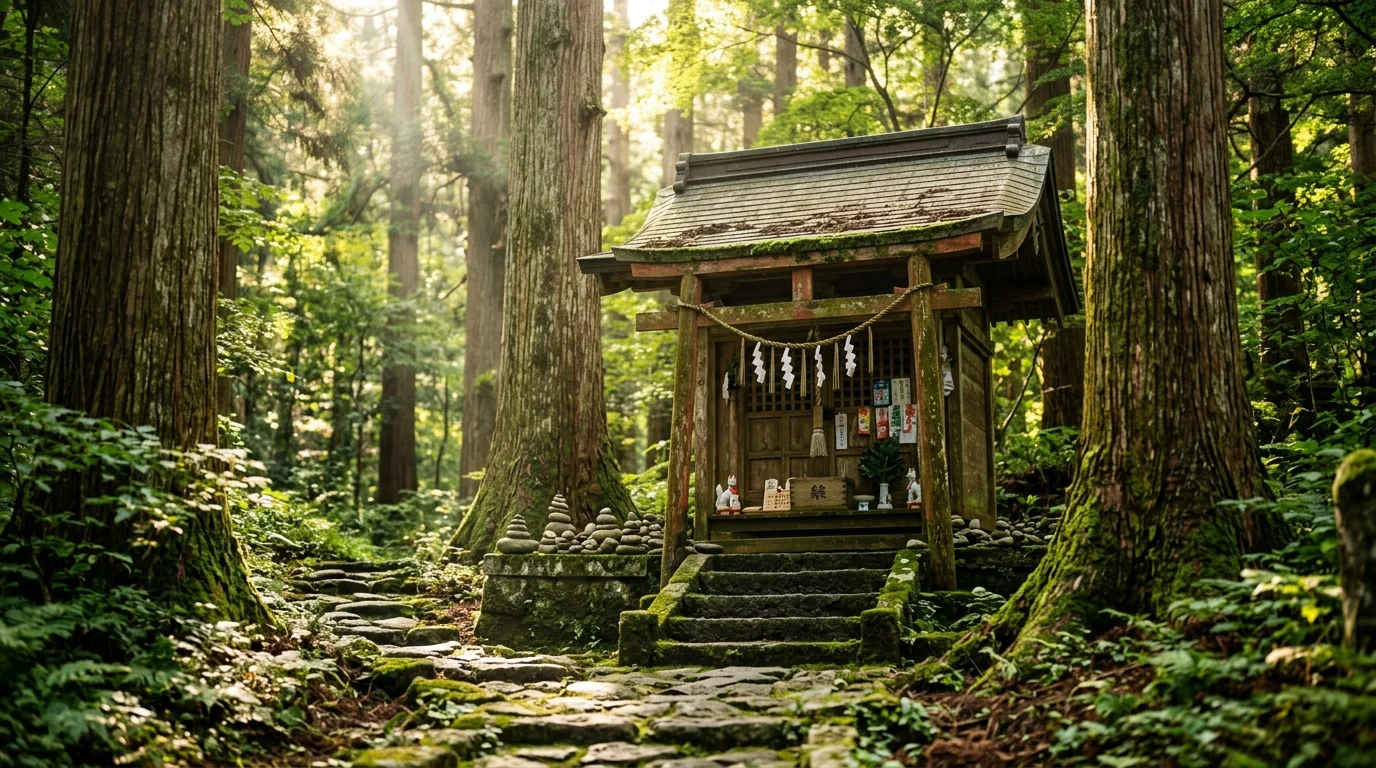
What Does “Shrine” Mean?
Quick Definition
A shrine is a sacred or holy place dedicated to a specific deity, ancestor, hero, martyr, saint, or similar figure of respect, where they are venerated or worshipped . Shrines often contain idols, relics, or other objects associated with the figure being venerated .
What It Usually Means In Conversations
When people talk about the shrine meaning in everyday conversation, they’re usually referring to:
A religious site: A place of worship or devotion, often associated with a saint, deity, or holy figure .
A memorial: A place or object preserved because of its history or associations with an important person or event .
A personal altar: A small setup in a home, usually with pictures, candles, and objects dedicated to a loved one or a deity .
What Tone Does It Convey?
| Context | Tone | Example |
|---|---|---|
| Religious devotion | Reverent, respectful | “They visited the shrine of the saint to pray” |
| Historical remembrance | Honoring, commemorative | “The memorial is a shrine to American liberty” |
| Personal memorial | Intimate, reflective | “She set up a shrine with her grandmother’s photo” |
Origin and History of the Word “Shrine”
The shrine meaning has a long history that stretches back to before the English language even existed.
Etymology: The word comes from the Old English scrīn, meaning “ark (of the covenant), chest, coffer, or case for relics” . This, in turn, came from the Latin scrinium, meaning “case or box for keeping papers” .
Evolution: Originally, a shrine was simply a box or chest for keeping precious items, especially religious relics. Over time, the word expanded to describe the place where these relics were kept, and then to any sacred space dedicated to a holy figure.
The Relic Connection: The shrine meaning is closely tied to the veneration of relics—objects associated with saints or holy figures. In many traditions, shrines were built to house these relics, making them places of pilgrimage.
Types of Shrines
Shrines come in many forms, both religious and secular:
Temple Shrines
Many shrines are located within buildings designed specifically for worship, such as churches, temples, or mosques. The shrine is often the center of attention, given a place of prominence .
Household Shrines
Small shrines are commonly found in homes, particularly in Hinduism, Buddhism, Catholicism, and modern faiths. These are usually setups of pictures and figurines dedicated to a deity, ancestors, or a localized household deity .
Wayside and Yard Shrines
Small shrines can be placed along roads or in gardens, often in the form of a statue of a saint or deity in an alcove. In the United States, some Christians have small yard shrines, sometimes called “bathtub madonnas” .
Secular Shrines
The shrine meaning can also apply to non-religious places. A war memorial or the grave of a beloved national leader can be described as a shrine because of the reverence people feel there .
Portable Shrines
In some cultures, there are portable shrines—small, movable sacred spaces for personal devotion .
The Shrine Meaning Across Religions
Shrines are found in many of the world’s religions :
Christianity
Catholicism, Orthodox Christianity, Anglicanism, and some forms of Lutheranism all have shrines. In the Roman Catholic Church, shrines can be designated at the local, national, or international level . Shrines in churches are often centered on a statue or image of Jesus, Mary, or a saint, providing a visual focus for prayer.
Islam
Islam’s holiest structure, the Kaaba in Mecca, is often seen as a shrine . The tomb of the Prophet Muhammad in Medina is also a highly venerated site for pilgrimage. However, some Islamic reformers (like the Wahhabi and Salafi movements) oppose the building and visiting of tomb shrines, viewing it as a deviation from true Islam .
Hinduism and Buddhism
Shrines are central in Hinduism and Buddhism, often found within temples and homes. Many households have a small shrine dedicated to a personal deity, used for daily worship .
Shinto
In Shinto, shrines are places where devotion is paid to deities (kami) . These shrines are often located in natural settings.
Pakistani Shrines
In Pakistan, there are many shrines of religious leaders and saints, such as the Data Durbar Complex in Lahore and the shrine of Abdullah Shah Ghazi in Karachi . These sites are places of pilgrimage for both religious and nationalist purposes .
Real Examples of Shrines in Conversations
Example 1: Religious Context
Person A: “I’m planning a pilgrimage to the shrine of the saint.”
Person B: “That’s a beautiful holy place. Many people go there to pray.”
Meaning: A sacred religious site associated with a saint.
Why it was used: To describe a place of religious devotion.
Example 2: Historical Context
Person A: “Why is this building so important?”
Person B: “It’s a shrine to American liberty—Independence Hall.”
Meaning: A place hallowed by its historical associations.
Why it was used: To explain a site’s significance.
Example 3: Personal Shrine
Person A: “What’s that setup in the corner with all the candles?”
Person B: “It’s a shrine to my grandmother. I keep her photo and things that remind me of her.”
Meaning: A personal memorial dedicated to a loved one.
Why it was used: To describe a private memorial.
Example 4: Tourist Visit
Person A: “Did you visit the shrine of Shah Abdul Latif Bhitai?”
Person B: “Yes, it’s near Hyderabad. It’s a beautiful place and many people go there.”
Meaning: A religious site dedicated to a Sufi saint .
Why it was used: To describe a travel experience.
Example 5: Museum or Memorial
Person A: “I visited the museum dedicated to the founder of the nation.”
Person B: “It’s like a shrine to his memory—people go there to pay their respects.”
Meaning: A secular memorial honoring a historical figure .
Why it was used: To explain the reverence for the location.
Common Mistakes and Misunderstandings
Confusing a Shrine with a Temple
Mistake: Thinking a shrine and a temple are the same thing.
Reality: While they can overlap, a temple is usually a larger building for communal worship, while a shrine often focuses on a particular relic or figure .
Using “Shrine” Casually
Mistake: Joking that an ordinary object is a “shrine” because you like it.
Reality: The shrine meaning implies reverence and respect. It’s best reserved for actual places of devotion or deep personal significance.
Forgetting Secular Shrines
Mistake: Assuming shrines are always religious.
Reality: The shrine meaning can include secular memorials, historical sites, and places hallowed by their associations .
Mispronouncing the Word
Mistake: Saying “sh-ryne” or “sh-ree-neh.”
Reality: “Shrine” is pronounced /ʃraɪn/ (like “shrine”), with a short, single syllable and a long “i” sound .
Similar Words and Related Terms
| Term | Meaning | Connection to Shrine |
|---|---|---|
| Altar | A table or structure for religious offerings | Often found within shrines |
| Reliquary | A container for sacred relics | The original meaning of the word shrine |
| Sanctuary | A holy or sacred place | Similar but often refers to the whole building |
| Temple | A building for worship | Can be a shrine, but not all shrines are temples |
| Memorial | A structure to remember someone | A secular shrine |
| Chapel | A small place of worship | Can be a shrine but not always |
| Mazar/Dargah | Muslim shrine or tomb | Used for Islamic shrines |
Is “Shrine” Positive, Negative, or Neutral?
The shrine meaning is generally neutral, but its tone depends on the context:
Positive aspects:
Represents devotion, respect, and remembrance
Connects people to their faith, history, or loved ones
Provides a place for reflection and prayer
Neutral aspects:
Simply describes a sacred space
Can be religious or secular
Varies greatly in size and scale
Negative aspects:
In some traditions, shrines are criticized as encouraging idolatry
Can be controversial in certain religious contexts
Should You Use “Shrine”?
You might use it when:
Describing a religious site dedicated to a holy figure
Referring to a memorial or historical site
Talking about a personal altar or setup of photos and objects
Discussing a place of pilgrimage
You should avoid it if:
You’re talking about a regular building of worship that isn’t dedicated to a specific relic or figure (use “temple” or “church” instead)
You’re using it to be flippant about a non-serious object
The context is casual and the word might seem overly formal