
What Does “Cantata” Mean?
Quick Definition
A cantata is a vocal composition for one or more voices with instrumental accompaniment, usually comprising solos, duets, recitatives, and choruses . The word comes from the Italian cantare, meaning “to sing” .
What It Usually Means In Conversations
When people talk about the cantata meaning in everyday conversation, they’re usually referring to:
A vocal-instrumental piece: The cantata meaning describes a musical work where singers and instruments perform together, often in multiple movements .
A Baroque-era genre: The cantata meaning is most strongly associated with the Baroque period (roughly 1600–1750). Johann Sebastian Bach was one of its most famous composers, writing hundreds of cantatas during his career .
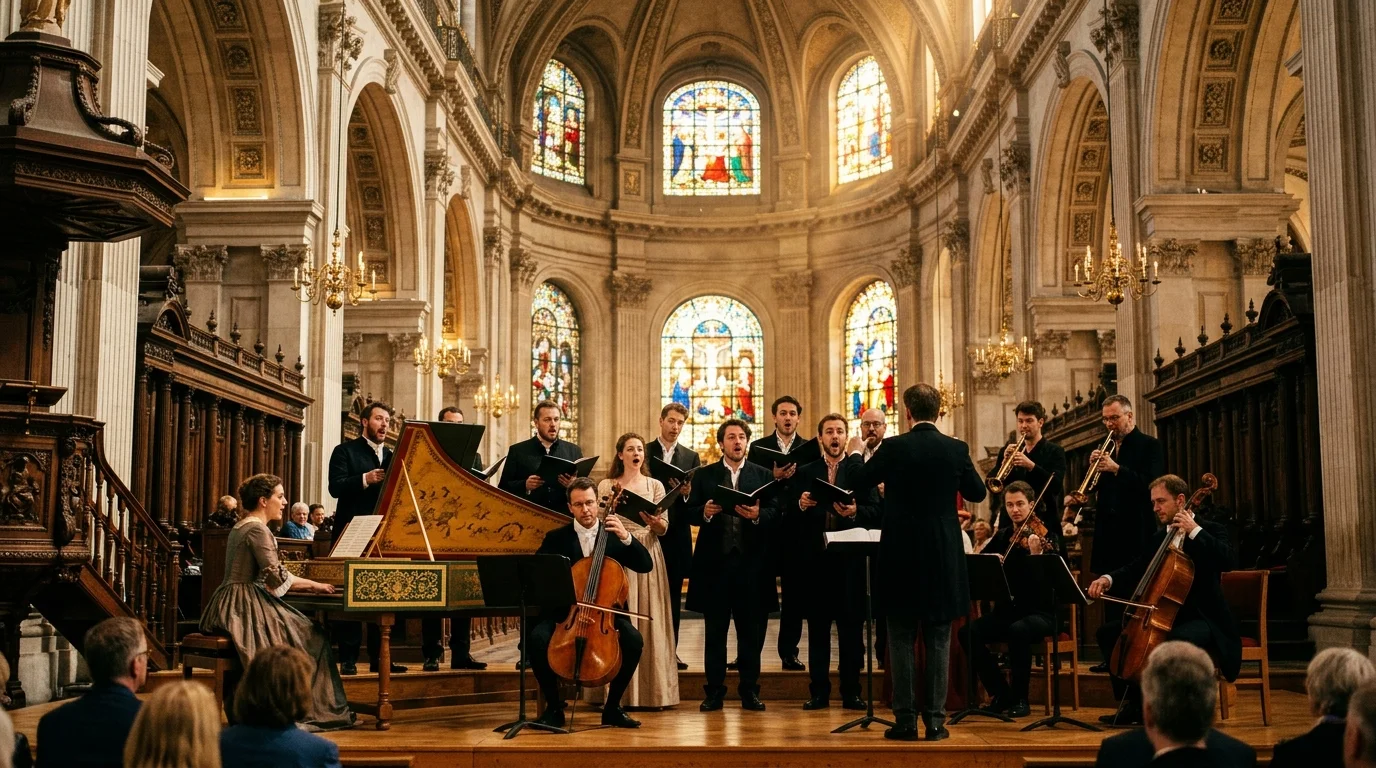
A church or concert work: Cantatas were often performed as part of church services, especially in the Lutheran tradition . They could also be secular, performed in courtly or domestic settings .
A smaller-scale alternative to oratorio: Cantatas are generally shorter and less dramatic than oratorios, and they are never staged with costumes or scenery .
What Tone Does It Convey?
| Context | Tone | Example |
|---|---|---|
| Music appreciation | Educational, formal | “Bach’s cantatas are masterpieces of the Baroque era” |
| Church service | Reverent, traditional | “The choir will perform a cantata for Easter Sunday” |
| Academic study | Scholarly, analytical | “We are examining the structure of the Baroque cantata” |
Origin and History of the Cantata
The Italian Roots
The cantata meaning originated in early 17th-century Italy as a chamber vocal genre . The term comes from the Italian past participle of cantare, meaning “to sing” . Early cantatas were often intimate works for solo voice with basso continuo accompaniment.
The Baroque Era
The cantata meaning truly flourished during the Baroque period, becoming an essential genre in both sacred and secular contexts . The form spread from Italy throughout Europe:
Italy: The Italian chamber cantata featured solo voice and continuo, often with secular texts about love or mythology .
Germany: The Lutheran church cantata became the dominant sacred vocal genre, written for the Sunday church service .
Bach and the Lutheran Cantata
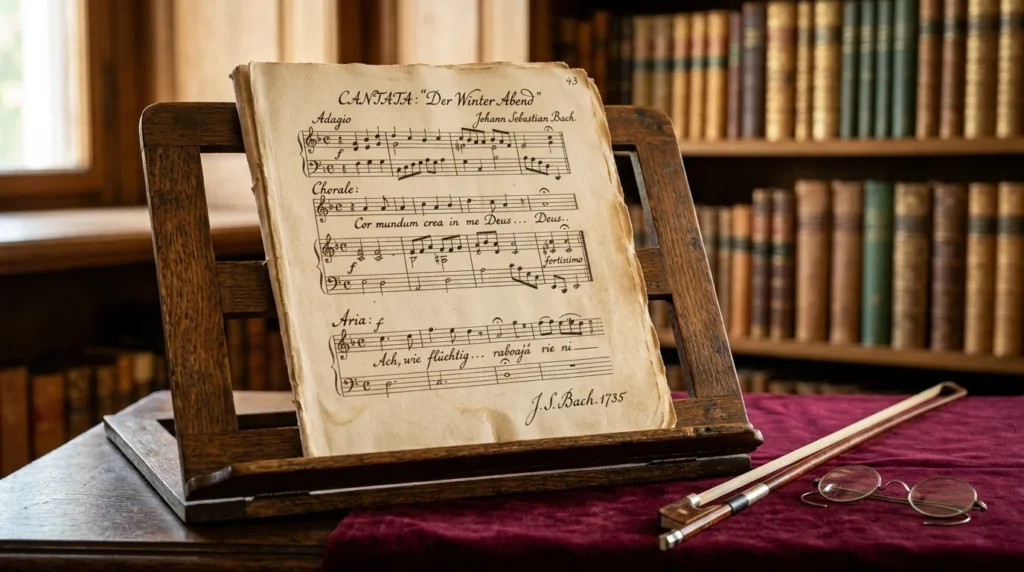
The cantata meaning is perhaps most famously represented by the works of Johann Sebastian Bach, who composed hundreds of cantatas as part of his job overseeing church music in Leipzig . Bach composed a new cantata for each Sunday of the church year (except during Lent and Advent), creating multiple yearly cycles of music .
Bach’s cantatas typically used Lutheran chorales (hymns) as their foundation. Some were written by Martin Luther himself, using pre-existing melodies that made them easy for congregations to sing .
Beyond the Baroque
The cantata meaning did not end with the Baroque. The genre continued to evolve through the Classical and Romantic periods, and composers continue to write cantatas today . However, the form is most closely associated with its Baroque-era peak.
How a Cantata Is Structured
The Movements
A cantata is a multi-movement work that typically contains three types of movements :
| Movement Type | Description | Example |
|---|---|---|
| Recitative | A speech-like, narrative passage | A soloist “telling” the story |
| Aria | A lyrical, expressive solo song | A soloist expressing emotion |
| Chorus | A passage for full choir and orchestra | The ensemble making a powerful statement |
Recitative
Recitatives are short “linking passages” that serve as sung narration between movements . They are often faster and more speech-like than arias. There are two main types:
Secco (dry) recitative: Uses only a soloist and continuo, giving the soloist freedom for ornamentation and rubato .
Accompanied recitative: Uses soloist, continuo, and strings, creating a more structured but still expressive setting .
Aria
Arias are movements that use only a soloist and orchestra. They are longer and more expressive than recitatives and serve as the emotional highlights of the cantata .
Chorus
Choruses use a full choir (SATB—Soprano, Alto, Tenor, Bass) and orchestra, allowing for rich, varied textures . Many cantatas open and close with powerful choral movements.
Cantata vs. Oratorio
The cantata meaning is often compared to the oratorio. They share similarities, but there are important distinctions :
| Feature | Cantata | Oratorio |
|---|---|---|
| Length | Generally shorter | Generally longer (can last over an hour) |
| Subject | Sacred or secular | Primarily religious |
| Performance context | Church service or concert | Concert hall |
| Structure | Less dramatic | More dramatic |
| Staging | Never staged | Never staged |
Both the cantata and oratorio are non-staged vocal works with instrumental accompaniment. Their most reliable distinctions are length and subject matter .
Types of Cantatas
The cantata meaning encompasses several distinct subgenres:
Sacred Cantatas
Sacred cantatas (also called church cantatas) are based on religious texts and were often written for performance during church services . Bach’s Lutheran church cantatas are the most famous examples.
Secular Cantatas
Secular cantatas use non-religious texts—often poetry, love stories, or allegorical subjects . They were performed for courtly entertainment or social gatherings.
Chamber Cantatas
Chamber cantatas are smaller-scale works for solo voice and restricted accompanimental forces . They were often performed in intimate settings.
Solo Cantatas
Some cantatas are for a single voice accompanied by instruments . Telemann’s Harmonischer Gottesdienst collection features solo cantatas with one vocal line, one melodic instrument, and basso continuo .
Real Examples of Cantatas in Conversations
Example 1: Music Discussion
Person A: “What’s the piece the choir is performing on Sunday?”
Person B: “It’s a cantata by Bach, written for the church service.”
Meaning: The piece is a vocal-instrumental work for church use.
Why it was used: To describe the musical genre.
Example 2: Historical Context
Person A: “Why did Bach write so many cantatas?”
Person B: “It was part of his job—he composed a new cantata for each Sunday of the church year.”
Meaning: Bach’s cantatas were part of his professional duties as a church musician.
Why it was used: To explain the context of his prolific output.
Example 3: Academic Context
Person A: “What’s the difference between a cantata and an oratorio?”
Person B: “Cantatas are usually shorter and can be either sacred or secular, while oratorios are longer and typically religious.”
Meaning: A comparison of the two vocal genres.
Why it was used: To explain a musical distinction.
Common Mistakes and Misunderstandings
Confusing Cantata with Oratorio
The cantata meaning is sometimes confused with oratorio. While they are similar, cantatas are generally shorter and can be either sacred or secular, whereas oratorios are typically religious and longer .
Thinking It’s Always Religious
While many cantatas are sacred, the cantata meaning includes secular works as well. Composers wrote cantatas on love, mythology, and other non-religious subjects .
Assuming It Has a Set Form
The cantata meaning describes a flexible genre with a wide variety of forms and styles. They can range from intimate solo works to large-scale works with chorus and orchestra .
Pronouncing It Incorrectly
The cantata meaning is pronounced kun-TAH-tuh (American) or kan-TAH-tuh (British) .
Similar Terms and Related Words
| Term | Meaning | Connection to Cantata |
|---|---|---|
| Oratorio | A longer religious vocal work | Similar, but longer and more dramatic |
| Anthem | A single-movement celebratory piece | Shorter than a cantata |
| Opera | A staged vocal drama | Cantata is unstaged |
| Mass | A liturgical setting | Can include music similar to cantatas |
| Chorale | A Lutheran hymn | Often forms the basis of Bach’s cantatas |
Is “Cantata” Positive, Negative, or Neutral?
The cantata meaning is neutral—it’s a functional musical term:
Neutral aspects:
Describes a specific musical genre
Used in academic and musical contexts
Can refer to both sacred and secular works
Positive aspects:
Associated with beautiful and masterful compositions
Bach’s cantatas are considered pinnacles of Western music
Should You Use “Cantata”?
You might use it when:
Describing a vocal composition with instrumental accompaniment
Discussing Baroque music or classical music in general
Referring to a church performance
You should avoid it if:
You’re in a very casual conversation where a simpler term might be more appropriate
You’re not sure if the music fits the definition