
What Does “Embellish” Mean?
The embellish meaning depends on the context, but it generally means to enhance or add details.
Quick Definition
Embellish (verb):
- To decorate or improve the appearance of something by adding attractive details.
- To make a story or statement more interesting by adding extra details, sometimes exaggerating the truth.
What It Usually Means
People use embellish when talking about:
- Decorating clothing or furniture
- Improving artwork
- Enhancing writing
- Adding details to stories
- Exaggerating events
- Beautifying designs
Origin and History of Embellish
The embellish meaning comes from the French word embellir, meaning “to make beautiful.” It ultimately traces back to the Latin word bellus, meaning “beautiful” or “pretty.”
The word entered English in the 17th century and was first used to describe decorating objects. Over time, it also came to describe adding extra details to stories or statements.
Common Uses of Embellish
The embellish meaning varies slightly depending on the situation.
In Fashion
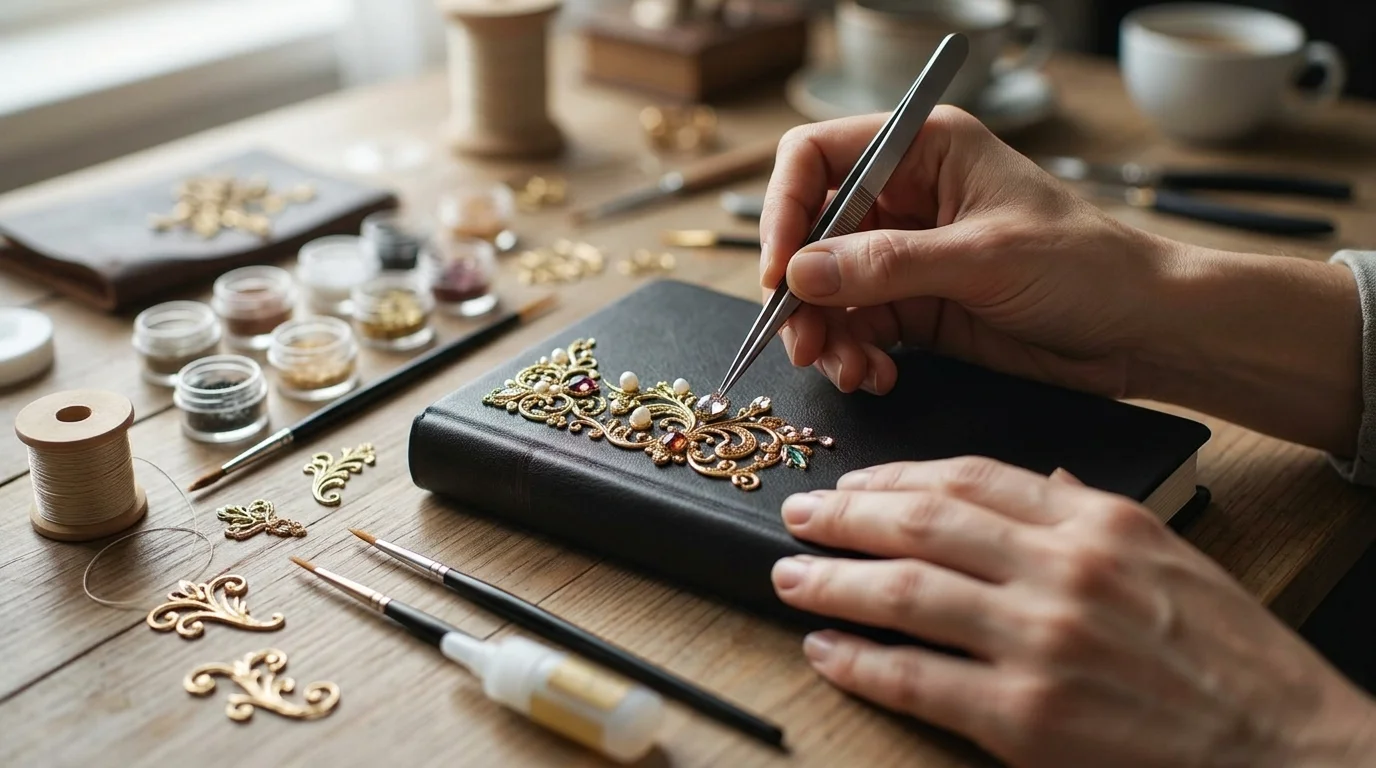
Designers embellish clothing with:
- Beads
- Sequins
- Embroidery
- Lace
- Crystals
Example:
“The gown was embellished with pearls.”
In Art and Design
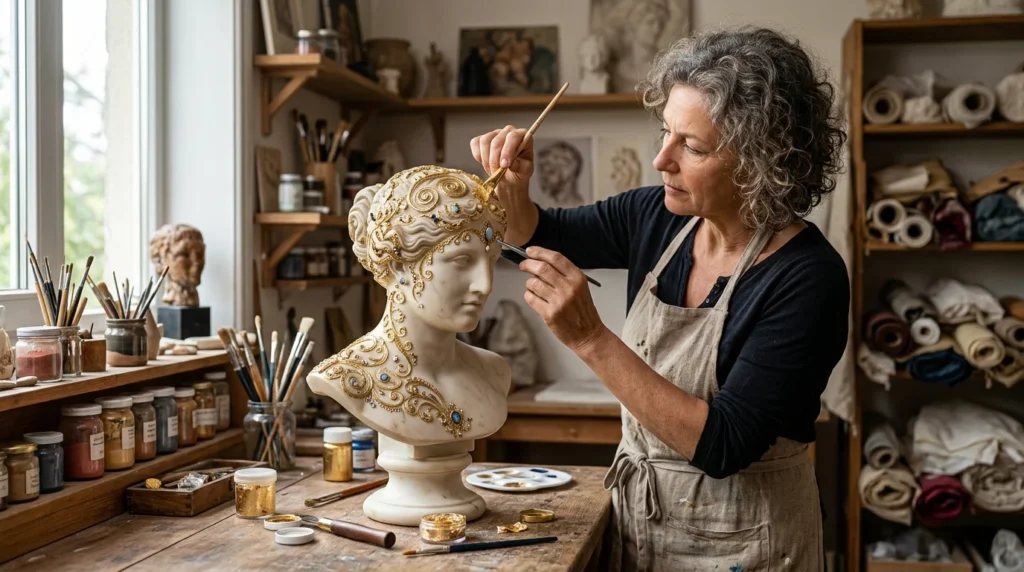
Artists embellish paintings, furniture, or crafts to make them more visually appealing.
Example:
“The frame was embellished with gold leaf.”
In Writing
Writers may embellish descriptions to make stories more vivid.
Example:
“The author embellished the setting with rich details.”
In Conversation
Someone may embellish a story by exaggerating what happened.
Example:
“He embellished the fishing story to impress his friends.”
Real Examples of Embellish
Example 1
“She embellished her dress with colorful embroidery.”
Meaning: She decorated the dress.
Example 2
“The designer embellished the handbag with crystals.”
Meaning: Decorative additions improved its appearance.
Example 3
“He embellished the truth during the interview.”
Meaning: He exaggerated or added details.
Example 4
“The cake was embellished with fresh flowers.”
Meaning: It was decorated beautifully.
Example 5
“The novelist embellished the dialogue.”
Meaning: The writing became more expressive.
Example 6
“They embellished the garden with decorative lights.”
Meaning: They enhanced its appearance.
Example 7
“Don’t embellish your résumé.”
Meaning: Don’t exaggerate your qualifications.
Example 8
“The speech was embellished with inspiring quotes.”
Meaning: Extra details made it more engaging.
Example 9
“The artist embellished the painting with intricate patterns.”
Meaning: Decorative details were added.
Example 10
“She tends to embellish stories when entertaining guests.”
Meaning: She often adds dramatic or exaggerated details.
Embellish vs. Decorate vs. Exaggerate
These words are related but have different meanings.
| Word | Meaning | Difference |
|---|---|---|
| Embellish | Add decorative or extra details | Can refer to decoration or exaggeration |
| Decorate | Make something more attractive | Usually physical decoration only |
| Exaggerate | Make something seem greater than it is | Refers to overstating facts |
| Ornament | Add decorative features | More formal, physical decoration |
| Beautify | Improve appearance | Focuses only on making something look better |
Common Mistakes and Misunderstandings
Mistake: Embellish always means lying.
Correct: Not necessarily. It can simply mean decorating or enhancing something.
Mistake: Embellish only applies to clothing.
Correct: It also applies to stories, writing, art, furniture, speeches, and more.
Mistake: Embellish and exaggerate are identical.
Correct: Exaggeration is one possible form of embellishment, but embellishment can also involve harmless decorative additions.
Mistake: Embellishing is always negative.
Correct: In design and art, embellishing is usually considered positive and creative.
Is “Embellish” Positive, Negative, or Neutral?
The embellish meaning is generally neutral, but its tone depends on context.
Positive
- Decorating clothing
- Enhancing artwork
- Improving design
- Adding creative details
Negative
- Exaggerating stories
- Misrepresenting facts
- Stretching the truth
Should You Use “Embellish”?
Use “embellish” when:
- Talking about decorative improvements.
- Describing artistic enhancements.
- Referring to adding expressive details in writing.
- Explaining mild exaggeration in conversation.
Avoid using it when:
- You simply mean “repair” or “fix.”
- You want to describe a serious falsehood—in that case, words like fabricate or lie may be more accurate.