
What Does “JTAC” Mean?
Quick Definition
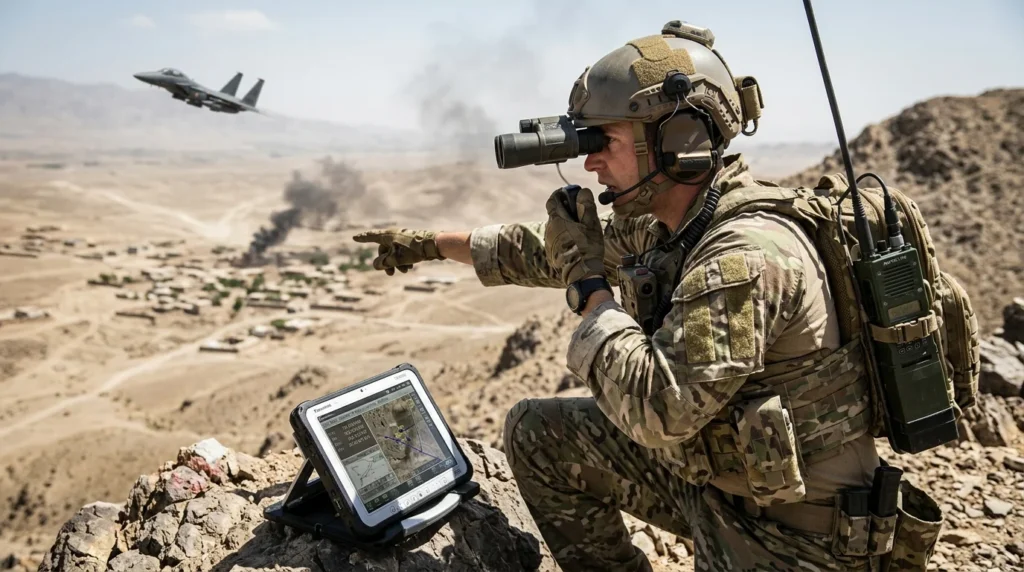
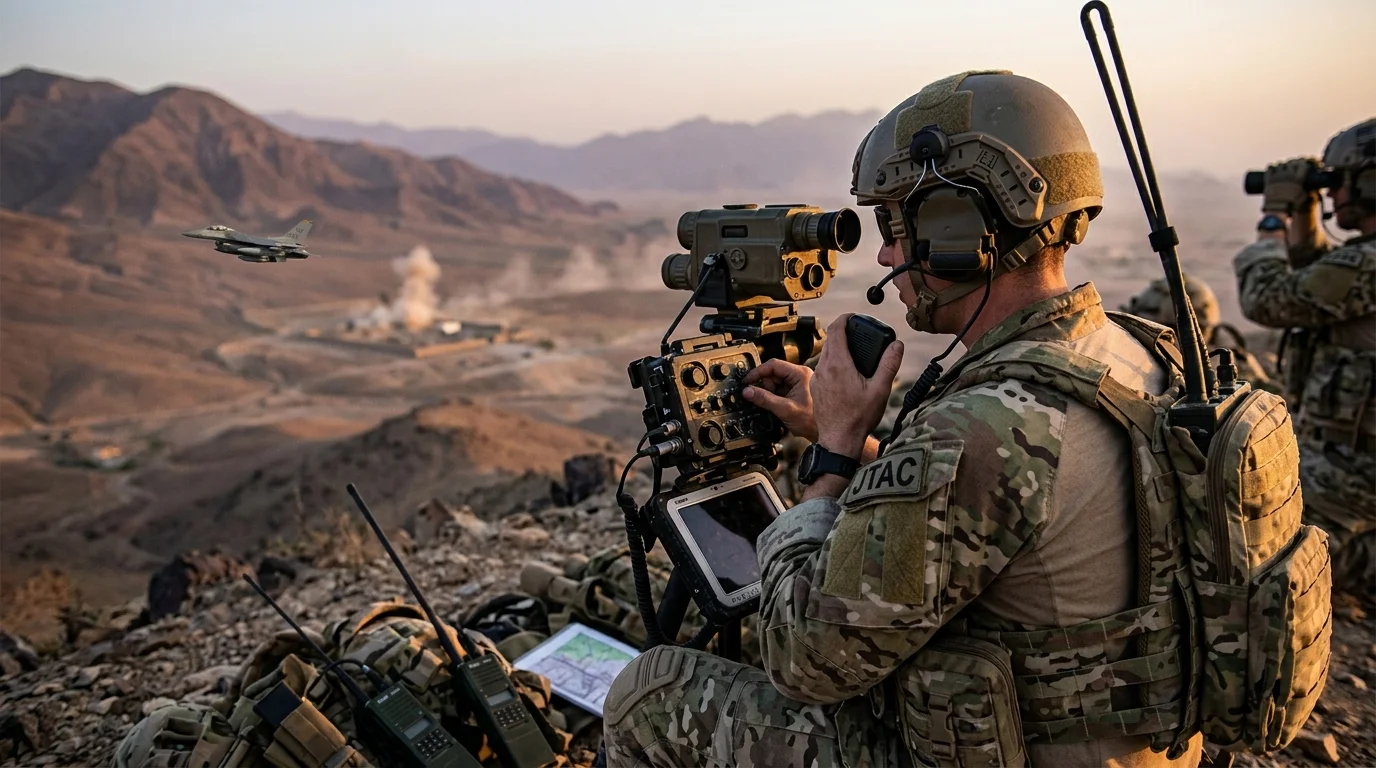
JTAC (abbreviation): Joint Terminal Attack Controller, a qualified military professional authorized to direct combat aircraft conducting close air support missions.
What It Usually Means
A JTAC is responsible for:
- Coordinating close air support (CAS).
- Communicating with military pilots.
- Identifying and confirming approved targets.
- Helping reduce the risk of friendly fire.
- Supporting ground commanders during combat operations.
JTACs operate with ground units while communicating directly with aircraft.
What Does a JTAC Do?
A JTAC’s duties may include:
- Communicating with fighter jets, helicopters, and other aircraft.
- Providing pilots with target information.
- Coordinating attack timing.
- Assessing battlefield conditions.
- Confirming friendly troop locations.
- Working alongside infantry and special operations units.
Because these tasks involve significant responsibility, JTACs undergo specialized training and certification.
Where Are JTACs Used?
JTACs serve in various military operations, including:
- Close air support missions.
- Special operations.
- Conventional ground combat.
- Joint military exercises.
- Coalition operations involving allied forces.
They are commonly found working with units that require direct coordination with military aircraft.
Origin and History of JTAC
The Joint Terminal Attack Controller designation was developed to standardize the role of qualified personnel who control terminal attack operations involving close air support.
Modern JTAC procedures emphasize:
- Standardized communication.
- Joint operations among different military branches.
- Safety and target verification.
- International interoperability with allied forces.
The role evolved from earlier forward air control positions as military doctrine and technology advanced.
How People Actually Use “JTAC”
In Military Discussions
“The JTAC coordinated the close air support mission.”
Meaning: The controller directed aircraft supporting ground forces.
In News Reports
“The JTAC communicated with aircraft during the operation.”
Meaning: They coordinated air support from the ground.
In Video Games
Many military simulation games include JTAC mechanics to recreate realistic battlefield communication.
In Military Training
“JTAC certification requires extensive practical training.”
Meaning: Personnel complete specialized instruction before performing the role.
Real Examples of JTAC
Example 1
“The JTAC cleared the aircraft to engage the approved target.”
Meaning: The controller authorized the strike according to mission procedures.
Example 2
“The infantry unit relied on its JTAC for air support.”
Meaning: The JTAC coordinated aircraft assisting ground troops.
Example 3
“The JTAC maintained radio contact throughout the mission.”
Meaning: They continuously communicated with the aircraft.
Example 4
“JTACs train extensively before earning certification.”
Meaning: The role requires specialized preparation.
Example 5
“The exercise included JTAC-led close air support scenarios.”
Meaning: The training simulated real battlefield coordination.
Example 6
“Pilots received target updates from the JTAC.”
Meaning: The controller provided mission information.
Example 7
“The JTAC worked closely with the ground commander.”
Meaning: They coordinated battlefield operations.
Example 8
“Accurate communication is essential for every JTAC.”
Meaning: Clear instructions help support safe and effective operations.
Example 9
“The coalition forces deployed experienced JTACs.”
Meaning: Qualified controllers supported multinational operations.
Example 10
“The JTAC helped coordinate multiple aircraft.”
Meaning: They managed air support during the mission.
JTAC vs. Related Military Roles
| Term | Meaning | Difference |
|---|---|---|
| JTAC | Joint Terminal Attack Controller | Certified to direct close air support |
| FAC | Forward Air Controller | Earlier or broader air control role; responsibilities vary by doctrine |
| TACP | Tactical Air Control Party | Military team that may include JTAC-qualified personnel |
| CAS | Close Air Support | The mission, not the person directing it |
| FO | Forward Observer | Primarily coordinates artillery rather than aircraft |
| Air Liaison Officer | Advises ground commanders on air operations | Different leadership role |
Common Mistakes and Misunderstandings
Mistake: JTAC is the pilot.
Correct: A JTAC is a qualified controller on the ground who coordinates with pilots.
Mistake: Every soldier can serve as a JTAC.
Correct: JTACs require specialized training, qualification, and certification.
Mistake: JTAC only works with fighter jets.
Correct: Depending on the mission, JTACs may coordinate with various military aircraft, including helicopters and other platforms.
Mistake: JTAC is the same as close air support.
Correct: Close air support (CAS) is the mission, while the JTAC is the person coordinating that support.
Is “JTAC” Positive, Negative, or Neutral?
JTAC is a neutral military abbreviation.
It simply identifies a specialized operational role and does not carry positive or negative emotional meaning.
Should You Use “JTAC”?
Use “JTAC” when:
- Discussing military operations.
- Reading defense news.
- Playing military simulation games.
- Learning military terminology.
- Writing about close air support.
Avoid confusion by:
- Explaining the abbreviation the first time you use it, especially for readers unfamiliar with military terms.