

What Is the Meaning of Easter?
The meaning of Easter centers on the belief that Jesus Christ rose from the dead on the third day after His crucifixion, fulfilling biblical prophecy and demonstrating God’s power over death.
Quick Definition
Easter is a Christian holiday celebrating:
- The resurrection of Jesus Christ
- Victory over death
- Forgiveness of sins
- Hope of eternal life
- Renewal and new beginnings
For Christians, Easter is the cornerstone of their faith because the resurrection affirms Jesus’ teachings and His role as the Savior.
Why Is Easter Important?
The meaning of Easter is deeply connected to several core Christian beliefs.
1. The Resurrection of Jesus
According to the New Testament, Jesus was crucified on Good Friday and rose from the dead on Easter Sunday.
Christians believe this resurrection demonstrates His victory over sin and death.
2. Hope and New Life
Easter reminds believers that even after suffering and loss, hope and renewal are possible.
3. Forgiveness and Salvation
Many Christians believe Jesus’ death and resurrection made forgiveness and reconciliation with God available to humanity.
Origin and History of Easter
The meaning of Easter comes from the events described in the New Testament.
According to the Gospels:
- Jesus entered Jerusalem during what is now called Palm Sunday.
- He shared the Last Supper with His disciples.
- He was crucified on Good Friday.
- His followers discovered His tomb empty on the third day.
- Christians believe He appeared to many people after His resurrection.
The celebration of Easter has been observed by Christians since the earliest centuries of the Church.
The exact date changes each year because Easter is celebrated on the first Sunday after the first full moon following the spring equinox.
Easter Symbols and Their Meanings
The meaning of Easter is reflected in many familiar symbols.
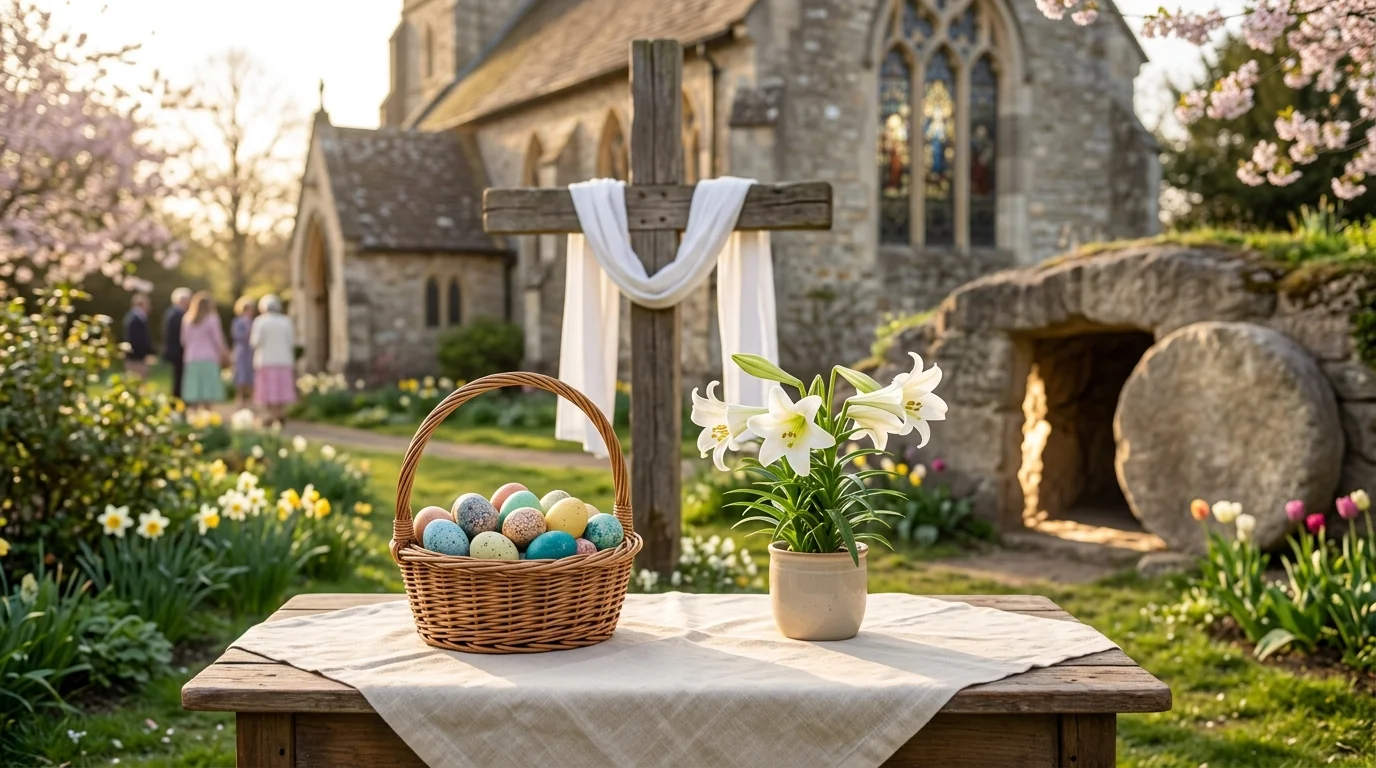
The Cross
Represents Jesus’ crucifixion and sacrifice.
The Empty Tomb
Symbolizes the resurrection and victory over death.
Easter Eggs
Eggs represent new life and rebirth.
Today they are also associated with festive celebrations and family traditions.
The Easter Bunny
The Easter Bunny comes from European folklore and symbolizes fertility and springtime rather than the biblical story of Easter.
Lilies
White Easter lilies symbolize:
- Purity
- Hope
- Resurrection
- New life
How People Celebrate Easter
People celebrate Easter in different ways around the world.
Common traditions include:
- Church services
- Prayer and worship
- Family meals
- Easter egg hunts
- Decorating eggs
- Giving chocolate eggs and candy
- Community festivals
- Singing hymns
Many families combine religious observances with cultural traditions.
The Meaning of Easter in Different Christian Traditions
Although customs vary, the central meaning of Easter remains the same.
Catholic Churches
Celebrate Easter with Mass, special prayers, and Holy Week ceremonies.
Protestant Churches
Often emphasize worship services focused on the resurrection.
Orthodox Churches
Celebrate Easter (Pascha) with unique liturgies, midnight services, and traditional foods, sometimes on a different date because they follow a different calendar for determining Easter.
Common Misunderstandings About Easter
Mistake: Easter is only about chocolate eggs.
Correct: Eggs are a cultural tradition. The primary meaning of Easter is the resurrection of Jesus Christ.
Mistake: Easter always falls on the same date.
Correct: Easter’s date changes each year based on the lunar calendar.
Mistake: The Easter Bunny is part of the Bible.
Correct: The Easter Bunny comes from European folklore, not Scripture.
Mistake: Easter is celebrated only in Western countries.
Correct: Christians around the world celebrate Easter, though customs vary by culture.
Similar Religious Celebrations
| Celebration | Meaning | Difference |
|---|---|---|
| Easter | Resurrection of Jesus Christ | Central Christian celebration |
| Good Friday | Commemorates Jesus’ crucifixion | Observed before Easter |
| Palm Sunday | Jesus’ entry into Jerusalem | Marks the beginning of Holy Week |
| Christmas | Birth of Jesus Christ | Celebrates His birth rather than resurrection |
| Pentecost | Descent of the Holy Spirit | Celebrated 50 days after Easter |
| Lent | Season of preparation | Leads up to Easter |
Is Easter a Religious or Cultural Holiday?
The meaning of Easter can be both religious and cultural.
Religious Meaning
For Christians, Easter celebrates:
- Faith
- Resurrection
- Redemption
- Eternal life
Cultural Meaning
For many families, Easter also includes:
- Spring celebrations
- Family gatherings
- Egg hunts
- Holiday meals
- Gift-giving
People may observe one or both aspects depending on their beliefs and traditions.