

What Does “Vocational” Mean?
Quick Definition
Vocational is an adjective that describes training, education, or skills related to a specific job, occupation, or trade . A “vocational” program is designed to give you the practical skills and knowledge you need to perform a particular job .
What It Usually Means In Conversations
When people talk about the vocational meaning in everyday conversation, they’re usually referring to one of these things:
Job-related training: Learning the skills you need for a specific occupation. This is the most common vocational meaning. For example, “vocational training in plumbing” means learning how to be a plumber.
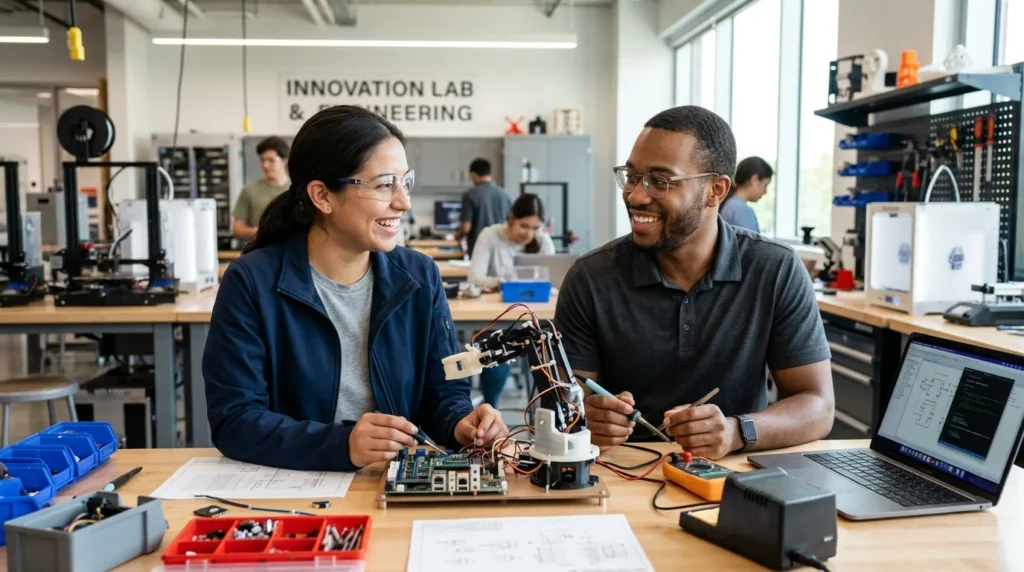
Practical education: The vocational meaning emphasizes hands-on, practical instruction rather than just theory. It’s about learning by doing.
Direct career preparation: Unlike a general university degree, a vocational program is designed to get you job-ready for a specific trade or profession .
What Tone Does It Convey?
The tone of vocational depends on the context:
| Context | Tone | Example |
|---|---|---|
| Education | Practical, applied | “She enrolled in a vocational course for graphic design” |
| Career advice | Focused, purposeful | “Vocational training can lead to quick employment” |
| Government policy | Strategic, developmental | “The government funds vocational programs to reduce unemployment” |
What Does Vocational Meaning on Different Platforms?
Pakistan Government and NGO Initiatives
In Pakistan, the vocational meaning is heavily associated with government and NGO programs aimed at empowering youth. The Punjab Vocational Training Council (PVTC) trains around 60,000–68,000 students annually across 184 vocational centers, offering courses in 38 trades. Impressively, about 82% of graduates secure employment or launch businesses .
The Punjab government has also introduced e-commerce, digital marketing, and advanced IT courses into its skills development curriculum. Over 10,000 skilled youth have secured employment in Saudi Arabia and other Gulf countries . The vocational meaning here is about creating a skilled workforce that can contribute to Pakistan’s economic growth.
UNDP and International Programs
The United Nations Development Programme (UNDP), in partnership with the Government of Japan, recently equipped 700 young people in Khyber Pakhtunkhwa with market-driven vocational skills. The training included practical skills like cell phone repair, LED bulb assembly, eco-friendly packaging, jewellery making, motorcycle repair, electrician, plumbing, solar system, and UPS installation .
TEVTA and Technical Education
In Pakistan, TEVTA (Technical Education and Vocational Training Authority) works alongside organizations like PSDA and TTB to provide multiple opportunities for skills learning. These organizations focus on the vocational meaning—practical skills that lead directly to employment .
Vocational Training vs. Traditional Education
Understanding the vocational meaning often means comparing it to traditional academic education:
| Aspect | Vocational Training | Traditional Academic Education |
|---|---|---|
| Focus | Practical, job-specific skills | General knowledge, theory |
| Duration | Often shorter (months to 2 years) | Typically 2-4+ years (degrees) |
| Cost | Generally more affordable | Often more expensive |
| Outcome | Direct job preparation | Broad career options |
| Examples | Plumbing, graphic design, electrician | Philosophy, chemistry, literature |
The Shift Toward Skills
As the job market evolves, the vocational meaning has become increasingly relevant. Many employers now value “skills and experience” more than traditional academic qualifications . Companies like Google, Apple, and IBM hire based on skills, not just degrees .
Challenges in Pakistan
Despite the growing importance of vocational training, it still holds a “secondary position in contrast to degree-awarding organizations” in Pakistan . Many students still pursue traditional degrees in fields like BS Chemistry, Math, Physics, and Literature—even when these don’t lead to clear career paths .
Real Examples of Vocational in Conversations
Example 1: Career Planning
Person A: “I don’t want to spend four years in university. What are my options?”
Person B: “You could look into vocational training. It’s more practical and gets you job-ready faster.”
Meaning: Discussing career-focused education.
Why it was used: To suggest an alternative to traditional degrees.
Example 2: Government Policy
Person A: “What is the government doing to create jobs?”
Person B: “They’re funding vocational programs to train people in skills like IT and construction.”
Meaning: Using the vocational meaning to describe policy.
Why it was used: To explain government initiatives.
Example 3: Personal Experience
Person A: “How did you become an electrician so fast?”
Person B: “I took a vocational course. It was all practical, hands-on training.”
Meaning: Describing the vocational meaning in practice.
Why it was used: To share how vocational training worked.
Example 4: International Context
Person A: “Why are so many Pakistanis getting jobs in Saudi Arabia?”
Person B: “They have vocational skills that are in high demand there.”
Meaning: Connecting the vocational meaning to international employment.
Why it was used: To explain migration trends.
Common Mistakes and Misunderstandings
Thinking Vocational Means “Less Than” Academic
Myth: Vocational education is inferior to traditional degrees.
Reality: The vocational meaning is about a different type of education—practical and career-focused. Both have value.
Confusing Vocational with “Trade School”
Myth: Vocational only means blue-collar trades.
Reality: The vocational meaning includes a wide range of fields, from IT and digital marketing to healthcare and hospitality .
Assuming Vocational Training Is Only for Young People
Myth: Vocational training is only for recent graduates.
Reality: The vocational meaning applies to anyone seeking practical skills for employment at any age.
Similar Terms and Related Words
| Term | Meaning | Connection to Vocational |
|---|---|---|
| Technical education | Training in specific technical skills | Often used interchangeably with vocational |
| Trade school | An institution offering practical training | A type of vocational education |
| Career-oriented | Focused on preparing for a specific career | Similar to the vocational meaning |
| Apprenticeship | Learning a trade through on-the-job training | A form of vocational training |