
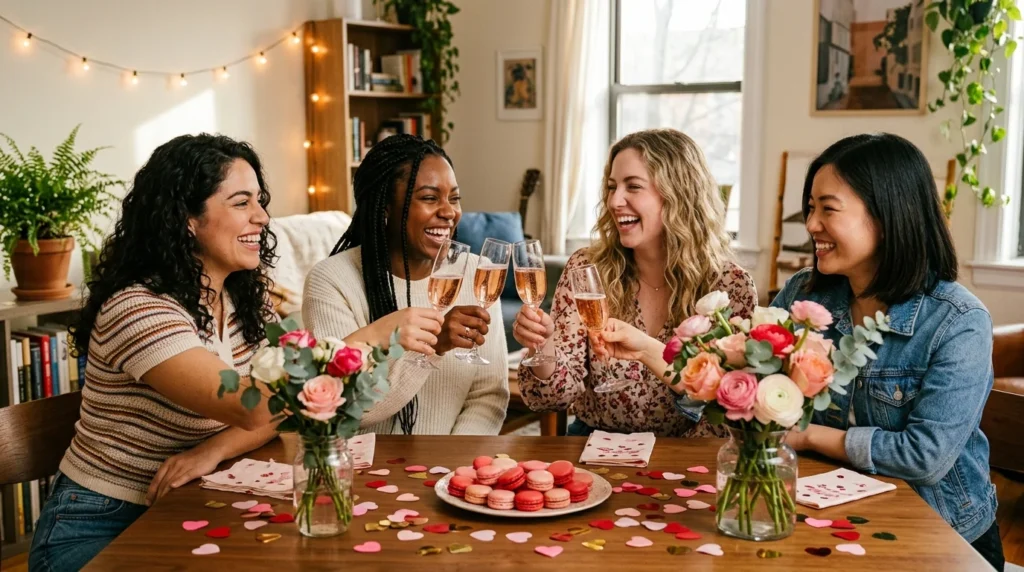

What Does Galentines Day Meaning Mean?
Quick Definition
Galentine’s Day is an unofficial holiday dedicated to celebrating friendship, particularly friendships among women.
It is typically observed on:
- February 13
- The day before Valentine’s Day
- With friends instead of romantic partners
What It Usually Means in Text Messages
When someone mentions Galentine’s Day in a text, they are usually referring to:
- A friendship gathering
- A brunch or dinner
- A girls’ night out
- A celebration of close friends
- A gift exchange among friends
Example:
Friend 1: “Are we still doing Galentine’s Day brunch?”
Friend 2: “Absolutely. I already made reservations.”
What Tone Does It Convey?
Galentine’s Day usually carries a:
| Tone | Example |
|---|---|
| Friendly | “Happy Galentine’s Day!” |
| Supportive | “Celebrating the amazing women in my life.” |
| Fun | “Brunch, mimosas, and friendship.” |
| Empowering | “Women supporting women.” |
| Lighthearted | “My true soulmates are my best friends.” |
Unlike many internet terms, Galentine’s Day is almost always positive.
What Does Galentine’s Day Mean on Different Platforms?
Text Messages
People often use the phrase to coordinate plans.
Example:
“What time is our Galentine’s Day dinner?”
Meaning:
A gathering with friends.
Snapchat
On Snapchat, users frequently share:
- Friendship selfies
- Group celebrations
- Gift exchanges
- Brunch photos
The meaning remains the same.
Instagram is one of the biggest platforms for Galentine’s Day content.
Popular posts include:
- Group photos
- Appreciation captions
- Friendship quotes
- Celebration highlights
TikTok
TikTok users create content around:
- Galentine’s Day party ideas
- Gift recommendations
- Friendship trends
- Matching outfits
- DIY decorations
Discord
Although less common, Discord communities may host:
- Virtual events
- Friendship appreciation discussions
- Online celebrations
Reddit discussions often focus on:
- Celebration ideas
- Party planning
- Gift suggestions
- Friendship experiences
Dating Apps
Some users mention Galentine’s Day humorously.
Example:
“Spent Galentine’s Day with my best friends before swiping tonight.”
The term highlights friendship rather than romance.
Origin and History of Galentine’s Day
The origin of Galentine’s Day is well documented.
The term was popularized by the TV show Parks and Recreation.
Understanding the galentines day meaning is easier when you know where the tradition began.
In a 2010 episode, the character Leslie Knope described Galentine’s Day as a day for celebrating female friendships.
Her famous description involved:
“Ladies celebrating ladies.”
The idea quickly resonated with viewers.
What started as a fictional holiday soon became a real-world tradition.
Since then, social media has helped Galentine’s Day grow into an annual celebration recognized by brands, workplaces, restaurants, and friendship groups worldwide.
How People Actually Use Galentine’s Day
Most people use the term when planning friendship-focused celebrations.
You’ll often see it used in:
- Group chats
- Social media captions
- Event invitations
- Workplace events
- Restaurant promotions
When to Use It
Use Galentine’s Day when:
- Celebrating friends
- Planning friendship events
- Posting appreciation messages
- Organizing brunches or dinners
When Not to Use It
Avoid assuming:
- Only women can participate
- It excludes all romantic relationships
- Everyone celebrates it
Many people simply use it as a fun reason to appreciate friends.
Common Observation
Most people use Galentine’s Day as an opportunity to focus on friendship without the pressure often associated with Valentine’s Day.
Real Examples of Galentine’s Day in Conversations
Example 1
Person A: “What are your plans for February 13?”
Person B: “Galentine’s Day brunch with my best friends.”
Meaning: Celebrating friendship.
Why it was used: Refers to a planned gathering.
Example 2
Person A: “Happy Galentine’s Day!”
Person B: “Love you, friend.”
Meaning: Friendship appreciation.
Why it was used: Holiday greeting.
Example 3
Person A: “Who needs Valentine’s Day?”
Person B: “Exactly. It’s Galentine’s Day week.”
Meaning: Prioritizing friendship.
Why it was used: Lighthearted humor.
Example 4
Person A: “I bought matching mugs for everyone.”
Person B: “Perfect Galentine’s Day gift.”
Meaning: Friendship-themed present.
Why it was used: Celebrating friends.
Example 5
Person A: “Let’s do a movie night.”
Person B: “Galentine’s Day plans secured.”
Meaning: Friendship celebration.
Why it was used: Social gathering.
Example 6
Person A: “Your friendship means so much to me.”
Person B: “Best Galentine’s Day message ever.”
Meaning: Appreciation.
Why it was used: Emotional support.
Example 7
Person A: “We should host a brunch.”
Person B: “A Galentine’s Day brunch sounds perfect.”
Meaning: Holiday gathering.
Why it was used: Event planning.
Example 8
Person A: “Look at these decorations.”
Person B: “They’re perfect for Galentine’s Day.”
Meaning: Holiday decor.
Why it was used: Party preparation.
Example 9
Person A: “Our entire friend group is coming.”
Person B: “This Galentine’s Day will be amazing.”
Meaning: Excitement.
Why it was used: Anticipation.
Example 10
Person A: “We’re exchanging gifts.”
Person B: “Galentine’s Day traditions are the best.”
Meaning: Friendship customs.
Why it was used: Celebration planning.
Example 11
Person A: “Can guys celebrate too?”
Person B: “Anyone can celebrate friendship.”
Meaning: Inclusive interpretation.
Why it was used: Clarification.
Example 12
Person A: “The brunch photos are adorable.”
Person B: “Happy Galentine’s Day!”
Meaning: Holiday greeting.
Why it was used: Social media interaction.
Common Mistakes and Misunderstandings
Mistake 1: Thinking It’s Anti-Valentine’s Day
Galentine’s Day does not replace Valentine’s Day.
Many people celebrate both.
Mistake 2: Assuming Only Single People Celebrate
People in relationships frequently celebrate Galentine’s Day with friends.
Mistake 3: Believing It’s an Official Holiday
Galentine’s Day is not a federal holiday.
It is an unofficial cultural celebration.
Mistake 4: Thinking It’s Only for Women
Although traditionally centered on female friendships, many people use the concept more broadly to celebrate friendship in general.
Similar Terms and Related Expressions
| Term | Meaning | Difference |
| Valentine’s Day | Romantic holiday | Focuses on romantic relationships |
| Friendsgiving | Friendship-focused Thanksgiving gathering | Celebrated in November |
| Bestie | Close friend | Refers to a person, not a holiday |
| Squad Goals | Admiration for a friend group | Social media phrase |
| BFF | Best Friends Forever | Friendship abbreviation |
| Friendship Day | International friendship celebration | Separate holiday |
| Girls’ Night Out | Social event with friends | Not tied to a specific date |
| Self-Love Day | Focus on personal care | Individual rather than group-centered |
| Palentine’s Day | Friendship celebration for all genders | Broader version |
| Friend Date | Social outing with friends | Informal event |
Internal linking opportunities: Valentine’s Day meaning, Friendship Day, BFF meaning, Bestie meaning, Friendsgiving ideas, Squad Goals meaning.
Is Galentine’s Day Positive, Negative, or Neutral?
Galentine’s Day is overwhelmingly positive.
Positive Context
- Friendship appreciation
- Community
- Support
- Fun celebrations
- Gratitude
Neutral Context
- Event planning
- Calendar discussions
- Workplace activities
Negative Context
Negative usage is rare. Any negativity usually comes from misunderstandings rather than the term itself.
Should You Use Galentine’s Day?
Use It If
- You’re celebrating friends
- You’re planning a friendship gathering
- You’re posting appreciation messages
- You’re organizing a February 13 event
Avoid It If
- Your audience may not understand the reference
- You’re incorrectly presenting it as an official holiday
- You’re excluding people unintentionally
For most social situations, Galentine’s Day is a friendly and widely recognized term.