
What Does “Peaky Blinders” Mean?
Quick Definition
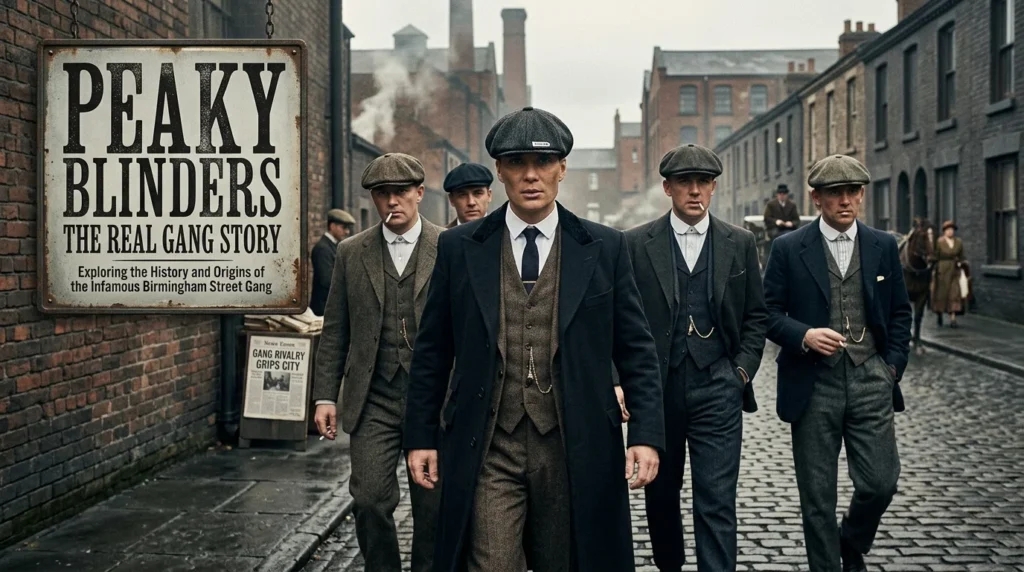
Peaky Blinders was the name of a real Birmingham street gang active in the late 1800s and early 1900s.
What It Usually Means Today
Today, most people use “Peaky Blinders” to refer to the popular British crime drama television series.
Literal Meaning
The name is generally believed to combine:
- Peaky = referring to peaked caps worn by gang members.
- Blinders = British slang for someone who looked stylish, impressive, or striking.
Most Common Interpretation
The most widely accepted interpretation is:
“Stylish men wearing peaked caps.”
What Tone Does It Convey?
The term often conveys:
- Toughness
- Style
- Rebellion
- Street culture
- Historical intrigue
What Does Peaky Blinders Mean in Different Contexts?
Historical Context
Historically, Peaky Blinders referred to an actual Birmingham gang involved in street crime.
Television
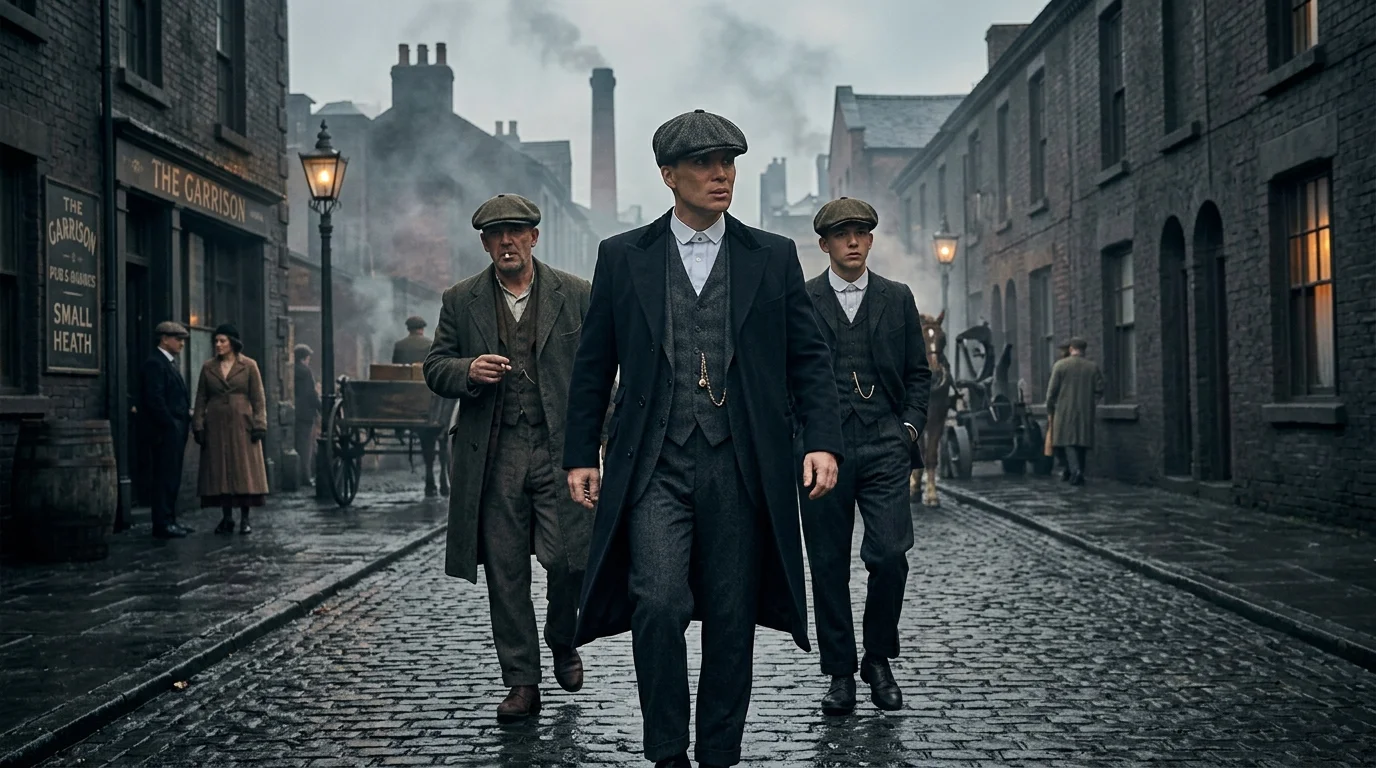
Today, the phrase is strongly associated with the acclaimed TV show Peaky Blinders.
Pop Culture
The name has become a symbol of:
- Sharp fashion
- Masculinity
- Gangster culture
- British heritage
Social Media
Fans often use the term when discussing:
- Characters
- Quotes
- Hairstyles
- Fashion inspired by the series
Origin and History of Peaky Blinders
The Real Gang
The original Peaky Blinders were active in Birmingham, England, during the late 19th century.
The gang was known for:
- Street violence
- Theft
- Gambling
- Local criminal activity
Unlike the television series, the real gang operated before the period depicted in the show.
Where the Name Came From
The exact origin remains debated.
The most accepted explanation is:
- “Peaky” referred to peaked caps.
- “Blinder” was local slang meaning stylish or impressive.
Together, the phrase described sharply dressed young men wearing distinctive caps.
The Razor Blade Myth
A popular story claims gang members sewed razor blades into their caps and used them as weapons.
However, historians generally question this theory because disposable razor blades were expensive and not widely available during the gang’s early years.
Most experts believe the razor-blade explanation is largely a myth.
How People Actually Use the Term Today
Most people use “Peaky Blinders” when talking about:
- The TV series
- Gangster culture
- Vintage fashion
- British history
You’ll often hear comments such as:
- “Have you watched Peaky Blinders?”
- “That outfit looks straight out of Peaky Blinders.”
- “Tommy Shelby made Peaky Blinders famous.”
When the Term Is Appropriate
Use the phrase when discussing:
- The television series
- Historical gangs
- Birmingham history
- Period fashion
When Not to Use It
Avoid assuming the term automatically refers to modern gangs or criminal organizations.
Real Examples of Peaky Blinders in Conversations
Example 1
Person A: Have you seen the show?
Person B: Peaky Blinders is one of my favorites.
Meaning: Referring to the TV series.
Why it was used: Entertainment discussion.
Example 2
Friend: Nice suit.
Response: Going for a Peaky Blinders look.
Meaning: Inspired by the show’s fashion.
Why it was used: Style reference.
Example 3
Student: Were the Peaky Blinders real?
Teacher: Yes, they were a real gang in Birmingham.
Meaning: Historical discussion.
Why it was used: Educational context.
Example 4
Viewer: Is Tommy Shelby real?
Fan: The character is fictional, but the gang was real.
Meaning: Distinguishing fact from fiction.
Why it was used: Clarification.
Example 5
Friend A: Why are they called Peaky Blinders?
Friend B: It likely refers to peaked caps and stylish appearance.
Meaning: Explaining the name.
Why it was used: Historical curiosity.
Example 6
Fashion Enthusiast: Flat caps are trending again.
Friend: Peaky Blinders probably helped.
Meaning: Influence on fashion.
Why it was used: Style discussion.
Example 7
Tourist: What’s Birmingham famous for?
Guide: Many people know it because of Peaky Blinders.
Meaning: Cultural impact.
Why it was used: Tourism discussion.
Example 8
Viewer: The show feels authentic.
Historian: It mixes history with fiction.
Meaning: Historical adaptation.
Why it was used: Media analysis.
Example 9
Fan: I love Tommy Shelby.
Friend: He’s the most iconic Peaky Blinders character.
Meaning: Character discussion.
Why it was used: Fan conversation.
Example 10
Person A: Is the razor-blade story true?
Person B: Most historians doubt it.
Meaning: Myth discussion.
Why it was used: Historical clarification.
Common Mistakes and Misunderstandings
Mistake 1: Believing the Razor Blade Story Is Proven
Most historians consider the story doubtful due to historical evidence.
Mistake 2: Assuming the TV Show Is Fully Accurate
The series is inspired by history but contains many fictional elements.
Mistake 3: Thinking Tommy Shelby Was Real
Tommy Shelby is a fictional character created for the television series.
Mistake 4: Assuming Peaky Blinders Refers Only to the Show
The term originally referred to a real historical gang.
How to Avoid Confusion
Remember:
- The gang was real.
- The TV characters are mostly fictional.
- The name likely relates to fashion rather than razor blades.
Similar Historical and Cultural Terms
| Term | Meaning | Difference |
|---|---|---|
| Peaky Blinders | Birmingham gang | Specific historical group |
| Gangster | Criminal gang member | Broader term |
| Mobster | Organized crime member | Often linked to mafia groups |
| Outlaw | Person outside the law | General term |
| Street Gang | Local criminal group | Broader category |
| Crime Syndicate | Organized criminal network | Larger scale |
| Mafia | Structured criminal organization | Specific criminal tradition |
| Bootlegger | Illegal alcohol trader | Different historical role |
| Racketeer | Criminal profit-maker | Business-focused crime |
| Hoodlum | Violent criminal | Informal term |
Is Peaky Blinders Positive, Negative, or Neutral?
The meaning depends on context.
Positive Associations
- Popular television series
- Memorable characters
- Distinctive fashion
- Cultural influence
Neutral Associations
- Historical study
- Local history
- Entertainment discussions
Negative Associations
- Crime
- Violence
- Gang activity
Historically, the gang itself was associated with criminal behavior.
Should You Use the Term Peaky Blinders?
Use It If
- Discussing the TV show.
- Talking about Birmingham history.
- Referring to vintage British fashion.
- Discussing historical gangs.
Avoid It If
- You assume all details from the show are historically accurate.
- You are referring to unrelated modern groups.